Apply for this course
Please select when you would like to start:
If you're a UK applicant wanting to study full-time starting in September, you must apply via UCAS unless otherwise specified. If you're an international applicant wanting to study full-time, you can choose to apply via UCAS or directly to the University.
If you're applying for part-time study, you should apply directly to the University. If you require a Student visa, please be aware that you will not be able to study as a part-time student at undergraduate level.
Why study this course?
Sport and exercise sciences involve the provision of support services to elite athlete, public health and fitness, as well as special populations such as the elderly and hospital patients. This university course has substantial components of physiology, anatomy, metabolism and biomechanics, with coverage of sports psychology and sports sociology. In a growing industry with excellent and diverse employment opportunities, graduates can find roles in the fitness industry, coaching, sports therapy, exercise physiology, health promotion and teaching.
Learn about every aspect of Sports Science
This university course has substantial components of physiology, anatomy, metabolism and biomechanics, with coverage of sports psychology and sports sociology
Maximise your career prospects
Graduates can find roles in the fitness industry, coaching, sports therapy, exercise physiology, health promotion and teaching
Make use of our amazing facilities
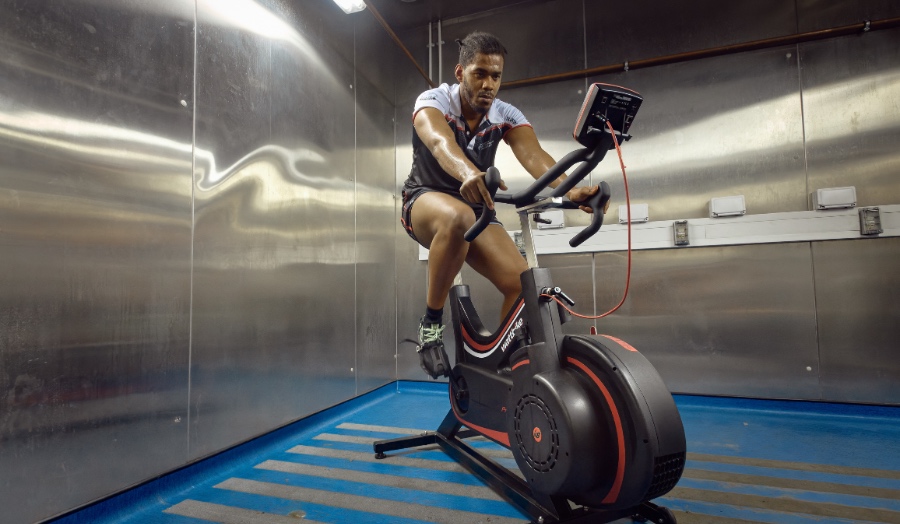
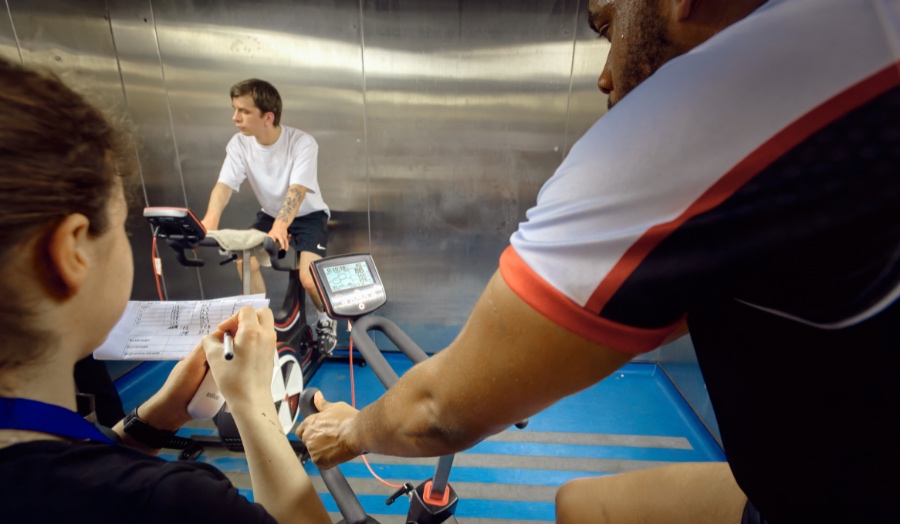
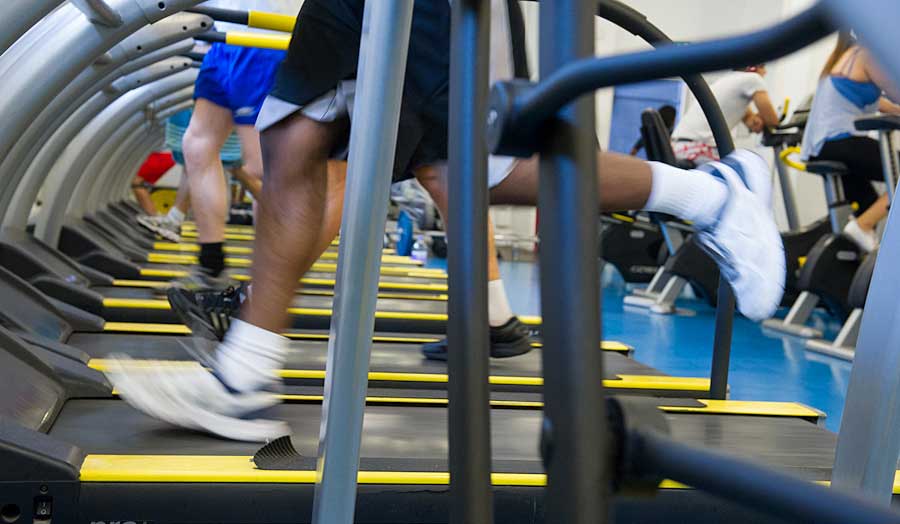
Our state-of-the-art facilities available to you throughout the course include Cosmed gas analysers, blood analysis, Woodway treadmills, large climate chamber and high-altitude simulation
Course modules
The modules listed below are for the academic year 2025/26 and represent the course modules at this time. Modules and module details (including, but not limited to, location and time) are subject to change over time.
Year* 1 modules
Year 2 modules
Year 3 modules
Applied Sports Science
This module currently runs:spring semester - Thursday afternoon
(core, 15 credits)
This module provides the foundations for the research analysis and activity which you will develop throughout your degree program. You will develop the skills required to read, interpret and analyse research in a variety of forms. This module also introduces you to methods of data analysis using computer software.
You will enhance your planning, preparation, academic writing styles, referencing and resourcing. Regarding data analysis, the aim of the module is to enable you to apply simple statistical techniques to data, as part of your other modules as well as in a sport-specific, real-life experiment.
Essential Principles of Effective Coaching and Teaching
(core, 15 credits)This module will introduce students to basic principles of coaching and teaching in a range of areas, which will be critical to development of a true understanding of sports performance and participation. These basic principles will feature sound philosophies in coaching and teaching which will foster a solid basis from which individual pedagogy can be forged over the rest of the year and on to subsequent years of the programme.
In parallel, practical coaching/teaching sessions will run, where you will be able to put the coaching theory into practice and develop the confidence to deliver sessions in the active sporting environment. Simultaneously, other skills will be acquired based around communication, leadership, teamwork and group management.
In addition, parts of the module will focus on sociology of sport and health related aspects of sport and exercise, referring to the sociological value of sport and how this links to coaching and teaching pedagogy as well as the social impact of the PE curriculum in schools. There will also be coverage of health-related aspects of sport and exercise, showing how sport and exercise can benefit our physical condition and mental wellbeing.
Read full detailsFoundations of Sport Psychology
This module currently runs:spring semester - Friday morning
(core, 15 credits)
This module provides a comprehensive introduction to the key concepts and theories that underpin sport psychology. It will equip you with the foundational knowledge and practical skills essential for understanding the psychological factors that influence performance in sports and physical activity. You will explore how psychological principles apply to both athletes and coaches, preparing you for a range of career pathways, including sport psychology consultancy, coaching, and performance enhancement.
Throughout this module, you will delve into fundamental psychological concepts such as motivation, confidence, self-efficacy, and goal setting. You will also examine how factors like arousal, stress, and anxiety impact performance. Key topics will include the development of mental skills, such as imagery, self-talk, and relaxation techniques, which are crucial for enhancing concentration and focus in high-pressure situations. Additionally, you will learn about psychological assessment tools and their application in a sports setting, as well as the ethical and professional standards as outlined by the British Psychological Society (BPS).
Read full detailsFundamentals of Musculoskeletal Anatomy
This module currently runs:autumn semester - Thursday afternoon
(core, 15 credits)
This module aims to provide an introduction to human anatomy and basic human movement. It is a broadly-based introduction to anatomy of the musculoskeletal system and human movement, and the isolation of specific muscle groups that produce these movements.
You will have the ability to learn and explore the anatomy of the musculoskeletal system and human movement of the lower limb, upper limb and trunk. Thus, among other topics, you will learn to identify and name structures such as bones, joints, muscles, and other relevant soft tissue structures found in the human body using appropriate terminology. You will also learn to describe the function of these structures and understand their relevance to movement and exercise.
The teaching methods include lectures, seminars and practicals. The seminar sessions involve group discussions based on directed learning, which is supported by material available on Weblearn.
Read full detailsHuman Physiology
This module currently runs:autumn semester - Monday afternoon
(core, 15 credits)
This module introduces students to the theoretical and practical aspects of human anatomy and physiology in health and disease. It is designed to provide Sport degree programme students with a fundamental knowledge relevant to the continued study of Exercise Physiology. This module aims to provide students, through lectures, tutorials and practical classes, with a sound knowledge of human body structure using appropriate anatomical nomenclature and an in-depth understanding of the physiology of selected body systems. The module will also aim to introduce basic concepts in immunology and pathology which are recurring themes in study at Levels 5 and 6.
Read full detailsIntroduction to Biomechanics
This module currently runs:spring semester - Thursday morning
(core, 15 credits)
This module aims to provide an introduction to human biomechanics. The focus is on the basic anthropometry and kinematics of the human body. The module is designed to provide students with the basic understanding of mechanical principles of the human body and their application in sport, exercise and rehabilitation. The module aims to help you understand how internal and external forces acting upon the human body affect movement, and how these principles are used to help improve performance. In addition, the biomechanical principles can help you understand the mechanical mechanisms of musculoskeletal injury pathologies, and how to apply them to reduce the risk of injury in sport and guide treatment.
In this module you will be able to learn biomechanical measurement techniques, understand and evaluate the relevance of the measurement of the physical characteristics of humans to sport and athletes. You will also learn about how soft tissue structures behave under mechanical load and how this relates to sporting activities, exercise, and rehabilitation techniques. The teaching methods for this module include lecture and practical sessions. The practical sessions take place in the physiology laboratory, and you will be separated into groups.
Read full detailsPhysiological Principles of Training
(core, 15 credits)In this module you will be provided with an introduction to the Physiology of exercise a sub-discipline of sport and exercise sciences. This is accompanied by the principles of training and athletic preparation which ensures a bias towards the specific interests of those studying for sports-related degrees.
The aims of this module are aligned with the qualification descriptors within the Quality Assurance Agency’s Framework for Higher Education Qualifications.
You will gain a fundamental grounding in exercise physiology including physiology, biochemistry and cell biology as they relate to exercise performance and so develop knowledge of the immediate responses of the body to exercise and also the longer term adaptations to exercise stimulation
The module encourages an appreciation of the contribution of Physiological Science to sports performance and exercise delivering both theory (the muscular, cardiovascular and respiratory systems) and practical skills (scientific methods of testing and data collection). The training principles element addresses the scientific basis of Sport and exercise performer support, organisation of preparation and the basis of different approaches to training.
The knowledge gained is relevant for a variety of employment opportunities, particularly those within sports science, coaching, personal training and sports therapy. This knowledge transfers directly to Level 5 study in which there are advances in the level of interaction with applied and exercise and environmental physiology.
Read full detailsProfessional and Core Skills
This module currently runs:autumn semester - Thursday morning
(core, 15 credits)
This module is designed to introduce you to the study of health sciences within higher education at London Metropolitan University, while also helping you develop lifelong skills in organisation and effective application of knowledge through ongoing learning.
This module will develop your transferable skills to enable you to derive maximum benefit from your chosen courses of study. We will provide clear guidance on the University’s teaching, assessment and progression regulations to facilitate smooth progression through your chosen course of study.
The module will introduce you to the learning resources and support facilities available within the University to assist you with your personal and professional development. The development of study skills will include writing laboratory records, scientific reports and essays.
You will be introduced to the development, scope and organisation of your chosen discipline and its associated professional bodies and employment opportunities. The transferable skills that will be developed will also prepare you for employment.
The module engages you in an exploration of activities that allow skills and knowledge relevant to your field of study to be developed. You will reflect on yourself as a learner, your development in a civic engagement context, as well as a work-based learning and careers context. Additionally, by constructing knowledge as individuals, and as part of a culturally diverse learning community, this module supports your development and achievement, and your ability to communicate effectively in a variety of professional, social and cultural contexts.
Read full detailsBiomechanical Applications
This module currently runs:spring semester - Thursday afternoon
(core, 15 credits)
This module focuses on understanding the application of principles of human movement in terms of the biomechanics of the muscular, nervous and skeletal systems. In addition, the module explores the practical application of this knowledge to performance analysis, the development of sporting excellence, and injury prevention.
The module aims to provide an understanding of human movement and its control in terms of biomechanical principles; develop the ability to apply theoretical understanding of human movement in a variety of contexts including the analysis and development of sporting performance, and the prevention and treatment of injuries; and develops critical thinking skills of data analysis and interpretation of results.
The aims of this module are aligned with the qualification descriptors within the Quality Assurance Agency’s Framework for Higher Education Qualifications.
Read full detailsBiomechanics of Human Movement
This module currently runs:autumn semester - Wednesday afternoon
(core, 15 credits)
This module focuses on understanding the principles of human movement in terms of anatomy and biomechanics. In addition, the module provides examples of the application of this knowledge to performance analysis, the development of sporting excellence, and injury prevention. A tutorial programme explores in more detail some of the numerical methods which support biomechanical analysis.
Read full detailsEnvironmental Exercise Physiology
This module currently runs:spring semester - Tuesday morning
(core, 15 credits)
You will be familiarised with a variety of field and laboratory-based tests of physical performance to assess components of fitness and work capacity associated with strength and power-based sports and muscle metabolism.
Secondarily you will undertake study into the impact on exercise of specific environmental exposure on physiology associated with high altitude hypoxia, high environmental temperatures and humidity including fluid balance and cold exposure.
The module builds on the Level 4 study of Physiology and links in specifically with the Level 6 module which follows in the Spring semester. Key concepts of anaerobic energy production in strength and power sports and muscle metabolism will be addressed. In additionally you will learn about the highly practical and industry related concepts of athlete support provision with specific reference to an appreciation of the impact of environmental impacts on exercise training and performance and potential ergogenic benefits of exposure extremes such as high temperatures and humidity.
Exercise Physiology
This module currently runs:autumn semester - Tuesday morning
(core, 15 credits)
This module introduces you to the responses of tissues and organs to acute and chronic exercise training. You will learn about the theoretical underpinnings of fundamental tests used including maximal oxygen uptake incremental exercise tests and blood lactate analysis and the so-called threshold concept and these will be accompanied with relevant lab testing experience. Other key concepts addressed are endurance, acid base balance, cardiovascular, respiratory and high intensity intermittent training.
Read full detailsSport Psychology: Controlling Individual Performance and Exercise
This module currently runs:autumn semester - Wednesday morning
(core, 15 credits)
This module elaborates on the key theories in sport psychology, covering a wide range of sport psychology topics and the mental skills used within those topics. Psycholgical issues relating to individual behaviour patterns are favoured are studied in detail. The impact of psychological factors on both participation and performance are studied.
The module aims to provide students with an understanding of key psychological theories which underpin sporting performance and participation itself. Students will focus on the psychological factors which influence an individual’s sporting behaviour, whether it be in competition, training or general participation. The module aims to develop students’ communication and literacy skills to allow them the ability to write a scientific piece of work with confidence. Most mental skills developed in sport psychology are directly transferable therefore students are given qualities necessary to advance in many other areas of life.
Read full detailsSport Psychology: Group Dynamics and Human Interaction
This module currently runs:spring semester - Thursday morning
(core, 15 credits)
The module aims to provide students with an understanding of key psychological theories which underpin sporting performance and participation itself. As a progression from the Autumn sport psychology module students will focus on developing an understanding of how those performing or participating in sport either facilitate or inhibit the performane of others. This will involve considering areas of human communication, team cohesion and social interaction in sport, as well as exploring the manner in which we are affected by being in the preence of other people.
The module encourages an appreciation of how to work effectively in a team setting and also aims to develop students’ communication and literacy skills to allow them the ability to write a scientific piece of work with confidence. All mental skills developed in sport psychology are directly transferable therefore students are given qualities necessary to advance in many other areas of life.
Read full detailsSports Science Research Methods
This module currently runs:spring semester - Tuesday afternoon
(core, 15 credits)
The aims of this module are aligned with the qualification descriptors within the Quality Assurance Agency’s Framework for Higher Educations Qualifications. This module aims to allow students to reflect on their chosen course. Students will select their project within the context of the course and possible future career. Students will consider and carry out the preparation necessary for a scientific dissertation proposal. In so doing, students will gain experience in devising dissertations by taking into account experimental design, feasibility in terms of costs and resources, and aspects of ethics and safety.
Read full detailsEmpowering London: Working within the Community
This module currently runs:all year (September start)morning
(option, 15 credits)
This unique module will provide insight into key urban issues affecting London (which are additionally relevant to other large cities around the UK and the wider world) before applying your academic knowledge in a practical setting.
You will undertake 40-70 hours of hands-on work experience with a London community focused organisation, tackling real-world challenges such as inequality, crime, health disparities, and climate change. Along the way, you’ll develop professional skills and reflect on your personal and professional growth to assist you to reach your graduate career goals.
Support is provided to help secure suitable placements which can be remote or in-person.
The module supports the University’s Empowering London initiative and promotes inclusive, ethical practice.
The module aims to enable you to:
● Effectively express and understand your current skills and abilities in relation to your career values and goals
● Practically apply the knowledge gained through your course programme to a work/neighbourhood environment
● Make a positive contribution to the challenges of current social and economic issues facing the University’s local communities and consider these from national and global perspectives
● Gaining unique insight of current challenges facing cities in the areas of social wealth; the environment; discrimination; health; poverty and deprivation and crime and partner with community institution to design potential solutions
● Gain understanding and direct experience of the graduate level skills, knowledge and insights required for inclusive practice and problem resolution within institutions to enable you to become an inclusive leader in society
● Recognise your personal and professional development through your work based practice and how to apply the experience and knowledge gain to your future goals
Please note:
● Students will be contacted prior to the semester to provide support in securing a Placement in good time.
● Students are responsible for applying for opportunities and to engage with the Module Team/Employer Engagement and Placements Team to assist them.
● The suitability of any opportunities will be assessed by the Module Team/Employer Engagement and Placements Team and all placements must meet Health and Safety requirements for Higher Education Placements.
● Students on a Student Visa must ensure their placement meets UKVI monitoring requirements. This includes:
• Prior approval of placement dates and hours by the Module Leader.
• Submission of timesheets signed by a line manager/supervisor.
• Ongoing engagement with the Module Leader and the International Student Support Team.
Sociology of Effective Coaching and Teaching
This module currently runs:autumn semester - Tuesday afternoon
(option, 15 credits)
This module explores the key pedagogical theories that inform sports coaching and teaching as well as covering a wide variety of themes relevant to contemporary sports education and training, and their sociological implications. The module includes a strong emphasis on experiential learning with students engaging in practical coaching and teaching sessions on a weekly basis.
The module aims to provide students with an overarching appreciation of important theories relating to effective teaching and coaching practice, as well as their influences on our social interaction. Students are afforded various opportunities to develop their practical competencies in relation to teaching and coaching. Ultimately, the module seeks to develop responsible and effective practitioners with a firm grounding in the necessary interpersonal and decision-making skills required within the coaching/teaching profession. This will be incorporated with an understanding of the role of sport in society. The ability to communicate and use a variety of strategies to achieve coaching/teaching objectives is developed, along with an appreciation of the value of reflective practice in personal development.
Applied Exercise Physiology
This module currently runs:spring semester - Tuesday afternoon
(core, 15 credits)
This module emphasizes development of very focussed practical skills related to athlete testing and support. You will develop the ability to provide testing and data interpretation using a range of techniques including cardiopulmonary exercise testing. You will engage also in understanding of the physiological effects of, and adaptations to, differing climatic and environmental conditions as they relate to both exercise performance and the provision of specific athlete support under these conditions. The module conveys an appreciation of the complex nature of environmental physiology and examines the practical implications for exercise preparation and performance under these conditions. There is also a focus on core competencies associated with Exercise Physiology identified by prospective employers so that students will become equipped with a range of skills relevant to the workplace including data interpretation, lab equipment management and the ability to interact with and communicate complex information verbally and in writing using plain language.
Major aims include competency with:
- Cardiopulmonary exercise testing
- Blood lactate and glucose testing and interpretation
- Manual blood pressure measurement and interpretation
- Communication skill relevant to athletes and patients / clients (non scientists)
- Comprehension of complex exercise Physiology concepts associated with oxygen uptake kinetics and exercise metabolism
Clinical Exercise Physiology
This module currently runs:autumn semester - Tuesday afternoon
(core, 15 credits)
This module ties together the Physiology material from Levels 4 and 5 offering learning of the principles of exercise Physiology applied to health promotion and disease. Exercise Physiology research in recent decades has made a significant contribution to clinical practice and increasingly Exercise Sciences are moving in the direction of health and clinical perspective. There are significant employment opportunities in healthcare for Sport Science graduates and so this module offers a preparation for these fields. You will analyse the relationships between exercise and a variety of disease and health conditions including cardiovascular, respiratory and metabolic diseases. You will focus on aetiology, diagnosis, prevention and intervention. You will cover both general topics such as epidemiology and pathology, as well as specific conditions such as cardiovascular disease, diabetes, obesity and psychological disorders and the aging process. The module aims to give you some theoretical and practical experience of describing and understanding clinical conditions. You will also become familiar with data collection, interpretation and presentation through a combination of lectures and lab practicals in which practical skills of exercise testing and interpretation will be developed using a range of instruments such as echocardiography, cardiopulmonary exercise testing and microvascular blood analysiis. Guest lecturers present in this module and these are expert practitioners in their areas whose experience and insight contribute greatly to the quality of the learning experience.
Read full detailsHuman Movement Analysis
This module currently runs:autumn semester - Thursday morning
(core, 15 credits)
You will be expected to perform a small research project to compare the biomechanics of two motions by collecting and analysing motion data. You will be given the opportunity to research either a project of your choice of select from a given list of project titles. The module is designed to support you in their respective pathway, with the expectation that those studying Sports Therapy / Sport and Dance Therapy will focus on injury risk and rehabilitation; for those studying Sport and Exercise Science you will focus on performance improvement, and for those studying Sport Psychology, Coaching and Physical Education will focus on providing coaching guidance for the individual. You will be able to select from any of these study types.
After completing this module you will be able to describe motions of the body during typical activities, examine the movement using multiple biomechanical techniques, understand the limitations of different experimental and analytical techniques used to quantify human movement, interpret motion data accurately, and evaluate studies of human movement. You will also learn the computer skills necessary to perform a biomechanical analysis of human movement.
The aims of this module are aligned with the qualification descriptors within the Quality Assurance Agency’s Framework for Higher Education Qualifications. This module aims to prepare you for post-graduate study, and further research suitable for academic publication.
Read full detailsSport Psychology and the Elite Athlete
This module currently runs:autumn semester - Tuesday morning
(core, 15 credits)
This module explores contemporary theory in sport psychology and its relevance to the competitive sporting environment. Approaching from an applied perspective which relates to employability, you will consider important concepts in terms of their potential impact on an athlete’s psychological state and therefore their engagement and performance.
The module aims to introduce you to the key real-life psychological demands associated with sports performance, in conjunction with coping mechanisms and solutions used to deal with those demands. In terms of employability, you will gain a critical insight into the applied practice of sport psychology and gain experiences of some of the key interpersonal skills that make an effective sport psychologist.
Read full detailsSport Psychology: Practical Application in the Real World
This module currently runs:spring semester - Tuesday morning
(core, 15 credits)
This module is focused on the practical skills required for a sport psychologist to operate in the real world. Beginning from data acquisition, through meeting and managing new clients, to client assessment and effective interventions to improve or enhance the sporting environment for participants.
Having developed the background theoretical knowledge from previous modules the student will now understand how the working sport psychologist prepares the ground for either sport psychology research or a sound client-psychologist relationship. The module will include working with current and/or former sports people.
This module provides students with the tools required to progress to higher educational studies or enter the sporting employment market with a range of theoretical and practical skills and experiences behind them.
Read full detailsSports Science and Therapy Dissertation
This module currently runs:autumn semester - Wednesday morning
spring semester - Wednesday afternoon
(core, 30 credits)
This module will enable you to reinforce the skills necessary to carry out a scientific programme requiring significant research. It will allow you to demonstrate the final development of your subject knowledge, skills and understanding through extended research based on laboratory, literature or field work.
This module aims to encourage you to reflect and build upon your subject knowledge and expertise by means of a specific investigation requiring significant research. During the course of the module, you will develop the skills necessary to plan, carry out, analyse and report upon the results of an experimental or analytical programme on a scientific topic. The module gives you the opportunity to attain achievement of a high level of personal development by working independently with the minimum necessary supervision. This module aims to provide you with the qualities and transferable skills necessary for employment requiring: the exercise of initiative and personal responsibility; decision-making in complex and unpredictable contexts; and, the learning ability needed to undertake appropriate further training of a professional or equivalent nature.
Read full detailsBusiness Developments in Sport
This module currently runs:spring semester - Wednesday morning
(option, 15 credits)
This module is an introduction to the principles of business in the specific context of sports related ventures.
The aims of this module are aligned with the qualification descriptors within the Quality Assurance Agency’s, Framework for Higher Education Qualifications. More specifically, it aims to provide you with academic knowledge and understanding to implement good business practice including marketing, accounting, management, service and reflection. These topics should provide the underpinning information to allow you to harness an entrepreneurial approach to business and professional work to optimise your employability and performance.
The module also seeks to develop your competence in discussion, oral presentation and written work, encouraging clarity of presentation and transferable tools often used in many employment settings.
Read full detailsEmpowering London: Working within the Community
This module currently runs:all year (September start)morning
(option, 15 credits)
This unique module will provide insight into key urban issues affecting London (which are additionally relevant to other large cities around the UK and the wider world) before applying your academic knowledge in a practical setting.
You will undertake 50 hours of hands-on work experience with a London community focused organisation, tackling real-world challenges such as inequality, crime, health disparities, and climate change. Along the way, you’ll develop professional skills and reflect on your personal and professional growth to assist you to reach your graduate career goals.
Support is provided to help secure suitable placements which can be remote or in-person.
The module supports the University’s Empowering London initiative and promotes inclusive, ethical practice.
The module aims to enable you to:
● Effectively express and understand your current skills and abilities in relation to your career values and goals
● Practically apply the knowledge gained through your course programme to a work/neighbourhood environment
● Make a positive contribution to the challenges of current social and economic issues facing the University’s local communities and consider these from national and global perspectives
● Gaining unique insight of current challenges facing cities in the areas of social wealth; the environment; discrimination; health; poverty and deprivation and crime and partner with community institution to design potential solutions
● Gain understanding and direct experience of the graduate level skills, knowledge and insights required for inclusive practice and problem resolution within institutions to enable you to become an inclusive leader in society
● Recognise your personal and professional development through your work based practice and how to apply the experience and knowledge gain to your future goals
Please note:
● Students will be contacted prior to the semester to provide support in securing a Placement in good time.
● Students are responsible for applying for opportunities and to engage with the Module Team/Employer Engagement and Placements Team to assist them.
● The suitability of any opportunities will be assessed by the Module Team/Employer Engagement and Placements Team and all placements must meet Health and Safety requirements for Higher Education Placements.
● Students on a Student Visa must ensure their placement meets UKVI monitoring requirements. This includes:
• Prior approval of placement dates and hours by the Module Leader.
• Submission of timesheets signed by a line manager/supervisor.
• Ongoing engagement with the Module Leader and the International Student Support Team.




.png.jpeg)


.png)