

Apply for this course
Please select when you would like to start:
Use the apply button to begin your application.
If you require a Student visa and wish to study a postgraduate course on a part-time basis, please read our how to apply information for international students to ensure you have all the details you need about the application process.
Why study this course?
The Computer Networking and Cyber Security with Work Experience MSc includes a work experience placement as well as Cisco accreditation upon successful completion of the course.
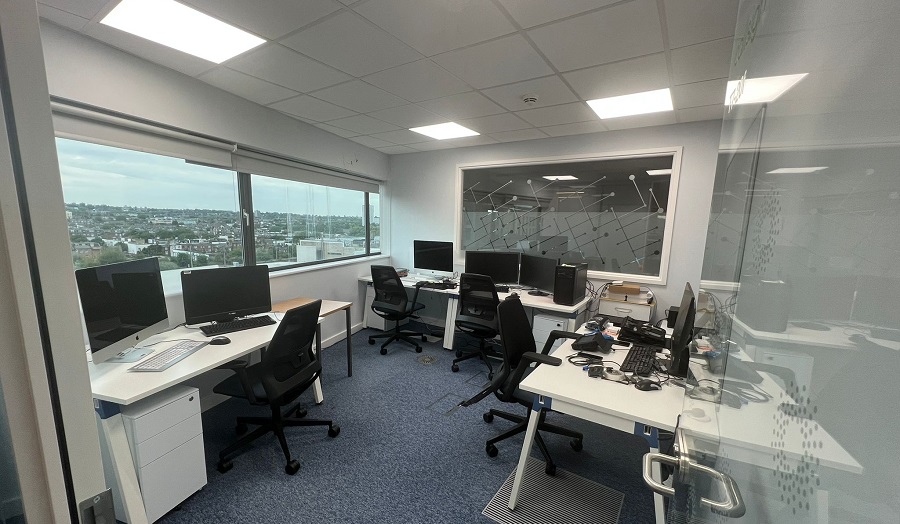
You’ll develop your knowledge of the very latest cyber security principles, tools and techniques taught by our specialist staff in a dedicated laboratory. Guest speakers from the industry will contribute to your learning, while the work experience will provide a unique student experience that will enhance your employability after graduation.
This degree course has been accredited with partial CITP status by BCS, The Chartered Institute for IT. This accreditation is a mark of assurance that the degree meets the standards set by BCS. As a graduate of this course, accreditation will also entitle you to professional membership of BCS, which is an important part of the criteria for achieving Chartered IT Professional (CITP) status through the Institute.
The course has also achieved partial CENG status by BCS on behalf of the Engineering Council. Accreditation is a mark of assurance that the degree meets the standards set by the Engineering Council in the UK Standard for Professional Engineering Competence (UK-SPEC). An accredited degree will provide you with some or all of the underpinning knowledge, understanding and skills for eventual registration as an Incorporated (IEng) or Chartered Engineer (CEng).
Some employers recruit preferentially from accredited degrees, and an accredited degree is likely to be recognised by other countries that are signatories to international accords
Boost your career prospects
This course includes a work experience placement as well as Cisco accreditation upon successful completion of the course
Accredited by BCS
This degree has been accredited with partial CITP status by BCS, The Chartered Institute for IT
This course has partial CENG status
The course has achieved partial CENG status by BCS on behalf of the Engineering Council, which means the degree meets the standards set by the Engineering Council in the UK Standard for Professional Engineering Competence (UK-SPEC)
Course modules
The modules listed below are for the academic year 2025/26 and represent the course modules at this time. Modules and module details (including, but not limited to, location and time) are subject to change over time.
Year modules
Cyber Security Management
This module currently runs:summer studies - Thursday morning
spring semester - Tuesday afternoon
(core, 20 credits)
This module focuses on various aspects of Cybersecurity Management and deals mainly with the protection of information assets over the cyber space by concerted measures.
This module aims to provide students with an appreciation of the benefits Cybersecurity Management provides within a business environment and over cyber space. This includes the choice and application of appropriate risk assessment and risk control techniques, the understanding of security standards & procedures, coupled with the application of cybersecurity technology & security measures in a business setting.
Read full detailsCybercrime and Cyber Security
This module currently runs:autumn semester - Tuesday afternoon
(core, 20 credits)
This module provides a broad introduction to cybercrime and cyber security evolution. The module examines the relationship between advances in Internet-based and digital technologies, and their criminal exploitation within cyberspace. It examines a wide range of cyber threats, attacks and risks, and the strategies employed to mitigate these, including the laws that are in place to protect and prevent online crimes/cybercrimes.
The module provides essential coverage of the principles and concepts underpinning cybercrime and cyber security, maintaining focus on the identification, examinations and assessment of the key threats, attacks and risks, and in areas related to legal, ethical, social and professional issues.
Read full detailsMSc Project
This module currently runs:spring semester - Wednesday afternoon
autumn semester - Wednesday afternoon
summer studies - Wednesday afternoon
(core, 60 credits)
The module provides students with the experience of planning and bringing to fruition a major piece of individual work. Also, the module aims to encourage and reward individual inventiveness and application of effort through working on research or company/local government projects. The project is an exercise that may take a variety of forms depending on the nature of the project and the subject area. Students will be encouraged to carry out their projects for local companies or government departments.
The objectives of the module are:
• To develop the ability to produce detailed specification relevant to the problem of investigation.
• To manage the project by confining the problem within the constraints of time and available resources.
• To effectively research the background material on the topic using a variety of sources and to develop ability to conduct critical analysis and draw conclusions.
• To apply and/or extend the knowledge acquired in the taught core modules to a new area of application or investigation.
• To use relevant tools and techniques for designing, testing, analysing, and critical evaluation.
• To demonstrate the originality in the application of new knowledge and skills.
• To effectively communicate the work to others by verbal and documentation media.
• To raise awareness in potential business development opportunities in an area pertinent to the topic.
Work Experience
This module currently runs:all year (January start) - Wednesday afternoon
summer studies - Wednesday afternoon
(core, 0 credits)
• The aim of the work experience period is to provide students with the opportunity to apply their knowledge and skills in the field of computing and related areas. The work experience period is seen by the course team as an essential vehicle for consolidation of knowledge and skills gained from the formal scheduled teaching element of the course This module provides students with an opportunity to undertake work experience in the Computing and IT industry at postgraduate level. The work experience spans two semesters and is underpinned by the taught element of the course in order to further enhance students’ skills relevant to their world of work and their career aspirations.
• This module is MANDATORY to all students studying MSc Computer Networking & Cyber Security with Work Experience
• This Work Experience may take one or a combination of the following:
•
• Students will be encouraged to find their own work placements in the public
• and private sector in the first instance.
•
• Students may be placed in suitable employment at the university and will be
• required to apply for work experience at the university.
•
• Students may be placed in suitable employment in the voluntary sector
•
• The World of Work (WoW) Agency in the School of Computing may find
• suitable projects for the students.
•
• Students may undertake a WoWbiz project which would typically entail an
• individual student or a team of students working on a real project which
• has been specified by a business
•
• Students will be prepared for work experience over a 6-week period. The actual work experience will cover a period of 6 months followed by an appraisal, critical reflection and review period of 2 weeks.
•
The work experience forms an integral part of the degree and will be assessed formally by the academic supervisor. It is an important part of the student's education that they spend an appropriate time in work with a view to establishing good professional practice that will enrich their learning and prepare them for the world of work.
•
• Students will have the work experience approved, before they take up the opportunity. It is essential that students are made aware that both the work experience and the relevant “health and safety checklist” where applicable need to be approved before starting.
• Support and advice will be given to students by their academic supervisor. The academic supervisor will be able to identify appropriate forms of work experience, consult a local employers’ database for prospective work experience and direct students to the careers team at Student Services for further help and advice in seeking employment.
• To ensure students on Tier 4 (General)/ Student visas are able to benefit from enhanced learning through work placements, the following must be followed to remain compliant with the Home Office regulations on work placements and not endanger their visas to study in the UK.
•
• Work placements as defined by UK Visas and Immigration (UKVI) are those placements which are an integral and assessed part of the course.
•
• Work placements must be reported to UKVI before they start and the dates and placement details cannot be changed without prior approval from the module leader, the Work Based Learning team and the International Support and Compliance Team.
•
• Students holding Tier 4 (General)/ Student visas must:
• Ensure the placement is agreed by the module leader as well as the Work Based Learning team before starting the placement.
• Provide all relevant paperwork and placement details to the Work Based Learning team before starting the placement
• Start the placement in the term the module is registered. If this needs to be changed because a placement is not available, this must be communicated to the Work Based Learning team
• Ensure weekly, signed timesheets are provided to the Work Based Learning team for all external placements
• Ensure they communicate any changes to the placement immediately to the module leader, Work Based Learning team and the International Support and Compliance Team.
• Direct any questions about work placements to visa.compliance@londonmet.ac.uk
Introduction to Networks
This module currently runs:autumn semester - Friday morning
(alternative core, 20 credits)
This module introduces the architectures, models, protocols, and networking elements that connect users, devices, applications and data through the Internet and across modern computer networks - including IP addressing and Ethernet fundamentals. By the end of the course, students can build simple local area networks (LAN) that integrate IP addressing schemes, foundational network security, and perform basic configurations for routers and switches.
Student will:
• Explain network technologies.
• Explain how devices access local and remote network resources.
• Describe router hardware.
• Explain how switching operates in a small to medium-sized business network.
• Design an IP addressing scheme to provide network connectivity for a small to medium-sized business network.
• Configure initial settings on a network device.
• Implement basic network connectivity between devices.
Network Routing Protocols
This module currently runs:autumn semester - Thursday morning
(alternative core, 20 credits)
This module tackles all issues important in the design, implementation, and configuration and troubleshooting of routing protocols in computer networks. Students learn basic concepts of routing algorithms and associated protocols. They then develop advanced skills in the deployment of individual protocols as well as advanced topics, such as route redistribution, route filtering, and migration to the latest Internet Protocol, IPv6. It includes aspects such as the Hierarchical Network Model, IP v4 and 6, Advanced routing protocols including Interior Gateway Protocols such as EIGRP capabilities and attributes and single and multi-area OSPF as well as the Exterior Gateway Protocol, BGP.It also introduces route filtering and path control to provide optimal and secure path selection in a complex computer network. Upon successfully completion of this module student should be able to sit for CCNP Route industry certification subject to satisfying relevant pre-requisite (CCNA).
Read full detailsSwitched Networks
This module currently runs:spring semester - Friday morning
summer studies - Wednesday
(alternative core, 20 credits)
This module develops in depth analytical and practical knowledge and skills for configuring and managing Internetworking devices in Local Area Networks using both basic and advanced Switching protocols.
Student are able to demonstrate knowledge and understanding of concepts, principles and technologies that underpin computer networking practice, design and application; as well as knowledge of the principal features of the computer Networking industry, its role, structure and organisation; The student would be able to draw independent conclusions based on a rigorous, analytical and critical assessment of argument, opinion and data.
The module introduces the student to current best practice in the design, deployment and maintenance of complex local area networks. It focuses on the delivery of high availability networks within the scalable campus network with a close attention to switch security and prepares students with a broad scope of architectural understanding and implementation skills required by enterprise networks.
Upon successfully completion of this module student should be able to sit for CCNP Switch industry certification subject to satisfying relevant pre-requisite (CCNA) and necessary preparations.
Switching Routing and Wireless Essentials
This module currently runs:all year (January start) - Monday afternoon
spring semester - Friday morning
summer studies - Monday
(alternative core, 20 credits)
This course focuses on switching technologies and router operations that support small-to-medium business networks and includes wireless local area networks (WLAN) and security concepts. Students learn key switching and routing concepts. They can perform basic network configuration and troubleshooting, identify and mitigate LAN security threats, and configure and secure a basic WLAN. covering switching, routing and wireless concepts and configurations. The material is utilising resources by our London Met Cisco Networking Academy and extends the theory by putting this into practice using Cisco switching and routing hardware as well as network-simulation environments. By the end of this course, you will be able to configure advanced functionality in routers and switches. You will also be able to perform basic troubleshooting of these components. Using security best practices, you will troubleshoot and resolve common protocol issues in both IPv4 and IPv6 networks.
Read full detailsDigital Forensics
This module currently runs:autumn semester - Thursday afternoon
(option, 20 credits)
This module addresses the growing demand from police forces, security agencies and commercial organisations for skilled professionals in this developing area. It covers such topics: digital crime activities and their prosecution, digital forensics & digital evidence, digital forensics process tools, and the legal and regulatory issues.
The aim of this module is to provide students with the knowledge of preservation and extraction of relevant digital evidence from mainstream digital equipment, including computers, computer networks (including the cyber space/Internet), and other digital devices in appropriate procedures, tools and techniques. The students will be able to expand their knowledge of how computers operate and communicate as well as issues related to networking and web technologies to develop the skills required to be able to use computers as a crime investigative tool.
Read full detailsEnterprise Networking Security and Automation
This module currently runs:autumn semester - Friday afternoon
(option, 20 credits)
Large enterprises depend heavily on the smooth operation of their network infrastructures. This course describes the architectures and considerations related to designing, securing, operating, and troubleshooting enterprise networks. It covers wide area network (WAN) technologies and quality of service (QoS) mechanisms used for secure remote access along with the introduction of software-defined networking, virtualization, and automation concepts that support the digitalization of networks. Students gain skills to configure and troubleshoot enterprise networks, and learn to identify and protect against cybersecurity threats. They are introduced to network management tools and learn key concepts of software-defined networking, including controller-based architectures and how application programming interfaces (APIs) enable network automation
Read full detailsHardening Network Infrastructure
This module currently runs:spring semester - Friday afternoon
summer studies - Friday
(option, 20 credits)
This module is delivered in two main parts:
1. CCNA Security:
The first part is based on the CCNA Security course, part of the Cisco Networking Academy Programme. It introduces core security concepts and skills essential for installing, troubleshooting, and monitoring network devices to ensure data integrity, confidentiality, and availability. This curriculum is designed for individuals looking to enhance their CCNA-level skills and meet the growing demand for network security professionals. It prepares students for entry-level security roles and the globally recognised Cisco CCNA Security certification. CCNA Security is a hands-on, career-focused course that blends online and classroom learning, emphasising practical experience, critical thinking, and problem-solving. Students should have a foundation in CCNA-level networking concepts and basic PC and Internet navigation skills.
2. Security Controls:
The second part focuses on Security Controls, including tools and techniques to safeguard the confidentiality, integrity, and availability of critical assets and data. This section covers regulations, compliance, and best practices for protecting critical resources, with a focus on NewGen Firewall technology. Students are introduced to auditing and evaluation tools to assess and validate a network's security posture. They will also explore network threats, vulnerabilities, and the baseline security and configuration features required to secure network devices.
Together, these two parts provide a comprehensive understanding of network security, equipping students with the skills and knowledge needed to excel in the field.
Read full detailsNetwork Troubleshooting
This module currently runs:autumn semester - Thursday afternoon
(option, 20 credits)
The module is highly practical and is designed to prepare students for real world networks. Troubleshooting Cisco IP Networks teaches students the knowledge and skills that will enable the troubleshooting of complex enterprise routed and switched networks.
Students use their skill to troubleshoot the communication on large-scale data networks using Cisco equipment and extend their research skills. Students will cover various network diagnostic commands, switch and VLAN troubleshooting, EIGRP, OSPF and BGP troubleshooting, IPv4 and IPv6 addressing and routing issues, troubleshooting of wireless networks and various network security protocol related issues. A good trouble-shooter can save time and mitigate costs incurred by downtime.
Quantum Computing and Applications
This module currently runs:spring semester - Tuesday morning
(option, 20 credits)
Quantum computers are rapidly moving from the realm of the hypothetical to the position that they could be extensively deployed in the next 20 years. If technological development continues in the way it has in recent years these novel devices will have a huge impact across almost all realms of computer science, cryptography and information security as a consequence of the significant speed up in search algorithms and processing.
The deployment of quantum computers offers significant opportunities but also threats – 21st century cybersecurity relies on cryptographic algorithms developed in the 20th century that may no longer be as robust as we need them to be and data may already be being harvested in the hope of future decryption.
On the positive side, quantum technology offers routes for secure key distribution and post quantum standards are already being developed that attempt to ensure continued security via the mathematics of lattices and of error correcting codes. The deployment of these is likely to be a major area of employment in cybersecurity in coming years.
Read full detailsSecurity Auditing and Penetration Testing
This module currently runs:spring semester - Tuesday morning
summer studies - Tuesday
(option, 20 credits)
This module is designed to introduce principles underlying computer and network security auditing, securing, and penetration testing. It also introduces tools used to assess and validate security posture of a network and its applications. There is an extensive exposure to network threats and vulnerabilities. Students will assess the various security and configuration features required to secure networks.
This module also focuses on guiding students for further specialisation in vendor-neutral security certification programs such as GIAC, ISC, EC-Council, ISACA and networking with industry experts and engage in professional bodies such as BCS-ISSG.
The aim of the module is:
- To provide students with knowledge of the fundamental principles and techniques employed in auditing, securing networks and penetration testing.
- To create awareness of the need for security in computer and communications systems.
- To appraise a security policy and network security posture.
- To enable students to assess security risks and be able to apply appropriate mechanisms to counter the risks














.jpg)