
Apply for this course
Please select when you would like to start:
If you're a UK applicant wanting to study full-time starting in September, you must apply via UCAS unless otherwise specified. If you're an international applicant wanting to study full-time, you can choose to apply via UCAS or directly to the University.
If you're applying for part-time study, you should apply directly to the University. If you require a Student visa, please be aware that you will not be able to study as a part-time student at undergraduate level.
Why study this course?
This is a top-up version of our Tourism and Travel Management BA degree. A top-up degree is the final year (Level 6) of an undergraduate degree course and is for those who have a foundation degree, Higher National Diploma or equivalent qualification, or those wishing to study the final degree of their degree in London.
This degree will bring you closer to a managerial career in the travel and tourism sector. You’ll investigate contemporary issues, including how to evaluate and mitigate risks, develop tourism marketing strategies and manage visitor attractions. You’ll benefit from close links with government and businesses via membership of the Tourism Management Institute, as well as insights from international projects by research centres such as the Association for Tourism and Leisure Education and Research (ATLAS).
Become a member of the TMI
Benefit from close links with government and businesses via membership of the Tourism Management Institute (TMI)
Join a course that never stops developing
This course is constantly evolving to include the most up-to-date issues and to prepare entrepreneurs for the challenging tourism business environment, including how to strategically manage operations even in a situation of crisis
Join our famous overseas tour
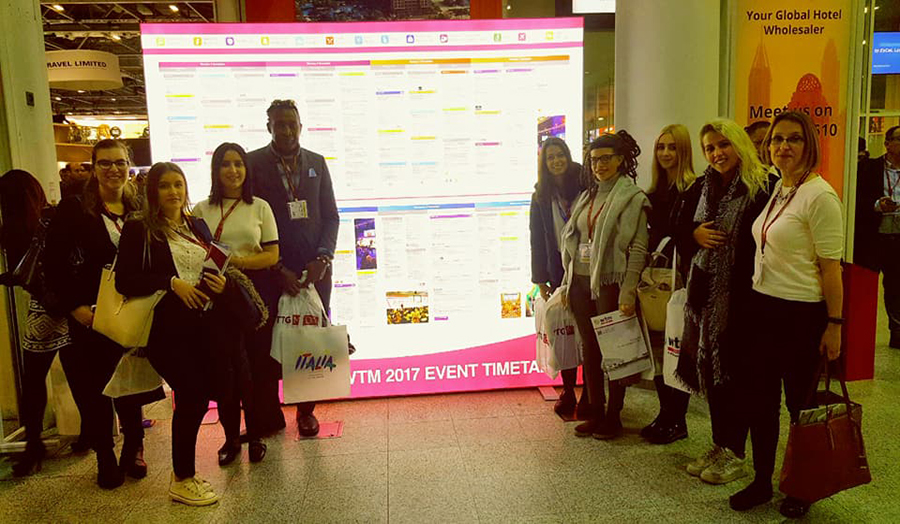
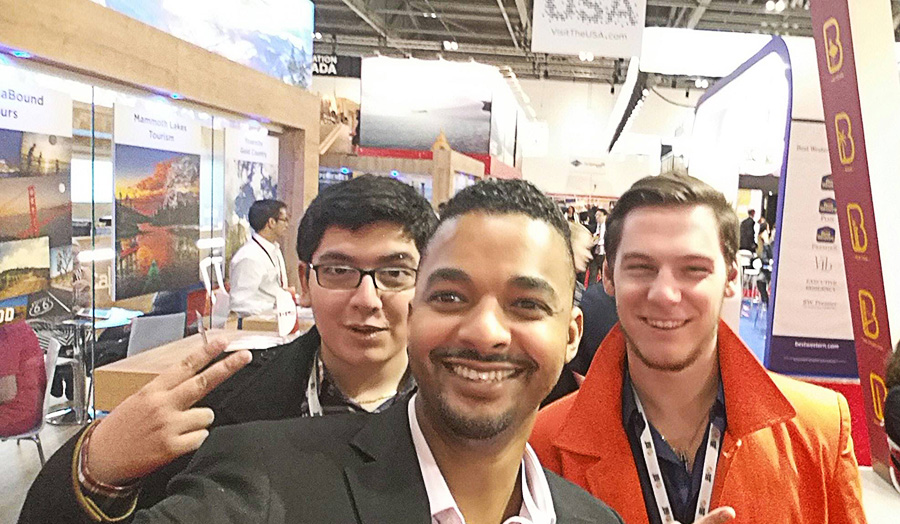
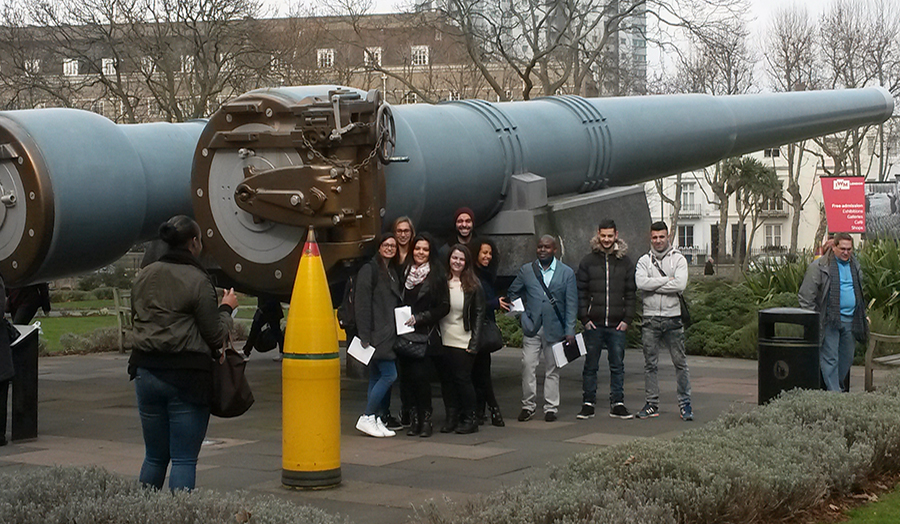
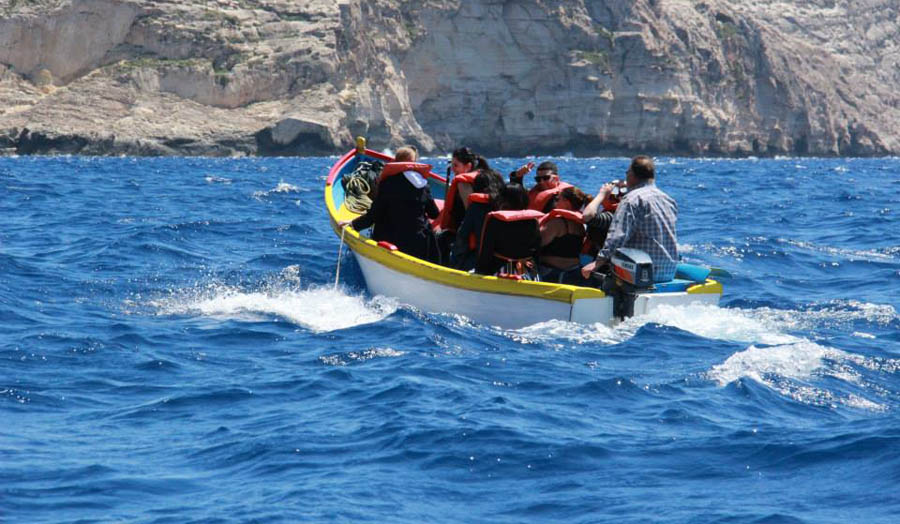
Our overseas study tour is the highlight of the course, providing an early example of field research techniques and addressing tourism marketing, management, planning and sustainability issues
Course modules
The modules listed below are for the academic year 2025/26 and represent the course modules at this time. Modules and module details (including, but not limited to, location and time) are subject to change over time.
Year modules
Leading Innovation
(core, 15 credits)By the end of this final-year core module “Leading Innovation”, you will have studied, and applied in practice:
• a range of leadership theories and techniques to critically evaluate and develop your own personal leadership style
• a range of leadership theories and techniques to critically evaluate contemporary innovation practice in organisations in a range of companies and industries engaged with innovation
• a range of innovation theories and techniques to critically evaluate contemporary innovation processes in organisations in a range of industries that innovate
• the synergies between leadership and innovation in a range of business contexts
The Module will be based around two themes:
(i) Theme 1: Leadership, where students will study, reflect on, and use leadership theories and techniques to assess and develop their own personal leadership style. By doing this, students will be closely engaging with and evaluating classic and contemporary theories, and directly applying the ideas from these theories to their own experience and ambitions.
(ii) Theme 2: Innovation, where students will study, analyse, and evaluate the innovation processes of selected organisations and industries (by critiquing, for example, Case Studies), and how innovation is achieved and operates within the contemporary economy (by critiquing, for example, classic and contemporary examples).
In addition, students will study the synergies between leadership and innovation, an emerging area in academic research and in practice. By doing this, students will be closely engaging with and evaluating innovation practice and performance, informed by leadership theories and techniques, covered in Theme 1.
Each theme will conclude with a task / assignment: Theme 1 will conclude with a team-based Seminar Task, and Theme 2 will conclude with a pairs-based summative assignment.
Once complete, this Module aims to enable students to understand a long-term timeline.
• Firstly, students will ‘look back’ and be exposed to classic and contemporary leadership texts, so they can critically evaluate and develop their own personal leadership style.
• Secondly, they will ‘look forward’ and critically evaluate how innovation can further emerge in the economy and society, and how contemporary and future organisations and industries can ensure sustainability through enhanced innovation, blended with enhanced organisational leadership.
In addition, this Module has been designed following University guidelines and policies on:
- Artificial Intelligence:
https://student.londonmet.ac.uk/your-studies/student-administration/guidance-on-the-use-of-artificial-intelligence/#
- Education for Social Justice Framework (ESJF):
https://www.londonmet.ac.uk/about/centre-for-equity-and-inclusion/a-fair-outcomes-approach-to-teaching-and-learning/the-degree-awarding-gap/education-for-social-justice-framework/
Sustainability:
https://www.londonmet.ac.uk/about/sustainability/
Service Excellence for Creative industries
(core, 15 credits)‘Service Excellence for Creative Industries and Aviation’ investigates practices and strategies used in managing exceptional relationships between customers and service providers. Consistent delivery of high-quality service increases customer loyalty, businesses reputation and competitive advantage, hence the module focus lies in the exploration of all aspects of excellent service delivery.
The aim of the module is to provide students with understanding of the importance of service excellence, including reflection on their own professional conduct practices, and equip them with analytical ability to assess and improve service delivery.
Read full detailsStrategy in Tourism and Travel
(core, 15 credits)This module critically analyses the theories and models that guide the development of business strategy for the travel sector with reference to current issues and case studies. Students will apply principles to practice through ‘live’ examples, for example strategies of start-up airlines entering scheduled routes.
The aim of the module is to apply theories and models of sustainable competitive advantage to the travel sector with particular reference to liberalization of travel markets, and continuing barriers to market entry. It also aims to examine the significance of organizational structure and people management for business strategy in the travel sector.
Read full detailsTourism Destination Management
(core, 15 credits)‘‘Tourism Destination Management’ guides students through principles of tourism destination management, opening a prospective career pathway into planning and developing a tourism destination’s portfolio. Realistic understanding of opportunities and obstacles faced by destinations seeking to establish or improve destination product and image will be explored critically with reference to current issues and range of destination case studies: urban and rural, led by events, culture, business or niche tourism products. During the module, students will apply principles to practice through ‘live’ examples, advising British destinations on improvements available and actions strengthening their competitive advantage.
Read full detailsConsultancy Project
(alternative core, 30 credits)The Professional Consultancy / Project module serves as a capstone experience, requiring students to undertake a business-focused project designed to enhance their employability and support ongoing professional development.
As part of this module, you will complete and document an individual project that not only consolidates your learning throughout the programme but also allows you to apply your knowledge in a real-world context. It provides a valuable opportunity to demonstrate the professional competencies you’ve developed over the course of your studies.
If you are currently employed, you may choose to base your project on a work-related consultancy initiative, subject to your employer’s approval. Alternatively, you may opt for a research-based project.
You will present your project through an online presentation. This module offers a platform to showcase your professional credibility while applying your academic, business, and technical skills in a practical setting
The Professional Consultancy Project aims to:
1 , Demonstrate the ability to utilise and contextualise knowledge by applying analytical skills to a business situation or problem
2 , Demonstrate the ability to assemble a coherent and sustained piece of writing that evaluates a business/project problem/solution
3 , Create an opportunity to continue the development of a range of skills associated with research, including analysis, interpretation, written expression, formal report writing, and self-managed study
4 , Engage students in a complex, integrated activity that will consolidate and integrate previous skills and learning
5 , Provide students with a ‘showcase’ opportunity that allows them to demonstrate their ability to apply the knowledge and skills acquired throughout the course to a significant and specialised task
Those studying on a Student Visa will only be able to complete work-based project option of this module if it meets UKVI monitoring requirements including: approval of the placement dates and hours by a Placement Officer prior to starting the placement, submission of weekly timesheets for the hours undertaken, signed by their contact at the business and continued engagement with the Placement Officer as well as the International Student Support and Compliance Team.
Dissertation
(alternative core, 30 credits)This module aims to enable students to complete a research focused dissertation on a chosen topic or issue appropriate to their undergraduate degree. Students are required to reflect on relevant research questions, theoretical concepts/hypotheses, prior literature, ethical approaches, research methodologies and data analyses in an independent and disciplined manner. Students are expected to develop an in-depth understanding of their chosen research topics, research methods/approaches and the ability to appropriately seek out data samples required for research in a selected topic. The module aims to develop analytical, critical thinking, referencing and time management skills in independently undertaking and reporting on a research project.
Read full detailsBrand Management
(option, 15 credits)You will be provided with a comprehensive and up-to-date understanding on brands, brand equity and strategic brand management issues. In addition, you will learn about the concepts and framework of branding, which are crucial in designing, implementing marketing campaigns as well as activities to build, measure and manage brand equity. You will also learn about the tools and techniques to improve long-term profitability via creating effective brand strategies.
Aims of the module:
• Explore the role of branding from a corporate and consumer perspective.
• Examine the theory of branding.
• Develop students' understanding of the role played by marketing communications in the building and maintenance of brands.
• Develop students’ researching and analysing skills.
• Develop students’ critical writing, application of knowledge and decision-making skills.
Conference Management
(option, 15 credits)The principal aim of this module is to provide students with insight into and appreciation of how conferences and the wider corporate events sector operate, with a focus on the design and management of events across various industries, as well as their complexities—particularly i the roles they play within the broader tourism and events sectors.
To this end the module seeks to explore both the supply and demand sides of the industry, including examining the roles of organisers, venues and suppliers along with the full spectrum of activities that take place before, during, and after a conference as well as the importance of technology in conferencing experiences. Students will also explore the purpose of these events, their scope and value within the broader business tourism landscape and consider current trends and emerging issues that influence how such events are planned, hosted, and managed in an evolving global context.
Aims of the module:
1. You will develop an in-depth and critical understanding of the conference sector within the events industry, including its purpose, structure, and role within the broader events and tourism contexts.
2. You will critically explore current issues and trends affecting the conference and business events sector and engage with these critically to generate informed ideas and potential solutions.
3. You will gain insight into the organisational and managerial skills required to design, plan, and operate conferences and other corporate events effectively.
Event Sponsorship and Fundraising
(option, 15 credits)The module examines various marketing and funding practices used in the events industry and the role events can play in the marketing of other organisations, products and services. It explores the relevance of sponsorship in events marketing and its strategic use in marketing communications and branding. It also considers both the use of events as part of organisations’ fundraising efforts and looks at ways in which events can secure funds and support from a range of stakeholders.
Building on students’ existing knowledge and understanding of marketing and marketing communication concepts and theories gained developed earlier in the course the module will explore the principles and practice of sponsorship and fundraising in an event context.
Aims of the module:
1. You will explore the nature, role and application of sponsorship and fundraising in the events industry and the role events play in sponsorship and fundraising strategies for various organisations in sectors including commercial, cultural and not for profit.
2. You will develop an in-depth understanding of current sponsorship and fundraising theories and practices and the ability to apply these in an events context.
3. You will gain the theoretical knowledge as well as practical skills necessary to develop and market sponsorship ready events.
4. You will learn strategies to secure financial/marketing support for events from partners and other stakeholders.
5. You will enhance key professional competencies that are highly valued in the industry, including research, applied analysis, critical thinking, problem-solving, and effective communication.
Global Marketing and Sales in the Digital Age
(option, 15 credits)Marketing is an essential component of any organisation regardless of size and has application globally, helping an organisation to retain and recruit news customers and increase the scale of a business.
Marketing is focused on the customer and the value of the product offering to stimulate demand, while sales activities are designed to encourage customer purchase. Both functions need to be integrated within an organisation to improve business performance.
Global marketing helps an organisation to find and develop new market opportunities while maintaining its domestic market(s.)
This module is intended to allow students to focus and explore the key components and nature of marketing and sales in a global market.
The global events of 2019 demonstrate the key linkages and interdependence of markets and demonstrate the importance of designing, distribution and selling products/ services in markets around the world, while maintaining a home market.
The module aims to:
- Provide an understanding of the role and importance of marketing and sales in a global setting.
- Explore a range of strategic choices available to organisations when seeking to expand globally.
- Provide an overview of marketing management in the ‘digital age’
- Explore the relationship and interdependence of marketing and sales
- Examine the impact of communication including digital applications to support product/service delivery in a global market.
Social Marketing
(option, 15 credits)This module introduces you to a developing specialist new field associated with marketing. It provides you with the opportunity to build on your knowledge about marketing to apply it to situations where the aim is to help address social problems. Social marketing is a developing new science that makes use of several disciplines, in addition to marketing, to help improve the welfare of our societies. This field has been applied to many social ills ranging from obesity, drinking and driving to discrimination and domestic violence.
You will be first introduced to the history and concepts of social marketing and shown the procedures used by social marketers to address social problems. You will be encouraged to develop your critical as well as applied abilities during their studies. By the end of the module it is expected that you will not only be able to appreciate the benefits of social marketing but also learn very useful skills about how to apply it. The knowledge and skills will prove very useful to enable students to apply their marketing skills to both commercial and social situations. It will also help develop their social responsibility attitude and enable them to consider this great discipline as another career route to target.
The module will be delivered over a 12-week period (15 weeks with assessment period) consisting of a 3-hour delivery, with the final hour being devoted to practice. The module will use a blended learning delivery approach covering lectures/workshops, video demonstrations and student projects. We will use extensively Weblearn for both delivery of teaching and practice material as well as for the submission of assessment.
Read full details