Apply for this course
Please select when you would like to start:
This course is subject to validation.
If you're a UK applicant wanting to study full-time starting in September, you must apply via UCAS unless otherwise specified. If you're an international applicant wanting to study full-time, you can choose to apply via UCAS or directly to the University.
If you're applying for part-time study, you should apply directly to the University. If you require a Student visa, please be aware that you will not be able to study as a part-time student at undergraduate level.
Why study this course?
Our Product Design Engineering BEng course with foundation year will provide you with the skills and expertise needed to work in specialist areas of product design engineering such as; UX and UI design, robotics, and e-health. This course will help you develop your skills by working on real-world creative briefs that place a strong emphasis on the effective presentation of ideas.
This course will provide you the ability to develop and adapt to new technologies and meet the needs of industry, learning all about the professional and ethical responsibilities of design engineers. You’ll also develop your expertise in a variety of areas such as electronic systems, programming, artificial intelligence and user experience. These skills are honed through projects during your studies, including the final year project.
This foundation year will help you build your confidence and skills, as well as learn the fundamentals of product design engineering. This course is shared alongside other foundation degrees; you’ll graduate with a full undergraduate degree with the same title and award as those who studied the traditional three-year course.
This course is delivered collaboratively by the School of Computing and Digital Media (SCDM) and the School of Art, Architecture and Design (AAD). As a result, teaching will take place across both our Aldgate and Holloway campuses.
Strong industry links
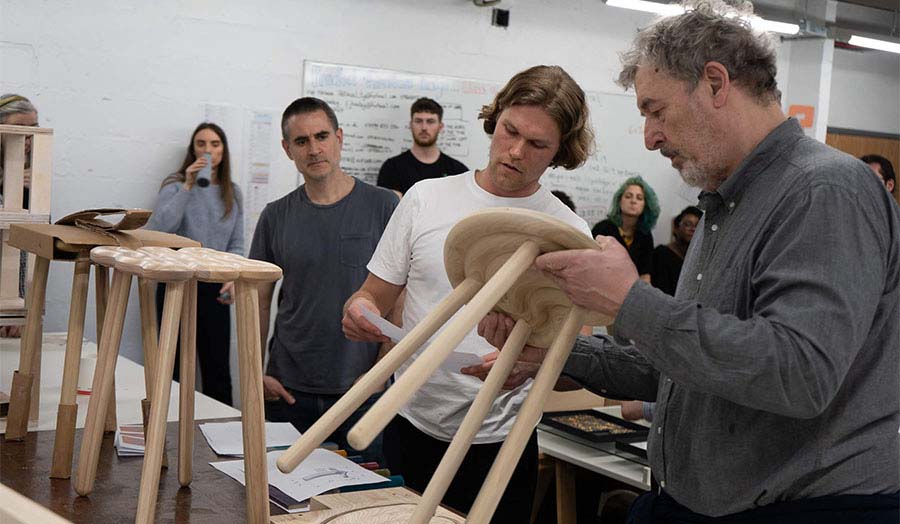
Projects are enhanced through industry mentorship with a range of brands and cultural organisations such as Vitra and Museum of the Home
Participate in London's creative scene
Opportunities to participate in some of London’s creative events
Collaboration with the School of Computing and Digital Media
Collaborative working with the School of Computing and Digital Media drawing on a wide range of knowledge and experience
Course details
In addition to the University's standard requirements, you should have:
- at least one A-level (or a minimum of 32 UCAS points from an equivalent Level 3 qualification, eg BTEC Subsidiary/National/ BTEC Extended Diploma)
- English language and Mathematics GCSEs at grade C/4 or above (or equivalent)
Accreditation of Prior Learning
Any university-level qualifications or relevant experience you gain prior to starting university could count towards your course at London Met. Find out more about applying for Accreditation of Prior Learning (APL).
English language requirements
To study a degree at London Met, you must be able to demonstrate proficiency in the English language. If you require a Student visa (previously Tier 4) you may need to provide the results of a Secure English Language Test (SELT) such as Academic IELTS. This course requires you to meet our standard requirements.
If you need (or wish) to improve your English before starting your degree, the University offers a Pre-sessional Academic English course to help you build your confidence and reach the level of English you require.
Qualification requirements for students applying from outside the UK
For international entry requirements, please visit your country-specific page for detailed information on accepted qualifications and grade requirements.
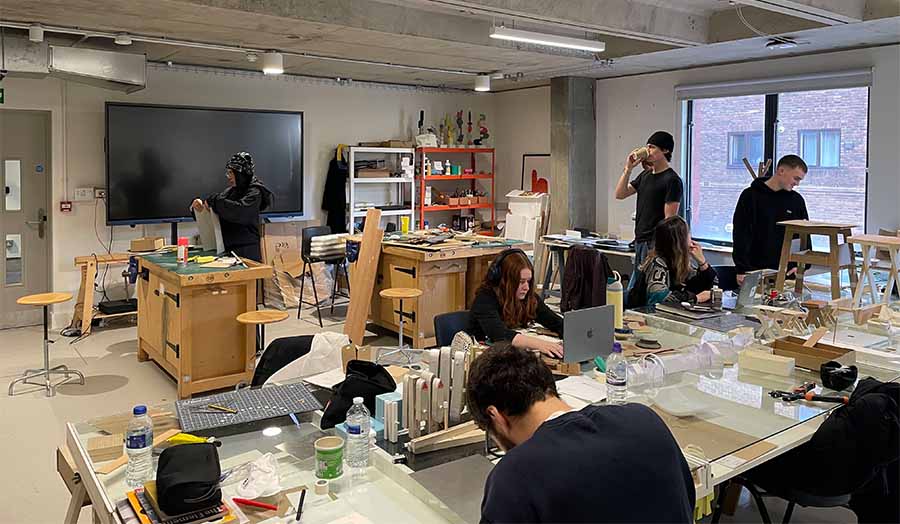
A variety of assessment methods are used throughout the course. These range from formative, summative, diagnostic, peer and self-assessment methods, through to studio-based work, workshops, and CAD and digital projects and exercises. Feedback is given throughout the course.
Graduates of the Product Design Engineering BEng will be well prepared for a wide range of careers across the creative, engineering, digital and technology sectors. The course develops a strong combination of technical engineering knowledge, creative design thinking, digital skills and practical problem-solving ability, allowing graduates to work on the design and development of innovative, user-focused products and systems.
Typical career routes may include roles such as Product Design Engineer, Product Designer, Computer-Aided Design Engineer, Manufacturing Engineer, Design Engineer, UX/UI Designer, Innovation Engineer, Prototyping Engineer, Human-Centred Design Specialist, Assistive Technology Designer, Robotics Product Developer, Smart Product Designer, Wearable Technology Developer, Medical and E-health Product Designer, Sustainability Design Engineer, Digital Fabrication Specialist, and Technology Consultant.
Graduates may find opportunities in sectors such as consumer electronics, healthcare technology, assistive technology, robotics, smart devices, sports equipment, gaming products, sustainable product development, manufacturing, digital design, start-ups, research and development, and creative technology industries.
The course also supports students who wish to develop their own product ideas or launch a business, particularly in areas such as smart products, app-connected devices, inclusive design, sustainable technologies and digital innovation. Through practical projects, collaborative work and the final-year major project, students will build a portfolio that demonstrates their ability to take ideas from concept through to prototype and evaluation.
Graduates will also be well placed to continue into further academic study, including an MSc, PhD or specialist professional training in areas such as product design engineering, robotics, artificial intelligence, user experience design, biomedical engineering, sustainable design, innovation management or advanced manufacturing.
If you study your undergraduate degree with us, as a graduate of London Met, you'll be entitled to a 20% discount on a postgraduate course if you continue your studies with us.
* exclusions apply
Please note, in addition to the tuition fee there may be additional costs for things like equipment, materials, printing, textbooks, trips or professional body fees.
Additionally, there may be other activities that are not formally part of your course and not required to complete your course, but which you may find helpful (for example, optional field trips). The costs of these are additional to your tuition fee and the fees set out above and will be notified when the activity is being arranged.
Discover Uni – key statistics about this course
Discover Uni is an official source of information about university and college courses across the UK. The widget below draws data from the corresponding course on the Discover Uni website, which is compiled from national surveys and data collected from universities and colleges. If a course is taught both full-time and part-time, information for each mode of study will be displayed here.
How to apply
If you're a UK applicant wanting to study full-time starting in September, you must apply via UCAS unless otherwise specified. If you're an international applicant wanting to study full-time, you can choose to apply via UCAS or directly to the University.
If you're applying for part-time study, you should apply directly to the University. If you require a Student visa, please be aware that you will not be able to study as a part-time student at undergraduate level.
When to apply
The University and Colleges Admissions Service (UCAS) accepts applications for full-time courses starting in September from one year before the start of the course. Our UCAS institution code is L68.
If you will be applying direct to the University you are advised to apply as early as possible as we will only be able to consider your application if there are places available on the course.
To find out when teaching for this degree will begin, as well as welcome week and any induction activities, view our academic term dates.











.jpg)