
Dr Ahmet Erdi Oztürk and Dr Sasha Raspopina discuss the implications of Turkish authorities targeting LGBTQ+ organisations and journalists
Date: 23 September 2026
Turkish authorities have detained dozens of LGBTQ+ activists and journalists, using accusations of obscenity to justify raids and arrests across the community.
Dr Ahmet Erdi Oztürk, a Senior Lecturer in Politics and International Relations at London Metropolitan University, said the attack on LGBTQ+ organisations should be seen as a wider attempt to frame political issues as matters of ‘security’.
And Dr Sasha Raspopina, a lecturer in journalism and digital media, compared the recent crackdown with Russian anti-LGBTQ+ policies.
Both academics share their thoughts on the recent developments in Turkey.
‘Pushing the boundaries of authoritarian control’
“What we are seeing should be understood not as an isolated crackdown on LGBTQ+ organisations, but as part of a much broader process through which political and social opposition in Turkey has increasingly been securitised,” said Dr Oztürk.
Turkey’s leader Recep Tayyip Erdoğan has been in power for more than two decades and some believe that this crackdown is the first step in his re-election campaign as the country approaches its next electoral cycle.
“In my view, Erdoğan appears to be pushing the boundaries of authoritarian control in an effort to create a quieter and more risk-averse public sphere,” said Dr Oztürk. “The significance therefore goes far beyond the LGBTQ+ community.”
The ‘My Family is Safe’ operation
The government’s current ‘My Family is Safe’ operation has involved:
- Raids across multiple provinces
- Arrests and pre-trial detention
- Investigations into associations and businesses
- Restrictions on online content and the detention of protesters
“The authorities have justified these measures through the language of protecting children, public morality and the family – while rights organisations and European institutions have described the operation as a serious escalation against civil society and fundamental freedoms,” added Dr Oztürk.
“The broader concern is that journalists, activists, civil society organisations and opposition actors face growing uncertainty over whether ordinary political activity may suddenly be reframed as a security, morality or criminal issue.
“Elections may remain competitive, but the political field can still become progressively more asymmetric if the space for organisation, communication and mobilisation continues to narrow.”
Dr Sasha Raspopina, lecturer in journalism at London Met, said:
“Turkey’s current crackdown on LGBTQ+ people and organisations has striking parallels with Russia’s anti-LGBTQ+ policies, particularly in the way restrictions are framed as protecting children and ‘traditional’ families.”
She said the recent operation has been presented by authorities in these terms, with broadly defined obscenity provisions being used against LGBTQ+ organisations, activists and venues.
“This is a clear trend in conservative and increasingly illiberal political contexts that the language of protecting children, families and ‘traditional values’ can position the state as the defender of social order while casting LGBTQ+ people as a threat to it.”
Journalist arrest
Tuğba Tekerek, a journalist, was arrested at her home in Istanbul and taken to Ankara for questioning by prosecutors, after publishing a piece on the LGBTQ+ community in the neighbouring country of Georgia.
On Tekerek’s arrest, Dr Raspopina said: “This is particularly significant because it shows how such restrictions can extend beyond LGBTQ+ organisations to journalism about LGBTQ+ issues.
“Tekerek was charged with obscenity over a single article about LGBTQ+ rights in Georgia. This case illustrates how dissemination of information about marginalised communities can itself become subject to state intervention.”
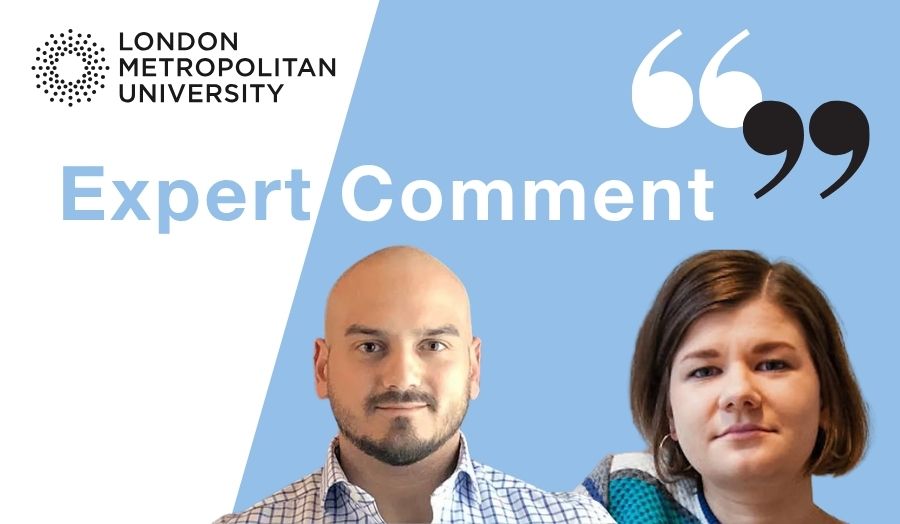
Dr Öztürk is the author of more than 20 peer-review journal articles, numerous policy reports, opinion pieces and co-editor of four special issues on religion and politics and Turkish politics.
Dr Raspopina is a lecturer in journalism and started her career as a journalist and producer at outlets including CBS News, the Guardian and the Economist, before switching to academia to write her PhD thesis on Russian public diplomacy.