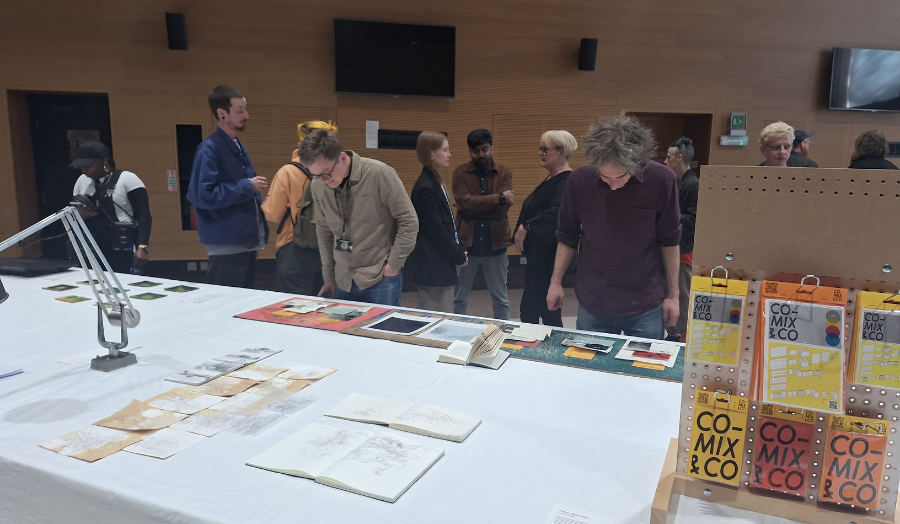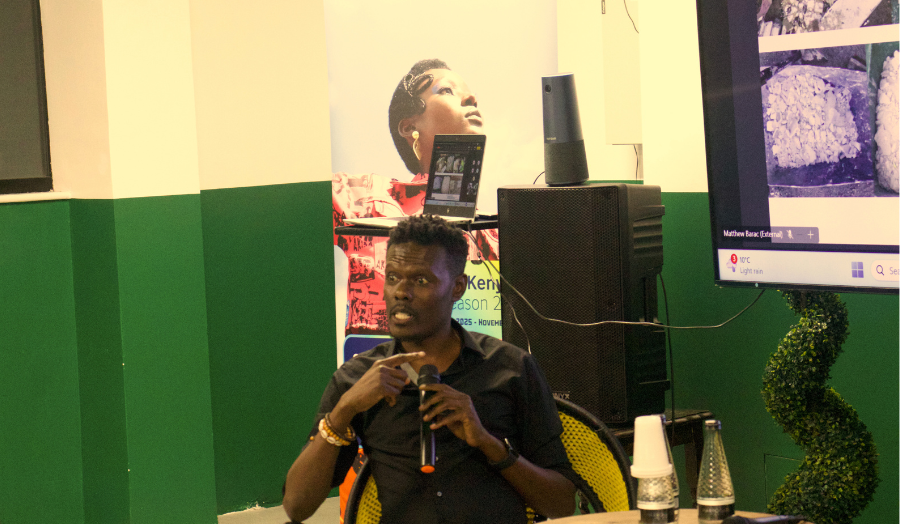
Hosted by AAD Research under the auspices of CREATURE and CUBE, this event celebrated postgraduate research across the School of Art, Architecture & Design (AAD).
The Postgraduate Research (PGR) programme at AAD leads to either a PhD or MPhil degree. Students pursue a range of research approaches, including a traditional 'big book' thesis, a PhD by prior output, or practice-based research. Practice-based routes may include research-by-design, creative practices (including painting, writing, or performance), practice-led research, or professional practice as a source of insight, leading to outcomes such as artefacts, exhibitions, publications, or policies.
This year’s Symposium featured short presentations from current PGR students affiliated with CUBE, CREATURE, or CLiOH. It offered a supportive space for students and staff to discuss innovative research in progress. The event was closed to the public with no external registration, and was intended as a forum for exchange rather than a public showcase.
Introduction
The 2026 PGR Symposium brought together postgraduate researchers across Art, Design and Architecture in a supportive, developmental forum structured around three themed panels. Conceived and organised collaboratively between staff and students, the event foregrounded student leadership (through co‑chairing) and encouraged presentation of work‑in‑progress, methodological reflection, and interdisciplinary dialogue.
With around 18 participants in person and additional online attendees, the symposium successfully combined in‑room discussion with hybrid participation. The ten-minute presentation format fostered concise articulation of complex doctoral research, while panel discussions enabled cross-disciplinary exchange. Presentations spanned theoretical, practice-based, and applied research, demonstrating a rich diversity of approaches—from literary analysis and visual culture to environmental design, participatory practice, and architectural theory.
Panel Summaries: Presentations
Panel 1 – Art
1. Seyi Sandra David
David’s research examines how postcolonial women writers use historical fiction to challenge omissions within colonial archives. Combining literary theory with creative practice, she argues that fictional narratives can recover suppressed voices—particularly those of women in the Benin Kingdom following the 1897 British invasion. The project links archival silences to ongoing structural inequalities, including contemporary trafficking patterns, proposing an “unbroken chain of harm.” A novel component integrates scholarly research with creative writing, positioning fiction as a method of historiographic intervention.
2. Geoff Lee
Lee’s project explores a “pragmatical” methodology grounded in studio practice, using a “rule of three” framework (what, why, how) to structure artistic enquiry. Situated within drawing and ceramic practice, the research proposes that analogue processes retain critical value within contemporary contexts shaped by digital and AI technologies. His approach integrates pedagogy, studio experimentation and theoretical reflection, demonstrating how simplification strategies can generate both creative and epistemological clarity across different learning contexts.
3. Jason Dy
Dy’s autoethnographic study investigates contemporary Christian art in the Philippines, focusing on relationality, community engagement, and spiritual practice. Drawing on a series of participatory art projects across diverse contexts, he reflects on tensions between sacred and secular, art and community, and institutional versus informal spaces. His methodology combines lived experience, archival documentation, and reflective practice, positioning artistic production as both research method and subject. The project foregrounds care, ritual, and embodied engagement as central to contemporary religious art practice.
Panel 2 – Design
4. Hoyee Tse
Tse’s research analyses the visual culture of the 2019–20 Hong Kong protests, focusing on activist imagery as a tool of identity formation and political communication. Working with a large corpus of digital images (c.130,000), she reflects critically on methodological challenges, including data volume, categorisation, translation, and the ethics of interpretation. The study highlights tensions between global and local visual languages (“glocal” aesthetics) and raises questions about how researchers can analyse ephemeral, politically sensitive materials without distorting activist intent.
5. Jodie Hatton
Hatton proposes a circular design system linking post-consumer wool carpets from the hospitality sector to soil regeneration in UK agriculture. Addressing waste, sustainability, and environmental policy, the project combines laboratory testing, field trials, and stakeholder interviews to evaluate wool carpet as a soil amendment. By connecting material flows across sectors, the research exemplifies regenerative design thinking, aiming to align industry waste practices with agricultural sustainability and environmental objectives.
6. Noorisha Singh
Singh’s project explores participatory design as a tool for preserving tangible and intangible cultural heritage within the Newar diaspora in the UK. Framed through the concept of falcha (a communal gathering space), the research emphasises co-creation, collective memory, and identity formation. Using workshops, storytelling, and design anthropology, she aims to develop a framework for community-led heritage preservation. The work highlights challenges of cultural continuity in diasporic contexts and positions design as a mediator between generations and cultures.
Panel 3 – Architecture
7. Michael Badu
Badu’s research reinterprets modern architectural historiography through a critical theoretical lens, focusing on Adolf Loos and the design of a house for Josephine Baker. Challenging dominant narratives of modernism, he critiques Hegelian models of progress and argues for alternative readings grounded in subjectivity and marginalised perspectives. Drawing on philosophy, critical theory and literary parallels, the project interrogates how architecture has engaged (or failed to engage) with Black subjectivity, revealing broader tensions between historical narratives and lived realities.
8. Nathan Miller
Miller investigates how communities might develop financial infrastructures to support “the commons” in East London. Combining case studies, data analysis and stakeholder interviews, the research identifies gaps in current funding models for community-led projects. His work distinguishes between “foundational” and “institutional” projects, analysing how resource access, governance, and funding mechanisms intersect. Emphasising practice-based insight, the project proposes new collective funding strategies for sustainable community asset ownership.
9. Sam Salehi
Salehi’s research examines how material culture, domestic space, and neighbourhood environments shape identity and belonging among the Iranian diaspora in North London (“Little Persia”). Combining architectural analysis with ethnographic methods, the project explores how migrants adapt domestic spaces to reflect cultural traditions. It situates personal and intergenerational migration histories within broader diaspora theory, highlighting how everyday objects and spatial practices mediate identity, memory, and belonging in multicultural urban contexts.
10. Daria Myerscough
Myerscough’s study investigates the redevelopment of a Nazi flak tower in Hamburg into a contemporary mixed-use complex. Through fieldwork, interviews and theoretical analysis, she explores how commercial redevelopment can catalyse new forms of remembrance. The project engages with concepts of “difficult heritage,” arguing that adaptive reuse can generate productive tensions between memorialisation and contemporary use. It demonstrates how contested sites can become dynamic spaces for public engagement with history rather than static monuments.
Key Insights and Discussion Points
Several recurring themes emerged across the symposium:
- Managing complexity in doctoral research:
Many projects engage large-scale, multi-layered problems (historical, social, environmental). Discussion emphasised the challenge of framing research questions and balancing scope with clarity. - Ethics and positionality:
Ethical considerations were central, particularly in relation to sensitive histories (colonialism, conflict), community engagement, and researcher subjectivity. Several presenters reflected on negotiating insider/outsider perspectives and the implications for interpretation. - Practice-based and embedded research:
A strong presence of practitioner-led research highlighted the value—and challenge—of integrating practice and academic analysis. Participants discussed how lived experience informs methodology and ethical decision-making. - Data and methodology challenges:
Projects involving large or complex datasets (e.g. Tse’s visual archive) raised methodological questions about analysis, categorisation, and use of digital tools (including AI). - Interdisciplinary exchange:
The panel structure revealed productive overlaps between disciplines, particularly around themes of identity, materiality, memory, and community.
Range, Context and Methodological Diversity
The symposium demonstrated a notably wide spectrum of research approaches:
- Theoretical and critical research:
(e.g. Badu, David) combining philosophical frameworks with historical and cultural analysis. - Practice-led and creative research:
(e.g. Dy, Lee, Singh) integrating studio work, artistic production, and participatory methods. - Applied and systems-oriented research:
(e.g. Hatton, Miller) addressing environmental sustainability, policy, and community infrastructure. - Ethnographic and autoethnographic approaches:
(e.g. Dy, Salehi, Singh) foregrounding lived experience and community engagement. - Hybrid methodologies:
Many projects combined qualitative, quantitative and speculative methods, reflecting contemporary trends in interdisciplinary doctoral research.
Geographically and culturally, the work extended beyond the UK to include Nigeria, Hong Kong, the Philippines, Nepal, Iran, and Germany, situating local research within global contexts.
Conclusion
The 2026 PGR Symposium successfully showcased the breadth and ambition of postgraduate research across the School of Art, Architecture and Design. The event fostered an open, supportive environment in which early-stage and advanced doctoral researchers could share work, test ideas, and engage critically with peers.
The range of topics, methodologies, and cultural contexts reflects a vibrant and intellectually ambitious research community. While many projects grapple with complexity and scope, this diversity is also a strength, demonstrating the capacity of PGR research to address pressing global and societal challenges through interdisciplinary, practice-led, and critically engaged approaches.
The event was organised by Matthew Barac (PGR Leader AAD) with a Working Group including students Alex Banister Fletcher, Noorisha Singh, Seyi Sandra David, Nathan Miller and supervisors Gina Pierce, Lewis Jones, and Rachal Bradley .
Details
| Date/time |
Wednesday, 13 May 2026 2.00pm - 7.00pm |
|---|---|
| Book ticket | Event ended |
| Location |
Online/In person
|