
Legislation to allow 16- and 17-year-olds to vote at the next general election began its journey through Parliament in early 2026. This will be the first change in 57 years. A team of UK scholars, led by Professor Alistair Ross at London Metropolitan University, are exploring what young people think about this proposal, and asking what they need to prepare themselves for this change.
The research team started organising deliberative discussions with small groups of 14- to 15-year-olds in 120 schools across the UK in late September 2025, exploring how young people consider the proposed changes. By March 2026 the team completed nearly all their data collection in England and Wales, with Scotland and Northern Ireland being surveyed over the early summer. Some of the provisional findings – based on about 95% of some of the England and Wales data – began to emerge in April 2026.
This project will provide valuable information about how students on the threshold of becoming voters think about how they will engage in the democratic process. Backed by the Electoral Commission UK, the research team are establishing the extent of young people’s understanding of how elections work, and whether and how they think they might participate. The project findings will be useful to the electoral officers in each constituency; the politicians and candidates of the major parties; the schools, colleges and teachers of all young people between 12 and 18; parents and other family members – and perhaps above all, to the young people themselves.
- Project contact: Alistair Ross
More information
The project intends to discover young people’s views of the changes, and to explore their responses to being given the vote. Discussing their reactions to the change – and exploring the implications for the need to prepare for the change – reveals much about the state of political knowledge of these potential voters.
The team are working with Year 10 students (all becoming 15 in the 2025/26 academic year), because they will become the first cohort to become 16-year-old voters.
The legislation to lower the voting age to 16 began its passage through Parliament in early 2026, and is expected to become law before the end of May 2026. Research led by London Metropolitan University is providing up-to-date information about how young people across the UK who will become new voters understand democratic engagement and the prospect of being first-time voters.
The Representation of the People Bill, introduced to Parliament on 12 February 2026, proposes allowing 16- and 17-year-olds to vote at the next general election. The government believes that lowering the voting age will help engage young people and ensure their voices are heard.
This is a major change in the composition of the UK electorate – the first since the 1969 reduction in the voting age from 21 to 18. The electorate has expanded on seven different occasions between 1832 and 1969, transforming from a tiny, property-owning male elite in the early 19th century to a universal, diverse democracy – but this has now not changed in the past 57 years.
The UK extension of the franchise to 18-year-olds was followed by many other European states in the decade that followed 1969. Since then, Austria has been the only significant state to further lower the voting age to 16. It is thought that the UK’s example will be followed by many other European states.
Voting at 16 first operated in the UK in the Scottish 2014 Independence Referendum, and then for the Scottish Parliament and local government elections from 2015; and in Wales for the Senedd Cymru and local government elections since 2020.
In 80-90 minute long discussions with a member of the research team, groups of about six young people talk freely with each other about the implications of being voters: for some, the excitement of having their views being considered as young adults; for others, their apprehensions about the responsibilities of this new role; and for nearly all of them the realisation that they need to find out more about the voting system and the choices before them.
The research team uses open-ended questioning to let the participants explore these challenges with each other, using their own vocabulary, rather than those of the researchers (or of politicians). They listen and respond to each other as they discuss values, participation and what their voice might contribute to society. The research team learn about their values and aspirations, and their concerns and apprehension.
This methodology has been developed by Professor Alistair Ross in his 2019 study of young Europeans’ political identities. In the early 2020s he teamed up with Dr Tom Loughran (Lancaster University), to develop a mixed-methods approach to this data, in an Erasmus+ Jean Monnet project on Young People’s Understanding of Values. Some other members of the team come from that earlier project; others from the Political Studies Association’s Young People’s Politics Group.
Mixed-methods approaches combine qualitative and quantitative methodologies. The research team use deliberative discussions to encourage small groups of young people to discuss their ideas in a way that lets them largely set their own agenda, using the points that they raise to discover their reactions, wishes, and feelings about the changes. This allows the team to often describe significant trends by quoting young peoples’ own words.
Much of this data is also coded, and can then be used in quantitative analysis. The team also collect quantitative data from questionnaires completed during the discussions, tracking possible voting preferences, information sources and specific reasons for voting.
- Many participants have a high level of intention to vote, but are worried about their lack of knowledge about the parties, and are apprehensive about the responsibility of voting
- Most are aware of the proposal to lower the voting age, and welcome the opportunity to make their voice heard
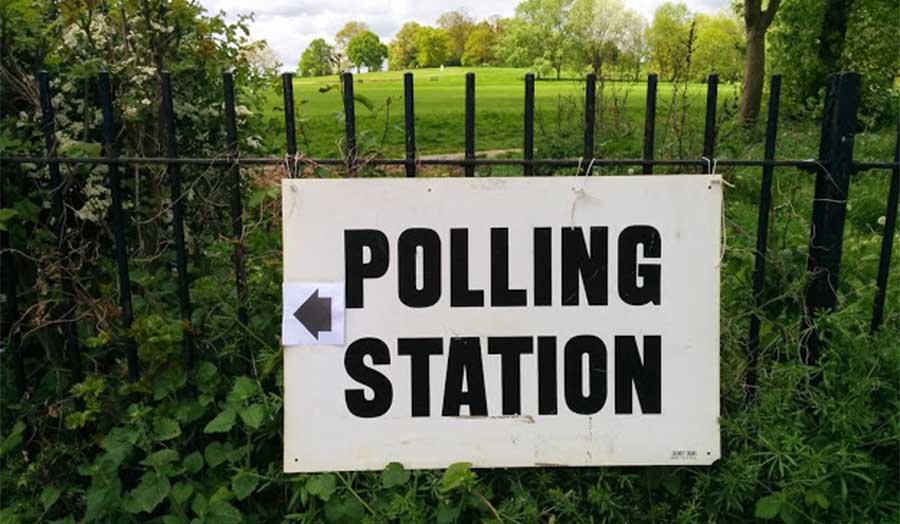
- There is limited understanding about the processes of voter registration, ID requirements, and polling stations
- There is also a heavy reliance on information from social media, but also a lack of trust in the accuracy of much of this
We are an interdisciplinary group of researchers from educational studies and political studies, with a strong interest in young people’s political engagement.
- Alistair Ross, London Metropolitan University: research lead for qualitative work and general policy
- Tom Loughran, Lancaster University: lead for quantitative analysis
- Julius Elster, London Metropolitan University
- Lesley Emerson, Queens University Belfast
- Henry Maitles, University of the West of Scotland
- Andrew Mycock, Y-PERN
- Christoper Pich, University of Nottingham
- Sarah Whitehouse, University of the West of England
- Pen Williams, University of Bristol
Alistair, Tom and Andrew are all members of the Academic Advisory Group on Vote at 16 and Democratic Government of The Ministry of Housing, Communities and Local Government.