
Andrew's story
From humble beginnings in north Manchester to interviewing the 38th president of the USA, international relations and politics lecturer Andrew credits much of his success to learning from his extraordinary, inspiring students. He’s long been fascinated by American politics and is adamant that open discussion and compromise should be a key part of university life, especially when you’re finding out who you are. His family life has helped to shape his inclusive values, whether that’s respecting personal pronouns to learning from others in a safe space. Graduation is the highlight of the year for him – he believes that young people really can change the world. His graduation advice: “Don’t run, look at the crowd, because you deserve every minute of that.”
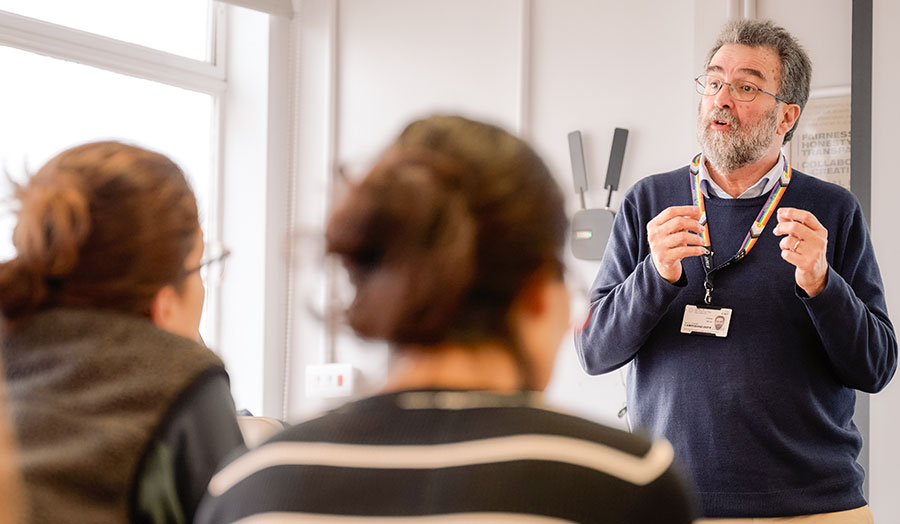
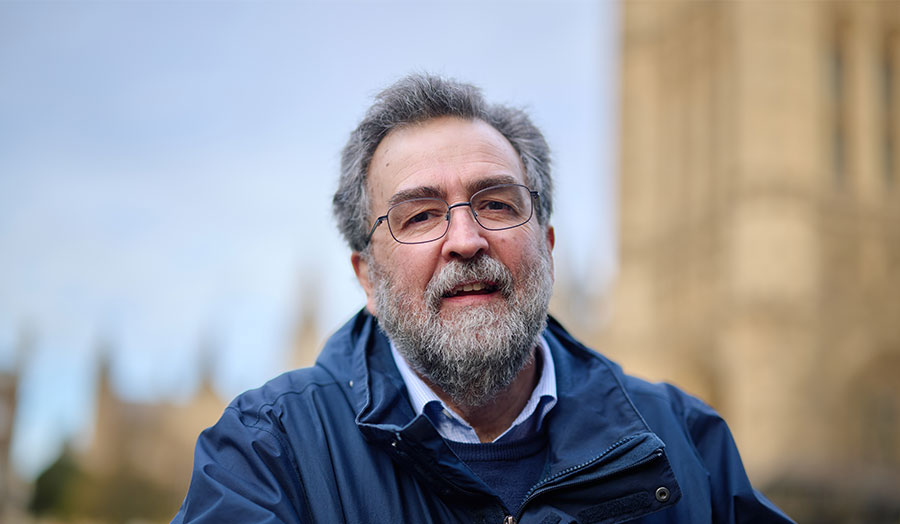
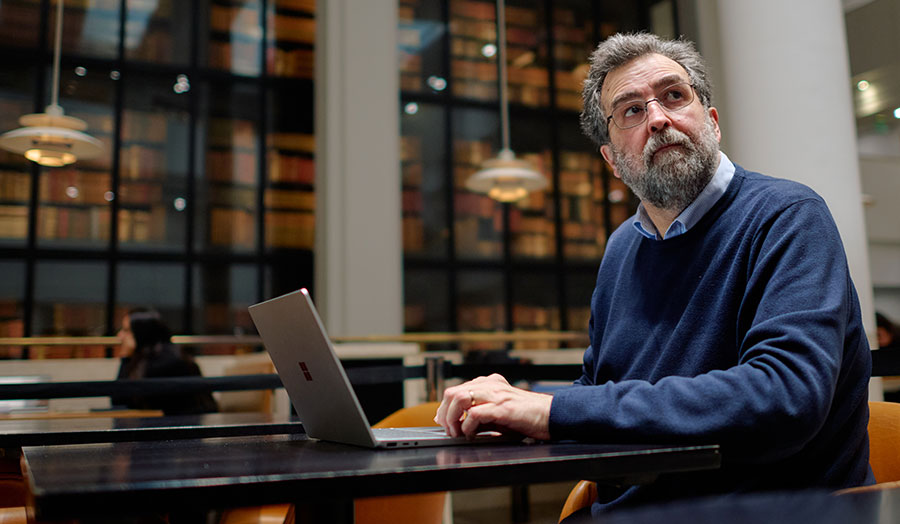
I was sat in Ann Arbor, Michigan, interviewing the 38th president of the United States. I can remember thinking, why does this man keep calling me sir? I'm just this poor kid from north Manchester. It was an extraordinary thing, but I realised I'd found my place at London Met.
I was born into what my kids call poverty. I lived with my mum in a rented terrace house. We had no hot water, no heating outside. I wasn't particularly bright; I was much more interested in playing in the factories they were pulling down and swimming in the canal.
I didn't have a clue what a university was. I just knew it was something that would enable you to progress in terms of education, and it was an opportunity that my parents wanted me to have.
I used to hitchhike, and an American Studies teacher picked me up for an hour's journey, persuading me to do American Studies. I suddenly found myself learning about Martin Luther King, Rosa Parks, William EB Du Bois and reading Walt Whitman's and Emily Dickinson's poetry. American politics really grabbed me. I got to the end of my time there and thought, 'I'd quite like to do this.'
I got a place to do a PhD, but couldn't get the money. So I moved into charities. I worked briefly as a volunteer at the Band Aid Trust. I then worked with an inner city group with young people at risk. I then spent two fabulous years at Great Ormond Street Children's Hospital. I then worked for Water Aid – an international NGO.
One day, a letter turned up from an old academic, five years after I'd left university, saying they'd been asked to put forward a candidate for a PhD scholarship. Would I be interested? To this day, I don't know how they tracked me down. Two months later, I was being interviewed by the person who became my PhD supervisor. A year later, I was interviewing the 38th president of the United States.
I love the students and I love the people I work with. I work with really committed people who are absolutely focused on the values of London Met – education for social justice, decolonising, supporting students way beyond what I hear from some other institutions.
I think every one of our students has a story to tell that needs to be listened to. And that's one of the extraordinary things about London Met; this University creates an environment where students bring those stories into the classroom. They will add something that's just utterly unique, and it can change a classroom instantly.
I have had students talk about very personal things in the classroom that will bring the subject to life. Maybe I'm naive, but I'm a great believer that young people can change the world, and I think maybe we need more of that. To me it's really, really important that people are able to be who they are. I always get really emotional when I see students achieve things when I know they've overcome the most horrendous journeys. That's why I love London Met. You can be in a classroom with 25 people and every one of them will be from somewhere in the world, and they will all bring something electrifying to that room.
Society changes, values change. When I was born, most African-Americans couldn't vote. You could go to prison if you were gay. I have lived for 61 years, and during that time, there have been profound social changes in the UK, in the US, that we should all celebrate and cherish. University helped me find out really who I was, and what I was going to stand up for. London Met does that for our students.
We live in a world where people are becoming polarised and siloed. It's easy to never come across any views that might challenge yours, which I find very worrying. A university should be a place where there is an openness about ideas, where people can discuss and address those issues based on facts, rather than just opinions. That's one of the things that I love about London Met, in conversations and in hearing people talk to each other. Being with your students is like being at the United Nations!
I absolutely love graduation day. It's the most wonderful celebration of what people have achieved. I always say to students: when you walk across that stage, don't run. Look at the crowd, because you deserve every minute of that.
Students are sometimes seen as lazy. They're not. Many of our students have families. Many of them are carers. Many of them work really hard just to earn enough money to survive. They're incredibly committed, resilient, funny, challenging, life-affirming. They constantly make me realise that being in a classroom is a pleasure. They're just the most inspiring, amazing people.
London Met's at the forefront of education in terms of its commitment to education for social justice. I go to equality, diversity and inclusion conferences and people will go, 'we're about to do this or that,' And I'm sitting there thinking, 'yep, done that.' We don't shout loudly enough about what we do.
We are committed totally to students in a way that other institutions may not be. That comes back to us wanting to see students reflected, to feel they have a place, and achieve their personal best.
I love the buzz and the diversity of London. We take students on tours of the American Embassy, the British Library and the Old Bailey. We also take students to the Mithraem, a Roman temple underneath a finance building. You can do lots of things in London for free.
I don't like London's poverty. I don't like the way that some people are left behind. That's wrong. London Met tries to actually help with those things. We're doing a lot of work with some of the poorest in the community, working with the local authorities and migrant groups to help tackle these challenges.
London Met has given me a lifetime of learning – and helped me to make a difference.
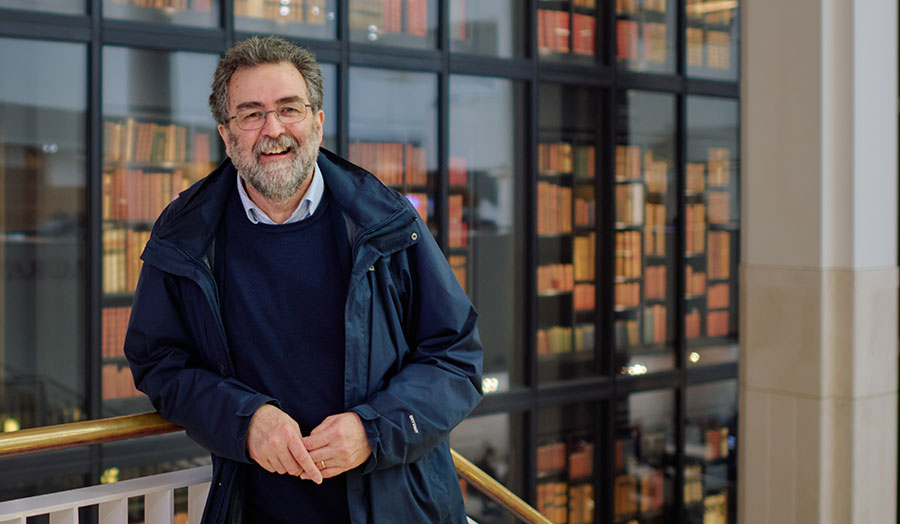
"I have had students talk about very personal things in the classroom that will bring the subject to life. Maybe I'm naive, but I'm a great believer that young people can change the world, and I think maybe we need more of that. To me it's really, really important that people are able to be who they are."
Read more about our International Relations BA, our International Relations and Politics BA, our International Relations MA and our International Relations Extended Master's MA


.jpg)
.jpg)
.jpg)

.jpg)