
In Mexico, undocumented migrants experience very high rates of impunity for crimes against their integrity in the context of hasty migration policies and practices that aim to contain the arrival of undocumented migrants to the US, often in violation of their rights (Le Clercq Ortega et al. 2023, Black and Viales Mora 2021). In Mexico, which often responds to the needs of the US, we anticipate the arbitrary detention and extortion by the authorities to be accompanied by a significant increase in military involvement in migration tasks, including the deployment of large numbers of troops to the US-Mexico border (Chishti and Putzel-Kavanaugh 2025).
Approximately 31% of undocumented migrants travelling north through Mexico are women and girls (IOM 2024). While all types of people are exposed to violent dynamics during their journey through Mexico, migrant women experience specific forms of violence and gendered discrimination at the hands of multiple actors, including migration guards (known as migra), workers in state detention centres and migrant shelters, and bureaucrats in the INM, among others, who are mostly men (López et al. 2024; Estévez 2017; Fernández de la Reguera 2020). The slow and changing bureaucracy, combined with the negligence and hostility of state officials, exacerbates women’s sense of entrapment and hopelessness. This article shows that state violence and neglect increase the dangers women face on their journey and reduce their chances of overcoming the male chauvinist values they have learnt (López et al, 2024).
In this new article, Professor María López explores institutional machismo as a set of exclusionary and violent norms and practices against undocumented migrant women by, among others, corrupt and negligent state officials, migration agents and shelter workers. María draws on concepts of male chauvinism (Gutmann 2007; Fuller 2012; Castañeda 2020), institutional violence in the region (Pita 2017), state violence against undocumented migrants in Mexico (IMUMI 2022), feminicidal violence (Lagarde 2006), and data collected in 2023 from migrant women and workers at a migrant shelter in Iztapalapa (Mexico City).
Although some of the women interviewed for this study did not overcome the difficulties they experienced, partly due to the negligence and hostility of the authorities, several women showed through their narratives of the journey how they had begun to strengthen their agency and articulate a more egalitarian understanding of gender roles. In this regard, she argues that for many women, the migration process becomes a transformative experience from which they emerge empowered and autonomous.
This special issue was edited by Alicia Castillo Villanueva and Arpita Chakraborty. María is grateful to them for their support throughout the editorial process and to the reviewers for their careful editing and insightful contributions to her paper.
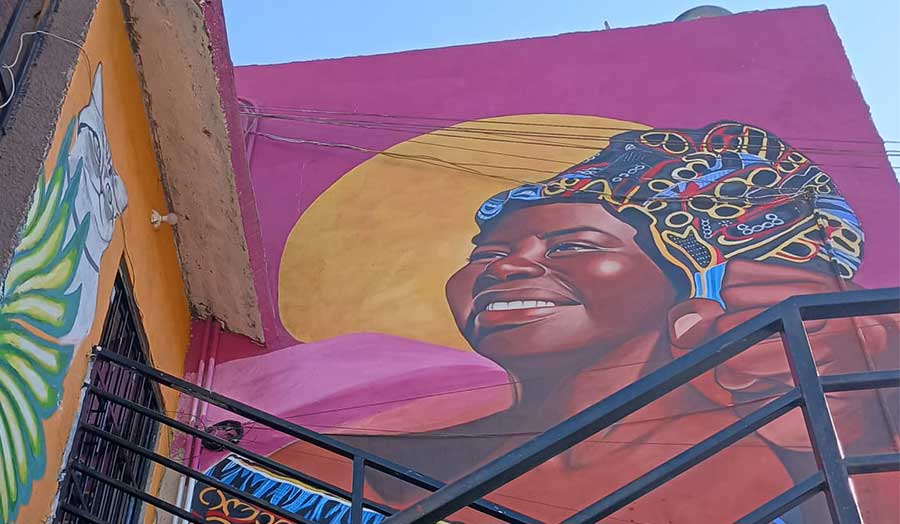
Image credit: Professor María López, 2024