
Apply for this course
Please select when you would like to start:
Use the apply button to begin your application.
If you require a Student visa and wish to study a postgraduate course on a part-time basis, please read our how to apply information for international students to ensure you have all the details you need about the application process.
Why study this course?
Our Building Surveying MSc course is designed to provide you with the expertise, knowledge and skills required to embark on a career within the built environment, as a Building Surveyor or one of the many related professions.
Designed as a conversion course, we welcome applicants without an undergraduate degree in property or construction-related fields, and no prior work experience is required. This building surveying master's will allow you to take your first official steps within the building surveying career path.
Building surveyors carry out many important roles within the property and construction industry and their skills are widely respected. This course will give you a sound knowledge of several areas including construction technology, sustainability in the built environment, building adaption and refurbishment and construction contracts and contract administration.
You'll develop a comprehensive understanding of the duties and skills required of a building surveyor and will be well placed to join this diverse and fulfilling body of surveying professionals, on completion of this course.
Benefit from authentic industry interactions
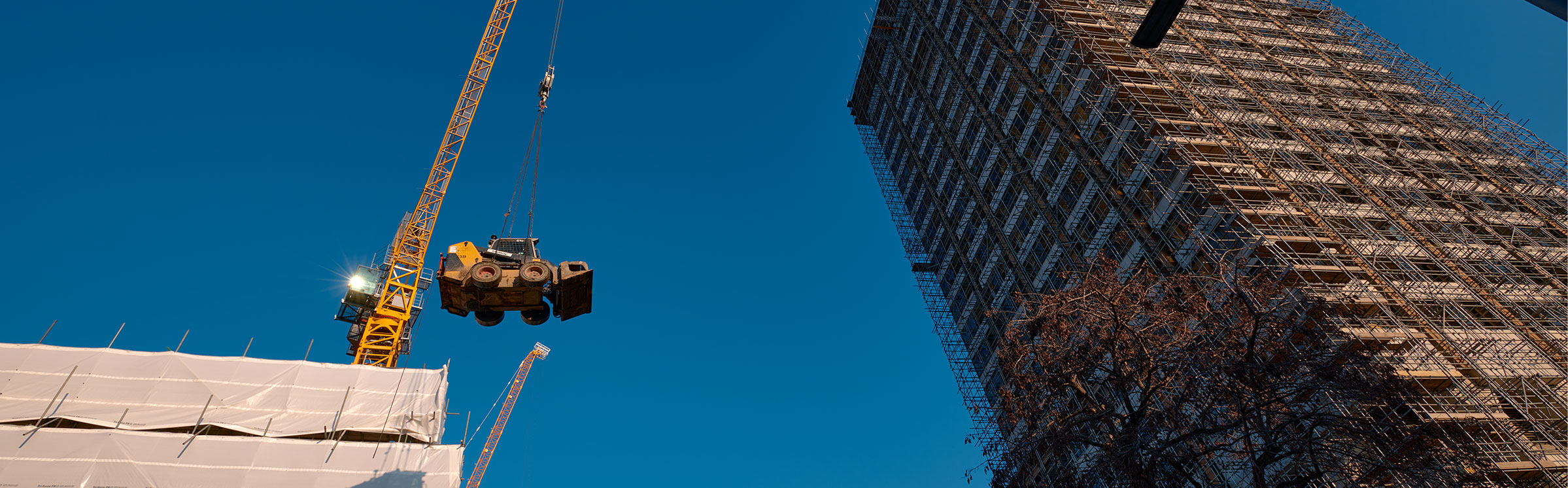
Experience the challenges and opportunities a career within construction has to offer as you visit live construction projects and engage in industry-inspired assignments
Stand out in the job market
Our curriculum is designed to include strategically embedded career development skills to set you apart from the competition
Learn from industry professionals
You'll have the chance to engage with real industry professionals, from practising surveyors and commercial managers to project managers, as well as receiving expert advice from your course academics and practitioners
Course modules
The modules listed below are for the academic year 2025/26 and represent the course modules at this time. Modules and module details (including, but not limited to, location and time) are subject to change over time.
Year modules
Applied Research Project
This module currently runs:all year (September start) - Thursday afternoon
(core, 60 credits)
The module will provide you with the opportunity to undertake an in-depth study of a subject that is of personal and academic interest within your field. You should focus your research on a topic or problem relevant to your current programme of study, based on an academic subject of interest, your current work practice, or recent work experience or placement. The submission will take the form of a dissertation.
You are encouraged to develop your critical thinking skills and undertake rigorous, theoretically-informed research. The module will deepen your understanding of the links between conceptual issues, the subject area, and research methods.
The module will introduce you to research methods and strategies that are appropriate to your area of study. It will provide you with experience in the planning and implementation of a research project, as well as the subsequent writing up of research findings in a dissertation, while encouraging you to engage in critical thinking throughout the process.
Read full detailsApplied Research Project
This module currently runs:spring semester - Thursday afternoon
summer studies
(core, 20 credits)
This module will introduce you to research methods and strategies that are appropriate to your area of study. It will provide you with experience in the planning and implementation of a research project prior to taking the corresponding module CO7P00A in the Autumn semester, in which you will complete and write up your research findings in a dissertation.
You are encouraged to develop critical thinking and undertake rigorous and theoretically informed research. The module will develop your understanding of the links between conceptual issues, subject area, and research methods.
Read full detailsApplied Research Project
This module currently runs:autumn semester
(core, 40 credits)
The module follows on from CO7P00S and will provide students with the opportunity to undertake an in-depth study of a subject that is of personal interest in your field. You should focus your research upon a topic or problem relevant to your current programme of study and based upon an academic subject of interest, your current work practice, or recent work experience or placement. The submission will take the form of a dissertation.
You are encouraged to develop your critical thinking and undertake rigorous and theoretically informed research. The module will allow you to apply your learning from CO7P00S and compose an in-depth critical analysis on a subject that is of interest to you in the Built Environment. The final submission is a dissertation.
Throughout the two semesters of this module, students will be supported by their supervisor with whom they can discuss their ideas, seek advice, and gain valuable formative feedback.
Read full detailsBuilding Adaptation and Refurbishment
This module currently runs:spring semesterafternoon
(core, 20 credits)
With the increasing urgency of the climate emergency, there is a critical need to reduce carbon emissions from the built environment to meet net-zero targets. Building Surveyors play a vital role in this effort, as experts in the refurbishment, adaptation, and retrofitting of existing buildings to reduce operational carbon emissions and mitigate the significant embodied carbon released from demolishing older structures and constructing new ones.
Refurbishment, rather than demolition, helps preserve the heritage of an area and is often essential for historically-significant buildings. The adaptation and refurbishment of buildings also requires careful consideration of design, building regulations, planning requirements, and the need to ensure the integrity of existing structures while retaining long-term value.
This module will introduce you to the concepts of refurbishment, adaptation, and retrofitting, equipping you with the skills necessary to effectively carry out such projects. Through case studies and the latest guidance, you will explore the practicalities of refurbishment and the environmental benefits of these approaches.
By completion of this module, you will have developed a comprehensive understanding of refurbishment, adaptation, and retrofitting processes, and be able to apply this knowledge to real-world construction projects. You will be equipped to assess the carbon footprint of existing buildings, understand regulatory frameworks, and contribute to the transition to net-zero standards.
Read full detailsBuilding Surveying Practice
This module currently runs:spring semester - Thursday morning
(core, 20 credits)
Building Surveying is a broad field that focuses primarily on the management, assessment, and maintenance of existing buildings rather than new constructions. The Building Surveying Practice module is designed to equip you with the advanced skills needed to excel in this area, including the ability to identify different construction types, recognise defects, and understand their underlying causes.
You will gain a thorough understanding of the historical significance of buildings and how to approach their conservation with sensitivity and care. Critical thinking and problem-solving are integral to the course as you will be taught how to gather relevant evidence and provide well-reasoned, practical advice. The module will also delve into the legal and regulatory aspects of Building Surveying, ensuring you are prepared to navigate complex, real-world situations effectively.
A strong emphasis will be placed on communication, enabling you to present your findings and recommendations clearly and confidently to clients, contractors, and colleagues.
By the end of the module, you will have developed the expertise and practical knowledge to offer informed, actionable solutions to common challenges in Building Surveying. The use of case studies and industry engagement throughout the course will ensure that you gain a comprehensive understanding of the role and responsibilities of a Building Surveyor, preparing you to be a valuable asset to any Surveying Practice or related profession.
Read full detailsBuilt Environment Economics and Finance
This module currently runs:autumn semester - Thursday afternoon
(core, 20 credits)
This module examines the Built Environment sector, markets, and organisations at a local, national, and international level, as well as the impact of government economic policy and globalisation on the sector. It examines the principles underlying the relationship between economic theory and the Built Environment sector. You will study how the sector makes effective use of resources and how, in the move towards decarbonising our economies, the environment can be afforded protection through embedding sustainable principles in our practice.
The relationship between business planning activities and corporate objectives will be explored to gain an understanding of the essential elements of a business plan and methods for financial benchmarking. Following on from this, the module will explore accounting concepts and principles and you will gain an understanding of the format of management and company accounts as well as how they are prepared, including balance sheets, profit and loss, and cashflow statements.
Throughout the module, you will consider how we can leverage big data for businesses’ decision making in the Built Environment. With the abundance of available data and analytical tools, organisations recognise the importance of effectively using it to gain a competitive edge. Through utilising data analytics and data visualisation tools, you will develop solutions to scenario-based problems and present them effectively.
Read full detailsConstruction Design and Technology
This module currently runs:spring semester - Monday morning
autumn semester - Monday morning
(core, 20 credits)
The module aims to develop students' knowledge and understanding of the design process and construction technologies. Professionals working in the Built Environment must possess a comprehensive understanding and expertise in sustainable design, manufacturing processes, construction technology, building services, and the application and benefits of Building Information Modelling (BIM).
This module introduces you to the various stages of design, from strategic definition through to technical design. Alongside this, it will examine various traditional and modern construction technologies, beginning with residential and low-rise construction types before progressing to more complex commercial, industrial, and multi-storey construction typologies. Additionally, you will explore the integration of building services such as water, heating, drainage, energy, and data in a sustainable manner, aiming to minimise the environmental impact of construction projects and building operation.
You will consider the impact of factors such as climate change, urbanisation, carbon reduction targets, skills shortages, and material availability on the design and manufacturing processes, construction technologies, and structural forms adopted within the Built Environment sector. Furthermore, you will examine the role of Government legislation and regulation in construction, with particular focus on workforce safety and the safety of building occupants during the construction phase and handover.
By the end of the module, you will have a solid understanding and appreciation of various construction technologies and building services, as well as their contribution to a sustainable Built Environment. Moreover, you will have developed valuable technical, research, and critical thinking skills, including proficiency in interpreting construction information. Upon completion of this module, you will be able to understand and evaluate the role and impact of design and construction technology in fostering a sustainable Built Environment.
Read full detailsProcurement and Contract Practice
This module currently runs:autumn semester - Monday afternoon
(core, 20 credits)
The module aims to provide students with a critical awareness of the processes behind successful procurement and contract management of a construction project. It aims to develop their knowledge and understanding of the legal and contractual context within which construction projects operate and the project contexts that influence the procurement strategy. The module will explain the fundamental concepts of procurement and contracting as well as examining the project procurement management knowledge area processes: plan procurements, conduct procurements, administer procurements, and close procurements. It also covers project outsourcing techniques and tools including soliciting, selecting, and managing subcontractors. It will examine the construction project procurement cycle and the statutory and legal frameworks that need to be accounted for. Particular attention will be given towards sustainable procurement and the influence of an organisation’s Environment, Social, and Governance (ESG) Strategy on project finance and procurement.
The knowledge gained will enable the student to propose project contract and procurement strategies for planning, decision making, and control.
By the end of the module, students should be able to critically evaluate the following:
• the principles of Contract Law
• the roles and responsibilities of the contract parties
• contract selection and procurement routes
• procurement strategies available for different project types
• the impact of governance on a project procurement strategy for public and private projects
• how a procurement method contributes to an organisation and/or projects ESG goals
• the use of digital tools to aid procurement
• standard form of contracts and their procurement terms
• techniques to manage disputes towards resolution
Sustainable Built Environments
This module currently runs:spring semester - Monday afternoon
summer studies
(core, 20 credits)
The module aims to develop a critical awareness of the background and drivers for sustainable development. It will explore the development of the sustainability agenda, different approaches to sustainable development, and the key trends in society that affect, and are affected by, the Built Environment. It will consider how climate change, urbanisation, and other factors are placing pressure on the Built Environment across the globe to deliver agile and appropriate responses to challenges, such as accelerated climate change, extreme weather, and societal change.
The knowledge gained will enable students to understand the impact of the Built Environment sector on the sustainability agenda.
By the end of the module, students should be able to critically evaluate the following:
• the background behind the sustainability in the Built Environment agenda
• drivers for change and appropriate responses
• the role of development in maintaining and sustaining the wider environment
• techniques that can be adopted to reduce our Built Environment operational energy demand
• the different types of infrastructure and their role in achieving Sustainable Built Environments
• strategies to ensure energy security, positioned within a low-carbon energy-mix










.png)





.jpg)
.jpg)
.jpg)