London Metropolitan University, in partnership with Vilnius University, invite proposals for conference papers for an international symposium “1984 and its afterlife: legacy, narratives, and the making of a community” to be held at London Metropolitan University, London, 18 – 19 December 2025.
This symposium will explore the historical, social and cultural reverberations of the events of 1984 in India and abroad through the analysis of literature, films and artworks engaged with them.
2024 marked the 40th anniversary of the Operation Bluestar, when the Indian army stormed the Golden Temple in Amritsar, setting in motion a chain of events which led to a brutal wave of anti-Sikh violence between the end of October and the beginning of November 1984, after the assassination of then Prime Minister Indira Gandhi by her two Sikh bodyguards – and during which more than 3,000 Sikhs were killed in New Delhi only (S. Tatla 2006, 62). These are key moments in the history of independent India, whose echoes still reverberate amongst Sikh communities around the world, part of a past “that is in some sense very much alive and continue to diffuse into the present to keep the future uncertain” (Mandair 2015, 268) - as seen most recently in the references to the trauma of 1984 in some of the cultural outputs supporting the protest of Indian farmers in 2020-2021 (Moliner 2024, 180).
This symposium seeks to explore the long-lasting legacy of 1984 and its role in contemporary narratives about the Indian postcolonial nation and its future, looking specifically at the ways in which narratives of 1984 inform processes of identity and belonging, and inter-community relations. Indeed, as Kaur Chaudhry observes, even though memories of violence have the potential to further divide communities, they can also promote inter-community solidarity, for example when Sikhs extended their support to Muslims in 2002, in light of their shared “gruesome experiences” (i.e. the violence of 1984 and 2002, Chaudhry 2019, xxvii). By analysing the ways in which the events of 1984 have been memorialised, and revisited, in literature, cinema, and other art forms, participants will discuss the significance of memories of 1984 for national and diasporic politics of identity and their impact on inter-community relations, sense of belonging and the relationship between Sikhs and the Indian state.
Questions papers may want to address are:
- What are the prevailing narratives of 1984 in India and abroad?
- Who remembers?
- What is the impact of 1984 on the relationship between India and its diaspora?
- What are the implications of 1984 on inter-community relations?
- Following Butalia (2001) “how can we talk about a violent past in such a way that we do not further increase and exacerbate the cycle of violence”?
- How have literature, cinema, music and other arts mediated narratives of 1984?
- Can the arts move us forward?
- What is the future of 1984?
Confirmed keynote speaker: Dr Ishmeet Kaur, Central University of Gujarat.
Regrettably we are unable to offer speakers funding towards travel, accommodation or subsistence. However, there will be no registration fee.
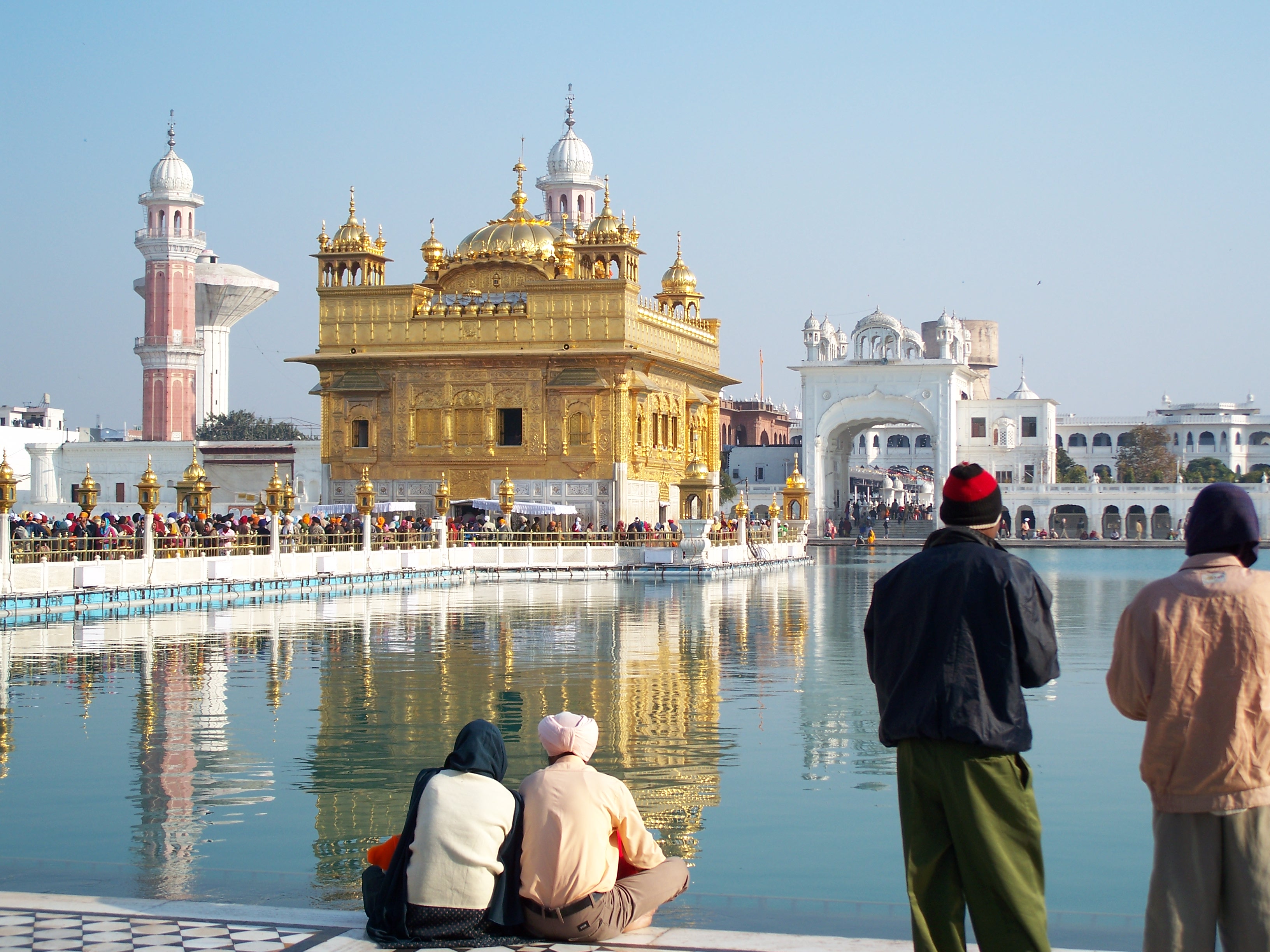
Image source: Vrlobo 888 via Wikimedia Commons
Convenors:
- Dr Clelia Clini, London Metropolitan University
- Dr Deimantas Valanciunas, Vilnius University
Please send your proposals by 15 September 2025 to deimantas.valanciunas@fsf.vu.lt and c.clini@londonmet.ac.uk
We accept proposals for online participation.
Dates and Location:
18-19 December 2025, London Metropolitan University, London, United Kingdom.
Hosted by Global Diversity and Inequality Research Centre, Research Group in South Asian Studies and Centre for Life Writing and Oral History (CLiOH), co-hosted by the Institute of Asian and Transcultural Studies, Vilnius University.
Sponsored by European Association for South Asian Studies (EASAS).
Sponsors and partners