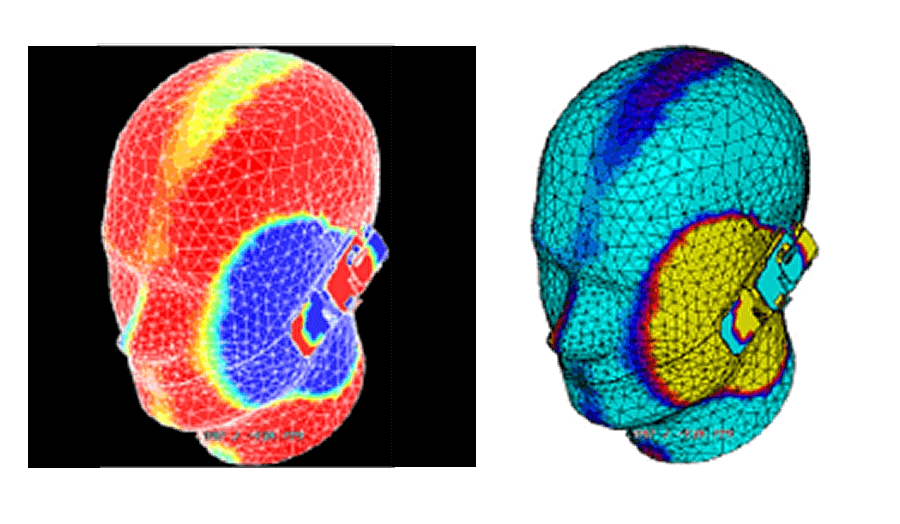
Ever-increasing demands for smaller, thinner, and more powerful technological devices pose growing practical challenges for manufacturers designing and testing new product concepts. A single chip for a smartphone might include over a billion individual components connected together to make integrated circuits. The only way to test these components is through modelling and simulation software.
Qucs/Qucs-S software – an open source, next generation tool devised by London Met’s Prof. M. E. Brinson with Dr Vadim Kuznetsov of Bauman Moscow State Technical University – has enabled compact device modelling and simulation for a range of applications, while allowing developers to avoid the prohibitive costs of earlier technologies.
Uses of this innovative software include the modelling and development of potentially life-changing medical devices and the creation of an ethical smartphone for security-conscious users.
In the field of human implanted medical devices (such as pacemakers), Qucs/Qucs-S has played an essential role in modelling how energy produced by body movements can be stored as a power source – offering profound benefits and improvements for patients and medical staff.
As open source software, meanwhile, Qucs/Qucs-S provides significant financial and ethical benefits to developers. The Librem 5 smartphone developed and sold by Purism offers an alternative handset for improved digital security. As Purism’s CEO and Founder commented, “Qucs-S has made free and open source simulation easily accessible to the world of electronics designers, and we love it”.