Understanding reach, effectiveness, and implementation of a national physical activity offer for people with musculoskeletal conditions (MSK)
London Metropolitan University led a multi-phase, mixed-methods evaluation of Versus Arthritis’ national Physical Activity Programme, including its flagship digital intervention Let’s Move with Leon and a suite of complementary digital and community-based initiatives. The evaluation examined who the programme reached, how it worked, and what outcomes were achieved—informing scale-up and future integration of digital and face-to-face support for people living with MSK conditions across the UK.
The research included:
- a rapid review of barriers and facilitators to physical activity
- a pragmatic randomised controlled trial of Let’s Move with Leon
- a large-scale service evaluation during COVID-19
- a qualitative study on engagement and experience
- a final realistic evaluation investigating what works, for whom, and in what circumstances across the broader Let’s Move digital and community offer.
Project lead
Project collaborators
This research was commissioned by Versus Arthritis and supported by Sport England.
More information
An estimated 20 million people in the UK live with an MSK condition, many of whom are insufficiently active. Versus Arthritis developed Let’s Move—a holistic, behaviourally informed programme designed to help people with arthritis and related conditions move more in ways that are safe, inclusive, and sustainable.
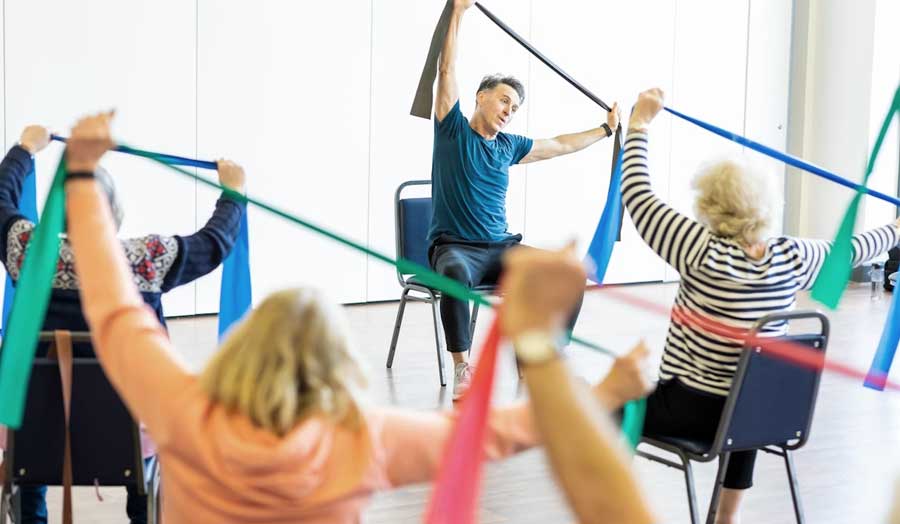
The digital components include the Let’s Move with Leon video series, stretching and resistance band videos, Facebook community, and newsletters. More recently, pilot face-to-face projects and local partnerships have extended the offer into community and healthcare settings.
- Assess reach, representativeness, and equity of engagement across programme elements.
- Evaluate effectiveness for increasing activity, strength, and wellbeing.
- Understand user experiences, engagement patterns, and acceptability.
- Identify mechanisms of change and contextual factors underpinning success.
- Inform scale-up and sustainability through a realist framework.
The evaluation applied multiple frameworks including the Behaviour Change Wheel and COM-B model (guiding design, analysis, and interpretation), the RE-AIM framework (assessing Reach, Effectiveness, Adoption, Implementation, and Maintenance), and Realistic Evaluation (exploring what works, for whom, and under what circumstances).
The final realistic evaluation used mixed methods to integrate prior findings and address new questions. Data included:
- A national survey (n = 1,404) exploring engagement with five digital components.
- Focus groups with internal staff, delivery partners, and participants.
- Secondary analysis of local pilot evaluations, YouTube and Facebook comments, and programme documentation.
- AI-assisted thematic analysis triangulated with human coding to refine programme theories.
Project partners