
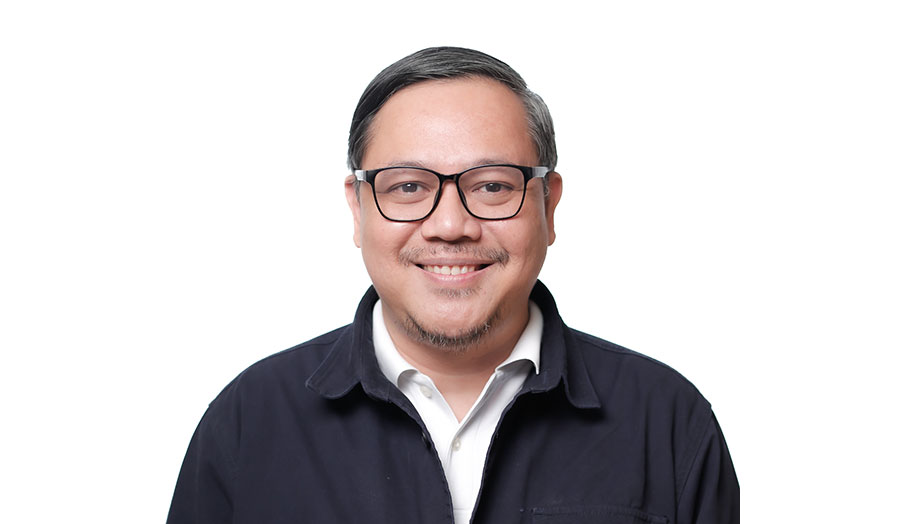
Filipino artist, Jesuit priest and lecturer Jason Dy SJ is undertaking a PhD which perfectly combines his interests in religion and artistic practice. We find out what led him down this path, and what he hopes the outcome of his research will be.
Tell us a little bit about yourself (where you’re from, where you grew up)
I grew up in a coastal town in Medina, Misamis Oriental Province, Philippines. In 1989, I joined my family in a nearby city, Cagayan de Oro City, and enrolled in Kong Hua School for junior high school. In that school, friendship was formed, and my creativity was nurtured through a youth Christian group called Christian Life Community (CLC). In college, I took up a Civil Engineering course at Xavier University. For the first three years in the University, I volunteered at Balay sa Gugma (Home of Love), a shelter for street children in the city. After graduating from college and passing the licensure exam for registered engineers, I responded to the vocation of being religious and joined the Jesuit seminary at the Sacred Heart Novitiate, Novaliches, Quezon City.
What brought you to London Met?
What brought me to London Met was its research centre, CREATURE (Creative Arts, Cultures and Engagement), to pursue a PhD in Arts (Research). Through CREATURE’s interdisciplinary approach to research “in the creative arts, its practice, cultural impact, and societal engagement,” my own creative practice and artistic research will be nurtured, deepened and broadened.
What did studying at London Met mean to you?
After ten years of active practice in the field of visual arts and curation, the time for a PhD is not just to get a higher professional degree, but more so to critically assess my creative practice through six major works from 2013 to 2023. Through reflexivity, research, and rigor, the observations, insights, and recommendations will be beneficial not only to my continuing practice but also as a resource for teaching and learning about the participatory mode of public art in the Philippines.
Tell us about your current role if you’re working now.
Aside from being a university instructor, contemporary artist, and independent curator, I’m a cleric belonging to the religious order of the Society of Jesus (Jesuits). As a priest, my primary ministry is pastoral care, sacraments, and liturgy. As a Jesuit, I engage in art, education, and culture. In my interdisciplinary practice, I’m interested in the creative dialogue and critical discourse with religion, spirituality, and faith.
What is your biggest passion in life, and where did that passion come from?
To search for beauty, in a sense of the sublime, that both pulls and tugs one into the world of the ineffable. This search must have been ignited when I was immersed in the beauty of the sea at Duka Bay, Medina, Misamis Oriental. As a child, the sea fascinated me. I wondered what was beyond the horizon and what was beneath its surface.
What drives you?
Spirituality and creativity.
What’s the proudest moment in your life?
Usually, a proud moment for me is also a humbling one. Right now, I’m grateful for the opportunity to pursue a PhD in the arts. It’s humbling to be given such a responsibility.
Tell us a little bit about your interests outside of uni and why they are important to you.
Three things. Exploring the cities and cultures of the UK. Engaging communities, especially the immigrants like the Filipinos. Existing within their changing times and seasons.
What’s next in your career?
Continue the apostolates of the Jesuits.
Do you have any advice for anyone else considering studying at London Met?
Build friendships. Explore opportunities within and outside the three campuses, Holloway, Shoreditch and Aldgate. Join the seminars, workshops, and talks offered by the various research centres at the London Met.
"As a child, the sea fascinated me. I wondered what was beyond the horizon and what was beneath its surface."
Find out more about our PhD programmes