
Biography
As an Interior Designer qualifying in 1986 I have been very fortunate to work for a number of practices many being multi-disciplinary practices. This breadth and depth of Interior knowledge and interconnectness to disciplines and team dynamics underpinned my academic career in teaching.
Through these interests surrounding human and spatial connections such as the user and the client, the public and the private space, the curriculum and the learner, the studio and creative practice I believe that whilst the individual integrity and practice and is preserved the meaningful exchange between both improves understanding, allowing for greater empathy developing ideas that are apposite and sustainable.
Teaching and interests
In my role as Deputy Dean I enjoy being involved with the life of the school, the innovation and enthusiasm generated by the students and my teaching colleagues. My own teaching within the BA and MA Design, focuses on developing ideas for the future to meet the demands of climate change, societal and cultural needs and imperatives. We are the change makers, the brave thinkers. My role is to support and encourage and inspire everyone in the school to be the best they can.
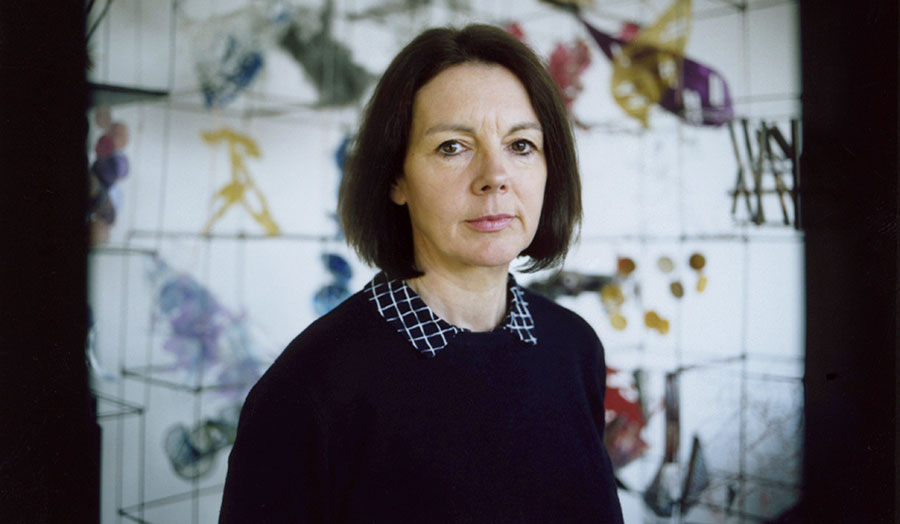
Kaye Newman
As well as an inspiration, teaching also allows opportunities such as our Hidden Space Research collaboration with Gachon and Dong Yang Mirae Universities in Seoul. This has allowed to us to investigate ideas of community and connection where the space exists to create thoughtful environments.
The common thread throughout Kaye Newman's design career has been themes surrounding connection. The user and the client, the public and the private space. To preserve the integrity of each but improve the continuity of flow and movement between them.
Through an empathetic, aesthetic and reflective approach and design philosophy, this has been developed as the underlying quality underpinning the Interior Design teaching programme at London Metropolitan University.
Kaye's research looks at high-density housing and how diverse communities work and live together, issues surrounding life balance and the family unit, all of which are integral to learning transferable skills, and both social and behavioural.
Building technologies are now developing to produce skyscrapers of advanced geometric forms but what if the building blocks were redesigned to mimic those in nature that allowed a natural give in weight and balance, developing fundamental endurance, acoustic and insulating attributes? Therefore taking the building back to a primitive position but being able to respond intuitively to its environment. Our air space and the built environment would now move forward together more sensitively, with softer edges and resulting in a less aggressive society.
Email: k.newman@londonmet.ac.uk