
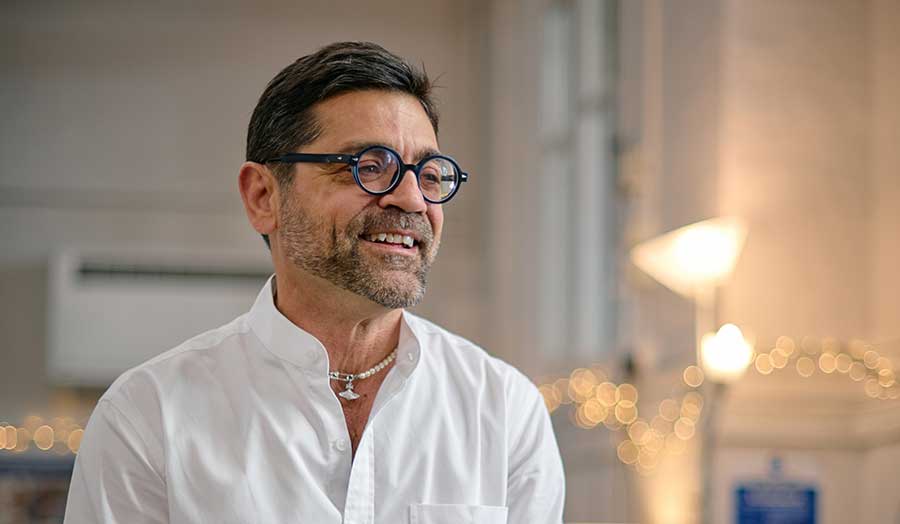
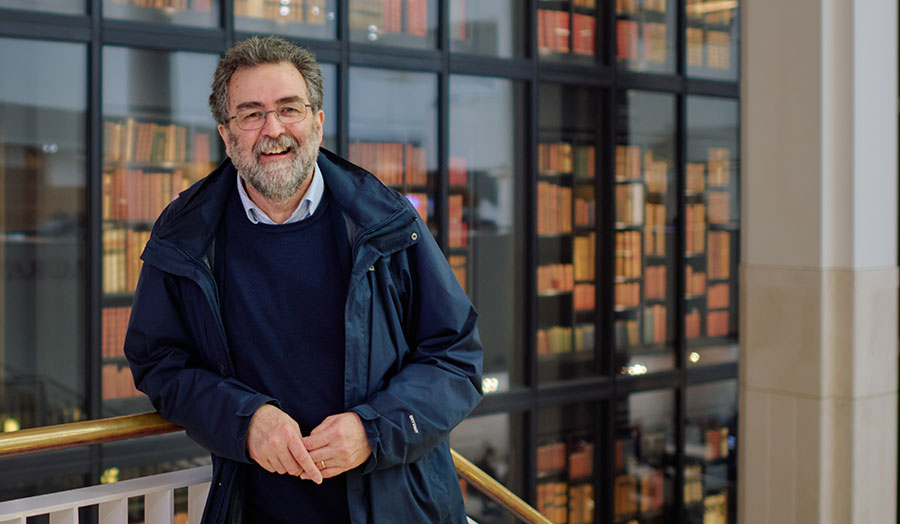
Don Green
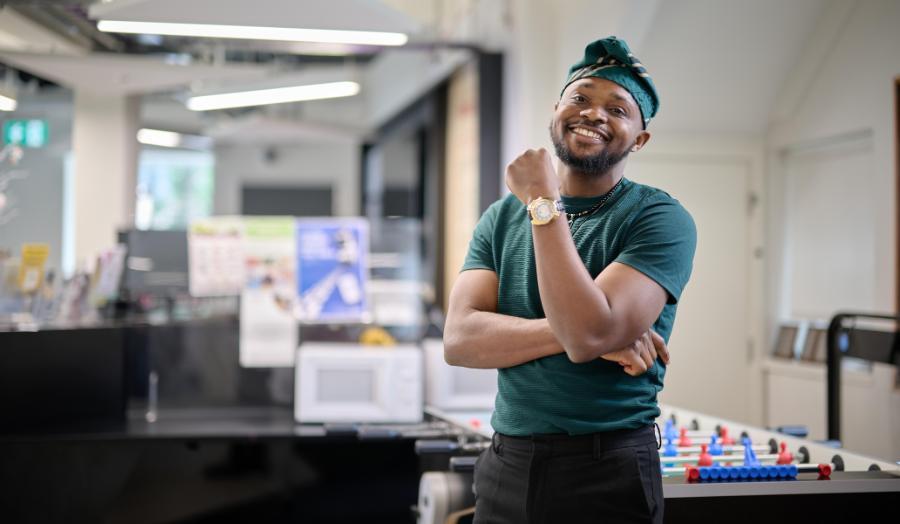
Don, a 'Jamaican Cockney' scientist with a passion for education, overcame a challenging childhood in London to achieve a PhD and become a dedicated teacher at London Met. Inspired by his own experiences, he empowers students from diverse backgrounds, and says it's no surprise that upon leaving London he ended up in the most diverse area of the UK. Don draws a fascinating parallel between jazz and chemistry, both fueled by the ability to transform ordinary elements into something extraordinary. A single riff in jazz, much like an unexpected twist in a chemical reaction, can lead to something groundbreaking and beautiful.
Don Green
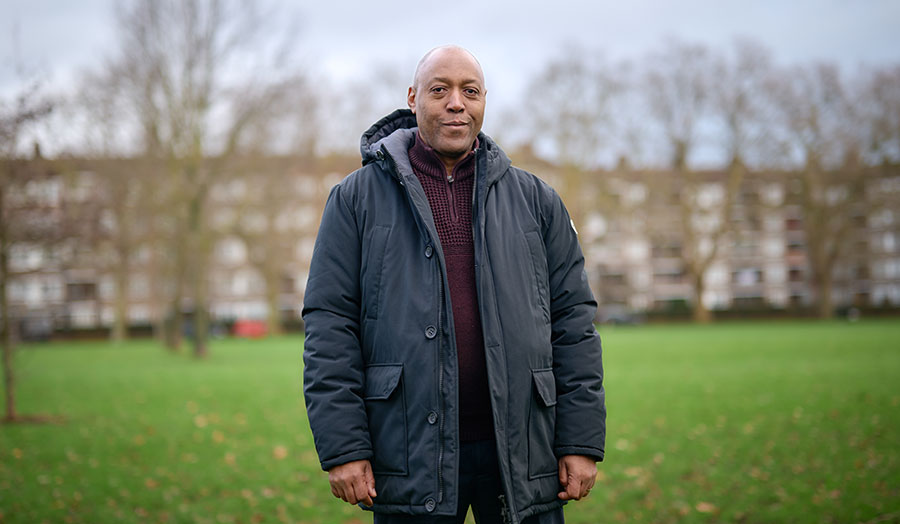
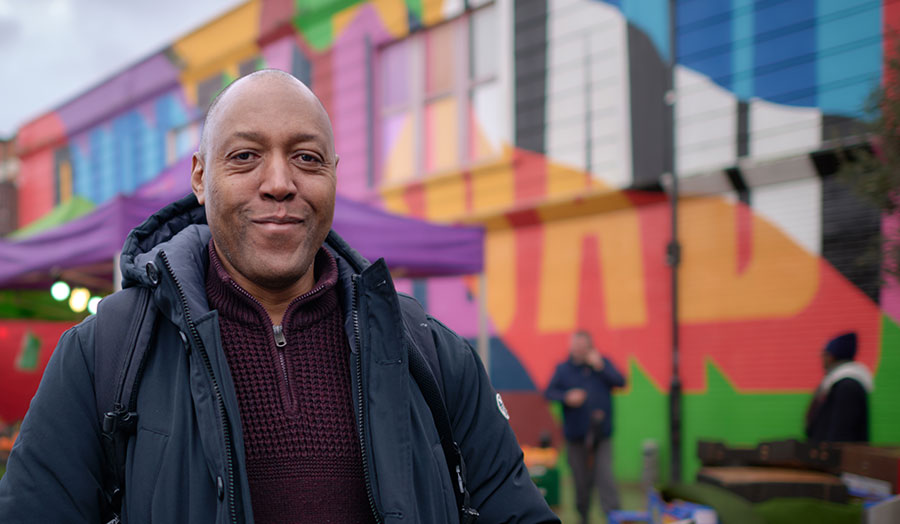
I’m a Jamaican cockney – I was born in Hackney. They have this expression, ‘you can take a person out of Hackney but you can’t take Hackney out of the person’. It was a colourful place to grow up, and I’m proud of my cockney roots. Growing up in Hackney, many times I saw someone going through something difficult, and people rally around you. Being a cockney for me is all about community spirit.
In the late sixties / early seventies I lived close to the poorest estate in Europe at the time – Kingsmead. A lot of the kids just wanted to be affirmed – to be loved as much as anything else.
My parents were the latter end of the Windrush generation. My stepfather was illiterate but he was very good with his hands – a carpenter. He worked on the National Theatre. Mother could read and write but didn’t have the opportunities to really develop and fulfil all that potential. Education for us was a way out. In that part of London, if you were an athlete, that was a way out. If you were, shall we say, someone who flirted with the law, that was a way out. Mum always said that if you had a good education, that would open doors.
If you were a young black kid in the 1960s, it was very difficult to find people who understood you. For me, it was Miss Murphy. She brought the Evening Standard’s junior crossword into the classroom. She’d get someone to draw it out, and if you felt that you had the correct response anytime that day, you could write the solutions in. It was a brilliant way to teach, it was very interactive and it created a buzz.
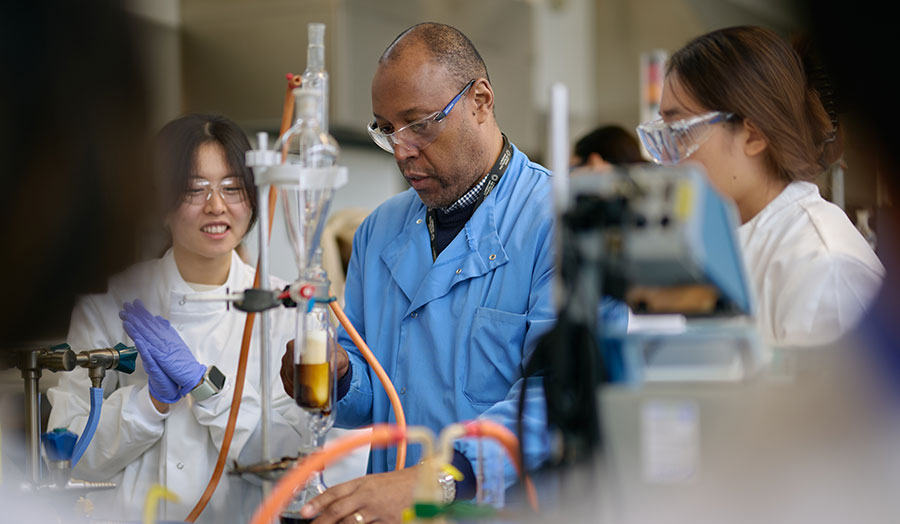
I started out in the 1980s as a lab technician at the University of London. I met my wife there. In 1984 I went from the Kings Road to Mile End Road to Queen Mary College. I was working and doing my Chemistry degree part-time – I just had this drive. For me, it was a love of organic chemistry. Chemistry is in everything we do – it underpins life as we know it. It’s in everything that we understand – it’s an extraordinarily rich subject.
I was told by the person who eventually became my PhD research supervisor about a research assistantship. I thought at least I could keep paying my mortgage and have a little bit left over. I spoke to Prof Harry Hudson and liked him from day one – his groups were international – Brazilian, Polish, Nigerian, Hungarian – I’ve always liked learning from different cultures.
I thoroughly enjoyed my PhD – it was probably the best work experience ever. By the time I got to the final year, the prof just let me design experiments and explore things – an East End kid being let loose in a lab – it was a tremendous experience. I had a couple of explosions in the lab – you’ve heard of TNT? I was working with nitrophosphates and what I didn’t realise is that when you elevate the temperature, they become very unstable and they can explode. I learnt a lot that day.
A lady called Professor Mary McPartlin (only the third woman professor in chemistry in the country at that time) told me, ‘you’ve got this', on my first day at London Met. I subscribe to that and I try to find space in whatever I do to encourage and enthuse, and to say ‘you’ve got this’.
London Met continues to attract people that are about rewriting the wrongs, challenging inequities that exist and promoting inclusion. This institution’s done that during all the time I’ve been associated with it. People really believe in education for social justice here, and that was long before it became crystallised within a document. While you might not have an explicit understanding of what education for social justice is all about, you feel it. In the teaching, the research work – it’s all about bringing many people to the piece.
I often talk about unlocking some of the negative programming that students might have had before coming here. I see lots of vertical tutoring (students a year or two above that will tell the students that you’re going to have a good time here because there’s a structure in place, people who are here to help you). We’re seeing that more and more. Students realise here that we care about them – we know they’re not a grade, they're more than that. It’s colleagues right across this institution that believe this and take that potential and challenge students intellectually, and the students realise they’ve learnt not just academic content but about life.
One of the joys I get when I walk into a classroom, I look up and see representation from the entire world. It just blows my mind. 150 or 160 languages are spoken here – I find that extraordinary and I want to be a part of that for as long as I can.
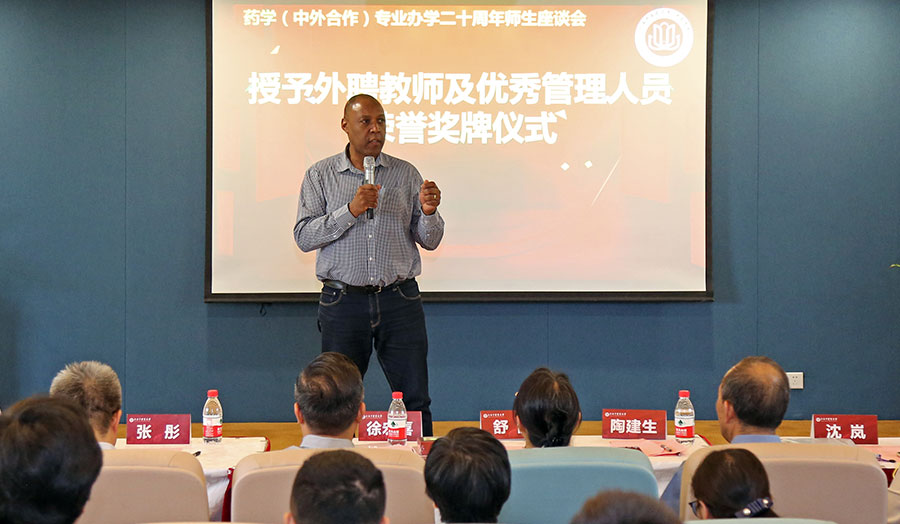
I’ve been working in a partner institution in China for four months – it’s a really longstanding collaboration with a school of Shanghai University of Traditional Chinese Medicine.
When I gave my very first lecture, I thought, this is me. You know when you know. Don’t get me wrong, I love research and meeting my peers. But when I started teaching, my heart just opened up and I realised that I have a responsibility to give back. It’s a privilege when someone says they enjoyed your lecture and you’ll see them next week. That’s all the motivation you need. Sometimes you’re talking to people who’ve come from traumatic experiences in education, and they’re coming into an environment that feels safe. Any question is a legitimate question in my classroom.
I had a very severe stammer, and I chose my situations to speak and find the right set of words. I can remember on many occasions I didn’t have the right syntax to say things. To speak and write well, you have to read well, and I love reading. I encourage my students to be scholarly. Libraries are infectious – I love students discovering that love of learning, and realising that they’re investing in themselves.
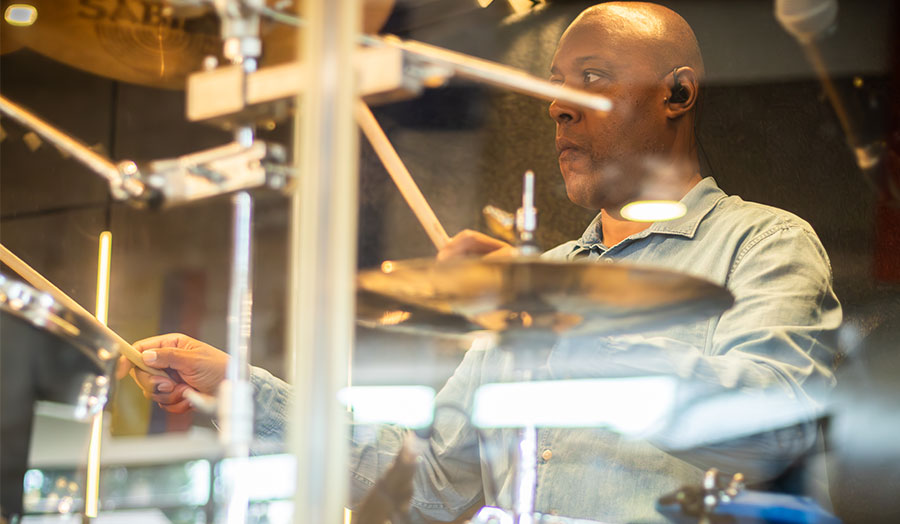
I love music – there was a DJ called Emperor Rosko who broadcasted from Radio Luxemburg, and played Motown in the late 60s. The music was incredibly rich. The discipline it takes to knock it out in one take. Jazz for me is all about collaboration. I’m privileged to play with some seriously good musicians. For me, there’s no difference between the science that I love and music – I can look at a chemical reaction and see immense beauty in it, it will literally lift my spirit. The music involves discipline – and respect for other musicians, back and forth.
My son Theo has worked for the Royal Shakespeare Company – and has been in a few films. He talks about when you’re on stage and everybody’s working together, you get that sense of collaboration. That comes from our family values – if we can help, we will help. My stepfather tried to be there as much as he could. He would have loved to see his grandson treading that very stage that his hands were involved with – so there’s that real sense of connection between the experiences of the Windrush generation right the way through to the modern day.
I have a massive respect for the arts. The arts got us through lockdown – we listened to more music, we read more. We shouldn’t separate the STEM subjects from the arts – they broaden you and challenge you. I’m seeing more collaborations from scientists collaborating with artists – long may that continue.
I’m giving the academic address at the graduation ceremony. There’s a thing called ‘ubuntu’ – if you lift up one person, everybody else gets lifted up. Being able to convey that and talk about my journey at graduation was a highlight of my career.
London Met means for me a place where your potential can be fully realised. It’s a wonderful place to explore possibility and potential. Very very talented people want to be part of this institution because of the values that are being projected right across the sector. London Met gave me the chance to fully express myself and help others.
London is a place where the whole world comes – you can get to meet people from incredible backgrounds and experiences. You’ve also got some of the best expressions of music, art and culture. The vibe is great. London for me is this incredible city, one of the best in the world.

"For me, there’s no difference between the science that I love and music – I can look at a chemical reaction and see immense beauty in it – it will literally lift my spirit."
Find out more






.jpg)
.jpg)
.jpg)



.jpg)