
Nearly 40 years on from the disappearance of Suzy Lamplugh, Professor Emma Short explains how understanding of stalking has evolved and warns of new dangers.
Date: 29 January 2026
Content warning: This article discusses murder, stalking, harassment, and violence against women.
Suzy Lamplugh was a 25-year-old estate agent who vanished in July 1986 after leaving her office in Fulham to meet a client for a house viewing. She was never found and was declared dead, presumed murdered, in 1994. It was a case that shocked the nation.
Her mother, Diana Lamplugh, established the Suzy Lamplugh Trust later that year to campaign for improved personal safety. Four decades on, the Trust remains a national leader in tackling stalking and harassment, running the National Stalking Helpline and supporting thousands of victims across the UK.
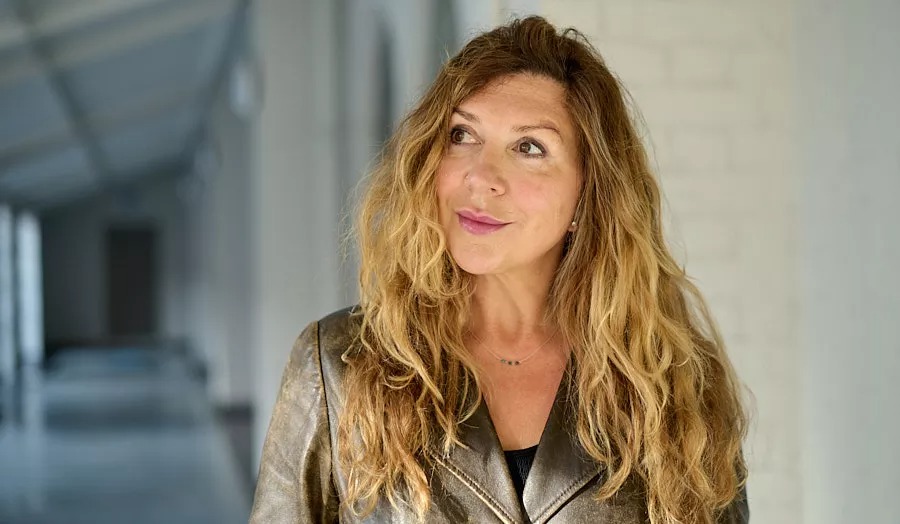
To mark the year of its 40th anniversary, we spoke to Professor Emma Short, a leading expert in stalking research, who serves as Deputy Chair of the Board of Trustees and is a Senior Lecturer in Psychology in London Met's School of Social Sciences and Professions.
As the Suzy Lamplugh Trust marks its 40th anniversary, what do you see as the most significant progress made in tackling stalking and personal safety?
One of the biggest areas of progress over the last four decades is that stalking is now recognised as a patter no behaviour rather than a collection of isolated incidents. We have moved from seeing unwanted contact as "relationship problems" or "nuisance behaviour" to understanding it as a course of conduct that can escalate to serious harm. That change has influenced legislation, policing guidance, and specialist support services.
We have also seen major progress in victim advocacy. Survivors are more likely to be believed, specialist helplines and advocacy services now exist. The Suzy Lamplugh Trust has been central to that shift, helping keep the focus on risk, safety, and lived experience.
From your perspective, where does practice still lag behind research, particularly in relation to online and technology-facilitated abuse?
Research shows that stalking is now routinely hybrid both digital and offline behaviour, but systems can often still treat online and offline harm as separate issues. Victims describe patterns of monitoring, messaging, location tracking, and image-based abuse as part of a single campaign of intrusion, yet responses are often fragmented across different teams, laws, or procedures.
We also know a great deal about the psychological impact of tech-enabled abuse, sleep disturbance, hypervigilance, chronic anxiety, but risk assessment and case management don't always reflect that evidence. There is still a tendency to underestimate the seriousness of digital monitoring and harassment.
How has the nature of risk changed with newer platforms, behaviours and technologies compared with when you first began working in this area?
The core psychology of stalking hasn't changed, it is still about entitlement, and control. What has changed is scale, speed, and access. Smartphones, social media, shared accounts, and data trails mean perpetrators no longer need physical proximity to intrude into someone's life. Information that once required effort to obtain is now ambient and constant.
This creates a sense of inescapability for victims. People describe feeling watched all the time, not just when someone is physically present. Risk is no longer confined to specific places; it follows victims through their devices, homes, and social networks.
What are the most pressing emerging dangers you're seeing now that practitioners and institutions are not yet fully equipped to respond to?
One major issue is the use of everyday technologies in coercive ways, location sharing, smart home devices, shared cloud accounts. These were not designed with how that can be exploited in stalking which makes the behaviour harder to recognise and regulate.
We are also seeing perpetrators use legal and data rights processes in vexatious ways to intimidate services and victims, and increasing use of AI tools to gather information, create fake content, or automate harassment. These developments move faster than policy and training, leaving practitioners to respond to problems that didn't exist in the same form even a few years ago.
How does your current work with the Trust help bridge the gap between academic insight and real-world support for victims?
I am proud to be Deputy Chair of the Board of Trustees at the Suzy Lamplugh Trust, my role is to support to the organisation's leadership, drawing on my specialist knowledge to support with developments in policy, practice and research. However, they are the experts, the national leader in campaigning, education and frontline services, including running the National Stalking Helpline.
Working closely with the Trust means knowledge flows both ways. Insights from helpline staff, advocates and survivors continually shape my research questions and keep my work grounded in lived experience. That exchange between evidence and practice is essential if we want responses to stalking that are genuinely effective in the real world.
The National Stalking Helpline can be reached on 0808 802 0300 and provides support to victims and professionals across the UK.
Running to Train Stalking Advocates
Professor Short is running the Southwold Half-Marathon with her daughter, Eve, on 1 March and is aiming to raise £1,500 to train one Independent Stalking Advocate (ISA).
Victims supported by an ISA have a 1 in 4 chance of their perpetrator being convicted, compared to the national average of 1 in 1,000. The Trust will match the fundraising target, creating two fully sponsored training places for the September 2026 intake.
Every pound above target strengthens the network of advocates dedicated to preventing harm and supporting recovery.
Those able to support this cause can donate via Emma and Eve's JustGiving page.