.jpg)
Apply for this course
Please select when you would like to start:
Are you a UK student applying to study full-time this January? Call us on 0800 032 4441 or apply online.
If you're a UK applicant wanting to study full-time starting in September, you must apply via UCAS unless otherwise specified. If you're an international applicant wanting to study full-time, you can choose to apply via UCAS or directly to the University.
If you're applying for part-time study, you should apply directly to the University. If you require a Student visa, please be aware that you will not be able to study as a part-time student at undergraduate level.
If you're applying for a degree starting in January/February, you can apply directly to the University.
Apply to us for January 2027
If you're a UK student or an EU student with settled or pre-settled status applying to study full-time this January, you can simply call our hotline on 0800 032 4441 or apply online.
Why study this course?
Designed in conjunction with senior aviation managers, our Airline, Airport and Aviation
Management BSc degree course recognises the demand in today’s international aviation
community for graduates with sound business skills and a good understanding of the entire
aviation system. Aviation is an exciting industrial sector that ranges from the technological
excellence of aviation engineering to the management of global airlines and airports.
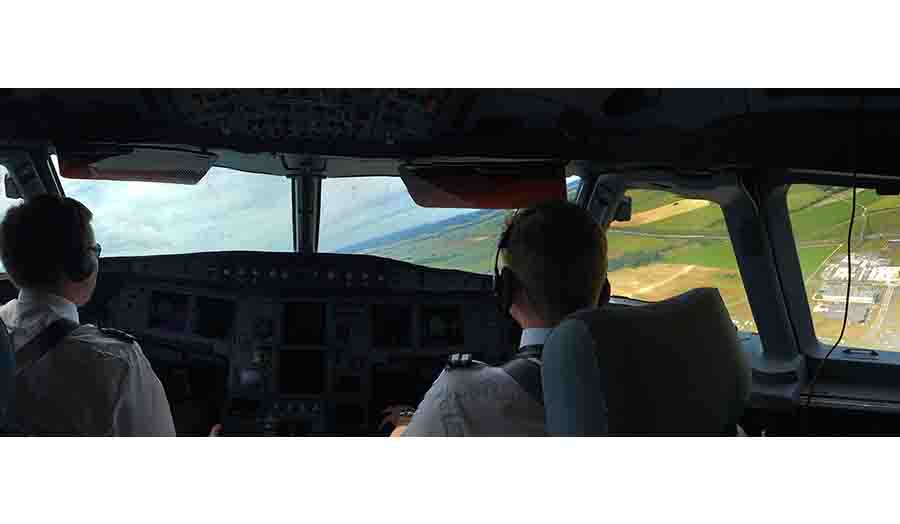
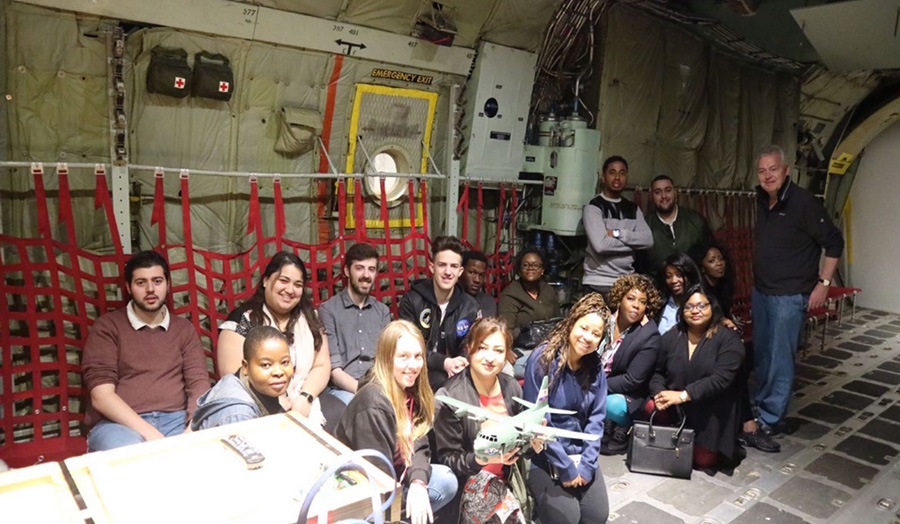
Study, travel and learn. As a student on this course, you will have the opportunity to travel to aviation hubs across the world to gain hands-on experience and learn from industry professionals. Potential destinations include (but are not limited to): Delta Air Lines (Atlanta Airport, Georgia), Gulfstream (Savannah Airport, Georgia), JetBlue Airways (Orlando Airport, Florida), as well as multiple organisations in the UAE such as Emirates, FlyDubai, Etihad, Abu Dhabi Aviation and DC Aviation (a private jet company). While visiting these aviation industry leaders, you will take part in educational sessions covering everything from customer experience and sustainability to air service development and emergency management. You will meet with senior airport leadership and receive tours of the facilities, gaining an insider's perspective on airport operations. By the time you return, you will possess a wealth of experience and knowledge that makes you stand out in the airline and airport management industry.
7th in the UK
Our management studies courses are ranked 7th in the UK in the National Student Survey 2026
Learn from industry professionals
Our lecturers have excellent links with members of the aviation community and they’re perfectly placed to offer you career advice specific to the sector
Take advantage of studying in London
Our location places us close to the UK headquarters of a number of leading aviation companies and a short distance from all major London airports such as Gatwick, Heathrow, London City, Luton and Stansted
Course modules
The modules listed below are for the academic year 2026/27 and represent the course modules at this time. Modules and module details (including, but not limited to, location and time) are subject to change over time.
Year 1 modules
Year 2 modules
Year 3 modules
Academic Skills
This module currently runs:autumn semester - Monday morning
autumn semester - Tuesday morning
(core, 15 credits)
This module will orientate you to Higher Educations and early employability planning. This module will introduce you to how the university works and how you can adapt and be successful in your studies by mastering key academic skills & employability skills; the module is designed to provide you with guidance to building core academic and professionals skills.
Running alongside the module requirements & in collaboration with the Gateway to Success a business school resource, we will set you on your way in career development and skill enhancement. The resource will support you in the tools, insights, and support needed to achieve your professional goal and build evidence of personal development and employability skills. Additionally students earn points for completing activities across learning and careers areas. Achieving the required points by graduation signals strong engagement and commitment to professional growth, which is formally recognised on the degree transcript.
You will be equipped with the knowledge to quickly navigate the university systems and locate information essential to your learning; the module does this by introducing and delivering an overview of the university literacy, opportunities and challenges. The module will also support you in developing digital literacy and effective communication, recognising the importance of these skills in academic and professional contexts. Key study techniques and skills to be covered will stretch from preparation for class, to time management, teamwork, academic reading and writing, research, the use of Artificial Intelligence and reflective thinking, to encourage and help you for your academic ability and professional career development. This will not only equip you with a solid foundation of the skills you need to progress to the subsequent levels of your study and ultimately to finish your course successfully, but it will also equip you with the soft and transferable skills you need to excel in your career progression, beyond the university.
The module aims to:
- Provide information and guide you on where to find study and module information.
- Provide you with a sound understanding of what is required to succeed when studying at the university.
- Development a range of academic, professional, and personal skills that will contribute to university learning, life-long learning and employability.
- Support your adoption of techniques and skills to help to improve your performance at the university.
- Use digital tools to effectively support learning and professional collaboration.
You will find, reflect on and further develop the following aspects:
- Management skills.
- Team work and presentation skills.
- Learning skills & styles
- Academic reading and critical thinking.
- Research skills and research methods.
- Academic writing and academic integrity.
- Use of Artificial Intelligence.
- Employability planning & development – The degree specialism & the Graduate labour market. Graduate employability skills, transferable skills, Skills development & planning. Developing a live CV to record the skills that you have developed through your course, work experience and in your extra-curricular activities.
Air Cargo Services and Operations
This module currently runs:autumn semester - Monday morning
spring semester - Tuesday afternoon
(core, 15 credits)
This module will give an overview of the modern-day cargo industry and its operational challenges and opportunities. The module will focus on how the industry has evolved and who the key players are within it. It will examine trends in existing and emergent markets and the increasing role of technology within the sector. The module will also look at relevant key pricing aspects as they relate to both normal cargo and, abnormal outsize cargo. The module will also look to study patterns in traffic flows and, a study of topical issues applicable to air cargo managers in today’s turbulent trading environment.
The aim at the end of this module is for students to understand current issues as they pertain to the cargo sector and the issues that arise from implementing decisions both in the UK, EU and globally
Read full detailsAirport Management
This module currently runs:autumn semester - Monday afternoon
(core, 15 credits)
This module provides an overview of the key functions of airport management essential for the seamless operation of the global aviation system. Airports play a critical role in processing both air passengers and cargo, ensuring that aviation activities are conducted safely, securely, and efficiently. Airports are multifaceted businesses with diverse responsibilities. They act as landlords, provide core infrastructure such as runways and terminals, host retail environments, and support airline operations. The scale and scope of these activities vary across different types of commercial airports, ranging from small local facilities to regional airports, international gateways, and major global hubs.
The focus of this module is on the management challenges faced by airport operators. These challenges are shaped by differing ownership models, management structures, and regulatory environments. As such, understanding airport management requires consideration of broader trends in the global development of the aviation sector.
One significant trend in recent decades has been the shift towards the privatization of airports. While this movement began in Europe—particularly in the United Kingdom—it has since gained momentum worldwide. Today, airports operate under a variety of ownership models, from fully state-owned to fully privatized, with many falling somewhere in between.
By examining these global developments and varying operational contexts, this module aims to provide students with a comprehensive understanding of the strategic, financial, and regulatory considerations that influence modern airport management.
The module aims to provide students with the ability to:
1. Recognise the strategic importance of airports in supporting regional and national economic development, functioning as vital growth hubs with significant impact on a country's economy.
2. Identify and analyse key components and interfaces involved in effective airport management, including operational, regulatory, and commercial dimensions.
3. Understand and evaluate performance benchmarks used to assess airport efficiency, effectiveness, and competitiveness
4. Examine the factors influencing service quality and gain insight into the passenger experience as a critical aspect of airport operations.
5. Appreciate the commercial role of airports, including the provision of retail, hospitality, and other non-aeronautical revenue-generating services.
6. Assess the dynamics of airport competition and understand the strategic roles of airport marketing and master planning in long-term development.
Data analysis for Marketing and Creative Industries
This module currently runs:autumn semester
(core, 15 credits)
The module introduces you to a range of quantitative methods useful for understanding and describing marketing data supporting decision-making. It provides you with the practical experience of using the latest version of Excel and/or SPSS software to describe and interpret marketing data of relevance to marketing and the creative industries. The module lays the foundation for level 5/6 modules as appropriate.
The module adopts an applied, problem-solving approach and aims to equip you with relevant quantitative and information management skills required by employers within the marketing and creative industries. The module also aims to enhance your employability and provide you opportunities for developing a range of key skills including, but not limited to, analysing data, application of knowledge and presenting data, data interpretation and reporting, problem solving and decision making, self / time management, digital literacy and IT skills, and numeracy / quantitative skills.
Fundamentals of Airline Management and Operation
This module currently runs:spring semester - Monday morning
(core, 15 credits)
The module introduces the fundamentals of Airline Operations, current issues, and their applications in the industry. Airline operations present a striking dichotomy: each day, airlines safely transport millions of passengers around the world, yet they often fail to deliver on more routine aspects—such as ground crews arriving late to open aircraft doors, lost baggage, or millions of pounds lost due to chronically underutilised aircraft.
Airlines have not traditionally applied factory-like, industrial-engineering scrutiny to their operations. A high percentage of an airline’s cost structure involves maintenance, ground handling, in-flight services, call centres, and aircraft acquisition. There is a significant opportunity to reduce overall costs by using labour, materials, and assets more efficiently, thereby enhancing service reliability.
This module explores the extent of these operational problems and how airlines work to solve them within the regulatory and economic constraints of the industry. Its aim is to provide students with a solid grounding in certification, rules of the air, cost structures, profitability issues, and the complex activities required for an aircraft to fly from point A to point B. The module also examines the interrelationships between various stakeholders in the industry.
The module aims to provide students with the ability to:
1. examine the key operational challenges faced by airlines and explore how these can be addressed within regulatory and economic constraints.
2. understand aviation certification, rules of the air, and regulatory compliance.
3. analyse airline cost structures and profitability issues, highlighting the complex processes involved in day-to-day operations.
4. explore the roles and interrelationships of various industry stakeholders in ensuring efficient and reliable airline operations.
Introduction to Air Transport Economics
This module currently runs:spring semester - Tuesday morning
(core, 15 credits)
This module serves as a comprehensive exploration and elucidation of the fundamental principles that underpin both micro and macroeconomics, essential for grasping the intricacies of airport and airline operations. Within this framework, the module delves into the analysis of supply and demand, explores the principles governing costs, revenue, and pricing dynamics, and explains concepts related to the productivity and performance of airlines and airports. Additionally, the module will introduce the concept of market failure and look into the economic facets specific to the airline and airport industries, incorporating industry benchmarks crucial for evaluating their overall performance.
The module aims to provide students with the ability to:
1. Acquire systematic knowledge and a profound understanding of both microeconomic and macroeconomic principles, fostering the capability to adeptly apply these concepts within the unique context of the aviation sector.
2. Discern and differentiate between the diverse costs inherent to airlines and airports, with a keen awareness of how these costs intricately influence overall profitability.
3. Demonstrate proficiency in comprehending and manipulating data from diverse sources to critically evaluate performance within the aviation sector.
Principles of Aviation Management
This module currently runs:autumn semester - Monday morning
(core, 15 credits)
The focus of this module is management and the development of students as managers. Managers are crucial to getting things done, for example, they plan, organise, lead and coordinate the work of others in order to meet organisational goals efficiently and effectively. The challenges of managing in today’s ever-changing, increasingly uncertain, complex economic environment requires managers to have the knowledge, ability and skills to take action, such as managing information, delegating tasks, setting goals, building teams, motivating others and, along with numerous other activities, achieve organisational success.
The traditional view of the purpose and role of management in the world of work was to seek stability and efficiency in a top-down hierarchy aimed at achieving bottom-line results. In contrast, the contemporary management approach expects managers to engage in motivating people and harnessing their creativity, sharing information and power, leading change, and finding shared vision and values in an increasingly diverse and complex workplace.
Today’s managers require the knowledge and ability to draw on both traditional and contemporary approaches to management when formulating workplace decisions. They also need the skills, tools, and techniques to manage their own career trajectory based on the acquisition of sound employability skills and accompanying behaviours.
In addition to knowledge, the module focuses on developing students as managers
which involves the ability to interact with, and motivate, a diverse range of people.
The module aims are to:
Enable students to identify and explain major developments in the history of managerial thought and, provide students with the opportunity to develop management, leadership and employability capability to enhance their individual potential.
Develop students’ appreciation of the different management approaches that can be used when managing in uncertain and complex environments.
Enable students to develop their management and employability skills, such as critical thinking and writing, interpersonal skills, self-management, communication, team-working, problem solving, and presentation skills, in order to maximise their competitive edge in the business world and, to explore the effectiveness of management influence and performance on the wider safety and operational culture within the aviation system.
Read full detailsPrinciples of Marketing: for Creative Industries and Aviation
This module currently runs:spring semester - Monday afternoon
(core, 15 credits)
The module aims to provide an understanding of the marketing process in contemporary organisations and in the context of tangible goods and services. The service sector accounts for a significant proportion of GDP and employment in most developed economies and therefore it becomes essential for students to gain insight within the area. In this module, students are introduced to a range of marketing theories such as the marketing concept, consumer behaviour, business environmental analysis, marketing research, consumer insights applicable to tangible goods and services marketing.
The module aims to:
● Provide an understanding of the theoretical foundations and practical application of marketing
● Provide an appreciation of contemporary issues in marketing.
● Develop students’ academic writing, application of knowledge and data interpreting skills.
● Develop students’ researching and analysing skills.
Airline Commercial Planning
This module currently runs:autumn semester - Tuesday afternoon
(core, 15 credits)
The module introduces the role of commercial planning for commercial airlines and in particular the evaluation of new air route development. The importance of route development cannot be underestimated for commercial airlines, but this can only be achieved by the careful evaluation of airline aircraft operations and fleet management.
Commercial planning requires all departments to engage with the objective of growing the airline network as follows-
1. Commercial airline planning requires and understanding of airlines see the growth prospects for their route networks
2. Forecasts of passenger demand are critical to the evaluation of the development of new routes at both the macro-scale and micro-scale.
3. Fleet management and the development of a long-term fleet acquisition is critical for long term objectives.
4. A focus on network development versus point-to-point networks or hub and spoke versus linear development.
5. The steps of route planning process are critically important to the development of profitable route networks, and this is central of the commercial airline sustainability.
6. Aircraft fleet management and aircraft performance features are again critical to the development of sustainable commercial airline operations and the module will evaluate these issues.
Airline Revenue and Pricing Management
This module currently runs:spring semester - Tuesday afternoon
(core, 15 credits)
All successful airlines need to master their market position and technical competencies to ensure success and the management of ‘fares’ is central to this. Pricing and revenue management are at the heart of every airline’s competency and thus of paramount importance. Strategic positions require airlines to understand the competitive environment and the ‘price’ points for both leisure and business travel segments. Pricing and revenue management are therefore critical to survival in the global air travel market.
The module aims to provide students with:
• The global management of air travel demand by understanding concepts such generators of air travel demand linked to the growth of global wealth creation
• An historic perspective in the development of revenue management tools and distribution for commercial airlines
• An appreciation of the manipulation of air travel demand based upon the tools of revenue management including concepts of high season demand, shoulder and low seasonal demand
• An understanding of the importance of the ‘pricing’ airline products and balancing revenue streams in complex systems such as full network airlines
• Development of the pricing strategies and revenue management strategies for different types of airlines business models including low-cost carriers
• To appreciate the opportunities for new revenue streams from ancillary revenues and the de-bundling of airline products
The module also aims to develop students' skills, in particular: academic study skills; IT; literacy; applied analysis; entrepreneurship, critical thinking; interpersonal and team-working; communication, including oral presentation; and problem solving.
Read full detailsAviation Psychology and Human Factors
This module currently runs:spring semester - Wednesday afternoon
(core, 15 credits)
Human Factors (HF) and our understanding of its effects on safety performance continue to evolve and develop. The human element is vital to the safe and efficient operation of all aspects of the aviation industry. Recently, a better understanding of human behaviour has led to significant safety benefits, with the discipline of human factors forming a cornerstone of every aviation safety management programme. This module explores how an understanding of operational personnel's attitudes, behaviours, and mental wellbeing can help reduce HF-related risks to aviation safety.
Another key area that helps explain why operational personnel make errors is aviation psychology. This field involves the study of human behaviour, actions, and cognitive and emotional processes in the aviation context, as well as the psychological challenges encountered in the workplace. In this module, psychological principles will also be applied to examine the effects of sleep patterns, central nervous system activity, mental functioning, and more on the behaviour and performance of operational personnel.
The module aims to provide students with the ability to:
1. Understand elements of aviation psychology and human factors, and their application in the aviation industry.
2. Identify key issues affecting crew interaction within the commercial aviation industry.
3. Apply models to recognise enabling factors that might contribute to aviation incidents and accidents.
4. Assess the factors that affect the mental wellbeing and stability of operational personnel.
Risk and Crisis Management
This module currently runs:autumn semester - Wednesday afternoon
(core, 15 credits)
The aviation and travel industry has a huge number of interdependent factions within it and this leads to vast operational complexities. This together with a highly regulated industry, a competitive and dynamic external environment and a substantial level of Government involvement has the potential expose this sector and, airlines and airports alike, to a vast array of risks and uncertainties, both internally and externally.
This module aims to explore the types of risk that the aviation and travel sector generally sector is exposed to and, what possible solutions might be put forward to mitigate against these.
More specifically the module will help develop the students understanding of how to assess, evaluate, mitigate and monitor risks as they pertain to the sector. This can be further broken down into developing an understanding of the areas such as
A second aim of this module is to build a practical knowledge base of the operational requirements for airlines and airports and wider industry sectors, to operate as effectively and efficiently as possible in sub optimal business environments or, due to unforeseen or unstoppable events.
Safety and Security for Aviation
This module currently runs:autumn semester - Tuesday morning
(core, 15 credits)
The aviation industry comprises a vast number of interdependent factions, resulting in significant operational complexities. This, combined with a highly regulated environment, a competitive and dynamic external landscape, and substantial government involvement, exposes both airlines and airports to a wide range of internal and external risks and uncertainties.
This module explores key aspects of aviation safety and security, particularly as they relate to accidents and incidents, including the regulations and processes currently in place. It also examines the roles of regulators, relevant government agencies, and international organisations in promoting effective safety and security management through the use of Safety Management Systems (SMS) and Security Management Systems (SeMS).
The module aims for students to be able to:
1. develop an understanding of current best practices promoted by competent regulators and international aviation organisations in enhancing safety and security in the industry.
2. gain knowledge and of the systems and procedures that contribute to making commercial aviation an exceptionally safe mode of transport, with a particular focus on SMS.
3. acquire tools and techniques for identifying, assessing and managing hazards, threats and risks.
4. understand how SeMS can be integrated into airport and airline operations.
Sustainability, Business and Responsibility
This module currently runs:spring semester - Monday morning
spring semester - Wednesday afternoon
(core, 15 credits)
‘Sustainability, Business and Responsibility’ addresses the critical issue of sustainability, explaining why the current human lifestyle is unsustainable. It shows the consequences of humanity’s exploitation of planetary resources and the impact it has on humans, the planet, and businesses. The module focuses on understanding how businesses affect sustainability and how sustainability affects businesses, in order to recognise the fundamental need to change business models into more sustainable ones.
Sustainability has become the essential focus of governments, global financial institutions, and international organisations. Post COP-21 in Paris (2015), organisations, businesses, communities, and individuals are expected to understand and take responsibility for their economic, environmental, and social impacts. It isn’t a “nice to know about” subject anymore; it is an essential aspect of business education, growing in importance to recruitment, career prospects, and professional development
The module tries to shift the focus from the negative, overwhelming inertia to the positive changes leading to a more sustainable future, learning how multiple individuals, entrepreneurs, and businesses innovate to reach the set sustainability goals of Net-Zero by 2050.
Aim of the module:
You will develop a full understanding of what is meant by sustainability, who decides what constitutes sustainability principles, and how these principles are applied.
You will recognise perspectives of governments, business, and communities, and the challenges and conflicts these present.
You will explore the varied tools and techniques used to assess sustainability in business.
Creating a Winning Business 1
This module currently runs:autumn semester - Wednesday afternoon
autumn semester - Thursday morning
spring semester - Thursday
spring semester - Friday
(option, 15 credits)
Why do some companies succeed while others fail? Are some business ideas fundamentally better than others? How can you tell which ideas and/or solutions are worth investing time and money in and which are not?
This module is a key introduction to identifying, critically assessing and developing new business opportunities. The approaches and processes covered can be applied equally to new commercial ideas, social enterprises or new ventures within an existing business.
The foundation of the module is a live client brief with a real organisation, where you will develop your own solutions leading to a presentation and designing a consultancy type. At each stage you will learn the concepts covered in the module by applying them to the brief.
This module will be delivered through weekly lecture/seminars. The sessions will consist of a combination of theoretical input and problem-based tasks, supported by multimedia, including videos, case studies and student-centred discussions. You absolutely need to attend regularly each week to keep up.
Students will be able to receive support from the work placement team at the University for how to identify a relevant business for the assessment tasks.
The Student Enterprise at London Met will provide guidance to any student considering setting up their own business or wishing to utilise their knowledge to work as a freelancer.
The module is particularly relevant to anyone engaged in business or working at setting up his/her own business. Those considering starting their own business, working for an SME or taking on an intrapreneurial role within a large organisation will find application and a plethora of take-aways.
Please note:
● International students on a Student Visa must ensure their placement meets UKVI monitoring requirements. This includes:
• Prior approval of consultancy dates and hours by the Module Leader and the University Visa Compliance Team.
• Submission of timesheets signed by a line manager/supervisor.
Empowering London: Working within the community
This module currently runs:spring semester - Wednesday morning
(option, 15 credits)
This unique module will provide insight into key urban issues affecting London (which are additionally relevant to other large cities around the UK and the wider world) before applying your academic knowledge in a practical setting.
You will undertake 50 hours of hands-on work experience with a London community focused organisation, tackling real-world challenges such as inequality, crime, health disparities, and climate change. Along the way, you’ll develop professional skills and reflect on your personal and professional growth to assist you to reach your graduate career goals.
Support is provided to help secure suitable placements which can be remote or in-person.
The module supports the University’s Empowering London initiative and promotes inclusive, ethical practice.
The module aims to enable you to:
● Effectively express and understand your current skills and abilities in relation to your career values and goals
● Practically apply the knowledge gained through your course programme to a work/neighbourhood environment
● Make a positive contribution to the challenges of current social and economic issues facing the University’s local communities and consider these from national and global perspectives
● Gaining unique insight of current challenges facing cities in the areas of social wealth; the environment; discrimination; health; poverty and deprivation and crime and partner with community institution to design potential solutions
● Gain understanding and direct experience of the graduate level skills, knowledge and insights required for inclusive practice and problem resolution within institutions to enable you to become an inclusive leader in society
● Recognise your personal and professional development through your work based practice and how to apply the experience and knowledge gain to your future goals
Please note:
● Students will be contacted prior to the semester to provide support in securing a Placement in good time.
● Students are responsible for applying for opportunities and to engage with the Module Team/Employer Engagement and Placements Team to assist them.
● The suitability of any opportunities will be assessed by the Module Team/Employer Engagement and Placements Team and all placements must meet Health and Safety requirements for Higher Education Placements.
● Students on a Student Visa must ensure their placement meets UKVI monitoring requirements. This includes:
• Prior approval of placement dates and hours by the Module Leader.
• Submission of timesheets signed by a line manager/supervisor.
• Ongoing engagement with the Module Leader and the International Student Support Team.
Learning through Work
This module currently runs:autumn semester - Wednesday morning
spring semester - Wednesday morning
autumn semester - Thursday afternoon
spring semester - Thursday afternoon
(option, 15 credits)
This Work Based Learning module enables students to undertake a short period of professional activity either: part-time/vacation employment; work placement; not-for-profit sector volunteering or a professional/employer led project.
Work Based Learning modules are designed to enhance students’ personal and professional development and assist in preparing students for their future careers. The module aims to facilitate application and progression of knowledge and skills gained via the learner’s studies and wider life experience. Students will be introduced to a range of professional skills and techniques, including: reflective self-assessment; preparation for employment; being a critical employee and developing approaches for co-operative and collaborative working.
• Students will be contacted prior to the semester to provide support in securing work based activity in good time.
• It is a student's responsibility to apply for opportunities and to engage with the Work Based Learning team to assist them.
• The suitability of any opportunities will be assessed by the Module Team and all roles must meet the Health and Safety requirements for Higher Education Work Placements.
• Learners may be able to utilise existing employment, providing they can demonstrate it is personally developmental and involves a relevant level of responsibility.
• In addition, students may be able to complete the Work Based Learning hours during the summer prior to the academic year a student is taking the module.
• Tier 4 International students will be required to submit weekly timesheets for the hours undertaken for the work based learning activity to meet the requirements of their visa. These will need to be signed by their line manager/supervisor.
The module aims to enable students to:
• Effectively express and understand their current skills and abilities in relation to their career values and goals.
• Practically apply the knowledge gained through their course programme to a work environment.
• Gain an in-depth insight of a work environment
• Make a positive contribution to the employing organisation and demonstrate inclusive workplace practice.
• Recognise their personal and professional development learning and apply to their future goals.
Please note:
● Students will be contacted prior to the semester to provide support in securing a Placement in good time.
● Students are responsible for applying for opportunities and to engage with the Module Team/Employer Engagement and Placements Team to assist them.
● The suitability of any opportunities sourced by the student will be assessed by the Module Team/Employer Engagement and Placements Team and all placements must meet Health and Safety requirements for Higher Education Placements.
● Students on a Student Visa must ensure their placement meets UKVI monitoring requirements. This includes:
• Prior approval of placement dates and hours by the Module Leader.
• Submission of timesheets signed by a line manager/supervisor.
• Ongoing engagement with the Module Leader and the International Student Support Team.
Research Methods for Marketing and Creative Industries
This module currently runs:autumn semester
(option, 15 credits)
In this module, you will be introduced to the theoretical and practical foundations of empirical social science research design for marketing and creative enterprises. How we undertake research ultimately depends on the nature of your research question and the type and kinds of evidence that are available. There are strengths, weaknesses, and trade-offs to most of the research design decisions we make. The overall aim of this module is to understand the consequences of the design decisions you make. Specifically, the module aims:
1. To teach you how to critically review empirical research.
2. To teach you how to sample and collect data.
3. To teach you how to analyse the data you collect.
4. To prepare you to undertake your final year dissertation.
The Practice of Consultancy
This module currently runs:autumn semester - Monday afternoon
autumn semester - Tuesday afternoon
autumn semester - Wednesday afternoon
autumn semester - Thursday afternoon
autumn semester - Friday afternoon
spring semester
(option, 15 credits)
Imagine yourself stepping into one of the most dynamic and influential sectors: consultancy. This field is booming, with a strong growth trend that shows no signs of slowing down. In the UK alone, you will find an industry that employs over 255,000 professionals and is valued at an estimated £16 billion per annum, making it the second largest consultancy hub in the world after the US.
As a management consultant, you actively engage with stakeholders to deliver objective, specialist advice. You diagnose issues and inefficiencies, solve problems, improve performance and implement solutions that drive complex change, maximise growth and create value for organisations.
In the Practice of Consultancy module, you gain the practical research and consultancy skills essential for a successful consulting career while preparing for your final-year Consultancy Project. This module introduces you to key research methods, equipping you with a hands-on understanding of the tools and techniques for problem analysis and issue clarification.
You will apply a range of frameworks to structure your diagnostic analysis and strategic thinking. Management consulting encompasses a wide array of activities, and as a consultant, you must be both client-oriented and solution-focused. In this module, you will develop expertise, resourcefulness, critical analysis, creative thinking, relationship management, empathy and communication skills; each essential for building trust and ensuring your recommendations are implemented effectively.
Advances in technology now provide organisations with unprecedented access to vast amounts of data that you can harness for evidence-based consultancy. You will explore how emerging technologies, such as artificial intelligence and advanced analytics, are transforming traditional consultancy practices. You will learn to integrate these tools with conventional desk research to validate and contextualise your data findings, thereby enhancing the robustness and relevance of your recommendations. You will also explore hypothesis testing to uncover actionable insights from data and drive evidence-based decision. This hands-on experience equips you with both critical analytical skills and the ability to communicate your insights effectively, ensuring you remain competitive in the dynamic world of business consulting.
In summary, this module aims to:
1. Develop your diagnostic ability to identify and clarify root issues within an organisation;
2. Hone your skill in applying appropriate methods to solve complex consultancy challenges;
3. Strengthen your ability to combine analytical frameworks, AI-supported insights and independent analysis to assess market opportunities and formulate actionable recommendations, and
4. Cultivate the capability to critically interpret statistical outputs and effectively communicate your findings to support robust, evidence-based decision making.
Airline and Airport Strategic Management
This module currently runs:autumn semester - Friday afternoon
(core, 15 credits)
The role of this module is to introduce the role of strategic analysis and planning for airlines and airports to determine a sustainable future for these partners. The module will explore the academic literature on the concepts in particular of Professor Michael Porter and his conceptual analysis of industry sectors linked to competition. In addition, there will be a focus on the alternative academic strategic thinking linked to the resourced based view of strategic management.
At its heart the nature of understanding the external environment and the opportunities for growth and development depending on internal capabilities and the external environment.
The module aims to provide students with an:
• understanding of the importance of strategic management opportunities for airlines based on environmental scanning and analysis
• appreciation of the internal factors that allow companies to capitalise on external market opportunities
• understanding of the vital nature of ‘vision’ and ‘mission’ and ‘market positioning’ features for airlines for strategic development
• review the concepts of simulation of the commercial airline environment using an airline simulation tool
• creatively design and evaluate the creation of a new commercial airline operation using software approved for this purpose
• show creativity and innovation in managing the costs and revenues of airline simulation tool to create a profitable airline operation
Airport Planning and Development
This module currently runs:spring semester - Thursday morning
(core, 15 credits)
The module introduces the key themes and understanding for airport planning and development which is a complex agenda that requires strategic over-sight. Airports are unique businesses that have many stakeholders and uniquely require local support as well as government support to succeed. They also have a unique relationship with airlines as they are symbiotic operators with airlines
The module aims for students to be able to:
1. An understanding of the context for airport planning and development
2. The role of master planning and reasons for this process
3. The importance of stakeholders in the aviation airport planning process
Brand Management in Aviation
This module currently runs:spring semester - Thursday afternoon
(core, 15 credits)
This module provides a comprehensive and up-to-date understanding on branding services and strategic brand management. It outlines the concepts and framework of branding, which increasingly is the ‘face’ of corporate strategy. So, when an airline such as British Airways announces a £7 billion investment programme this links to the management of the brand. Brand management is the interface between the consumer of airline services and the organisation and the multiple touch points that facilitate air travel.
It provides students with the tools and techniques and concepts to improve long-term profitability via creating effective brand strategies.
Aims of the module:
• Explore the role of branding from a corporate and consumer perspective for airlines and airports.
• Examine the theory of branding for airlines and airports.
• Develop students' understanding of the role played by brand audit and communications in the building and maintenance of brands in the Aviation industry including airlines and airports.
• Develop students’ researching and analysing skills.
• Develop students’ critical writing, application of knowledge and decision-making skills
Financial decision - Making in context for Aviation
This module currently runs:autumn semester - Thursday afternoon
(core, 15 credits)
Effective financial decision-making is a critical capability for managers operating within the complex and capital-intensive aviation industry. While decision-making is often an intuitive process, in the context of aviation finance it must be grounded in robust analysis and strategic insight. Finance plays a central role in executing organisational strategy, and financial managers are key to ensuring the optimal allocation of financial resources while also balancing the needs of shareholders, stakeholders, and regulatory frameworks.
This module introduces students to the core principles, tools, and frameworks of financial management within the aviation sector. It equips learners with the skills and knowledge required to support informed financial decisions in areas such as investment planning, risk assessment, cost control, and value creation. Students will explore the role of finance in ensuring corporate sustainability, operational efficiency, and effective governance within aviation businesses.
The module highlights the application of financial concepts in real-world aviation contexts, emphasising performance indicators and sector-specific financial methodologies. Through a practical and analytical lens, students will examine how aviation managers approach key financial decisions—ranging from capital investments to working capital management, and from financial reporting to risk-return analysis.
Although aviation managers may not perform detailed financial analysis themselves, a comprehensive understanding of financial processes is essential. This module enables future aviation professionals to critically interpret financial information, participate meaningfully in financial planning discussions, and ensure that strategic decisions are financially sound and aligned with long-term business objectives.
The module aims for students to be able to:
1. Use the concept of ‘time value of money’ to synthesise and compare alternative outcomes for the corporate decision-making process
2. Evaluate various corporate strategic decision-making techniques to a variety of long-term planning scenarios
3. Compare and assess the performance of the aviation industry both historically and currently
4. Appraise financial statements such as balance sheets, financial ratios, etc. and evaluate how theses statements and ratios are used in evaluating the financial health of a company
5. Give an appraisal of financial plans and long-term business viability
Leading Innovation in the Aviation Industry
This module currently runs:autumn semester - Thursday morning
(core, 15 credits)
This final-year core module “Leading Innovation” aims to enable students to study and apply in practice, a range of innovation theories and techniques. It will also allow students to critically evaluate contemporary innovation processes, and organisations in a range of aviation organisations
The Module will be based around two themes:
Theme 1: Innovation, where students will study, analyse, and evaluate the innovation processes of selected organisations and industries (by critiquing, for example, Case Studies), and how innovation is achieved and operates within the contemporary economy (by critiquing, for example, classic and contemporary examples). In addition, students will study the synergies between leadership and innovation, an emerging area in academic research and in practice. By doing this, students will be closely engaging with and evaluating innovation practice performance.
Theme 2. Students will then evaluate how this innovation can be used to solve real world problems in the aviation industry to lead to sustainable corporate growth.
Each theme will conclude with one overarching single assignment covering both themes that will comprise of 100% of the marks available for this module.
Consultancy Project
This module currently runs:all year (September start) - Thursday
all year (September start) - Friday
(alternative core, 30 credits)
The Professional Consultancy / Project module serves as a capstone experience, requiring students to undertake a business-focused project designed to enhance their employability and support ongoing professional development.
As part of this module, you will complete and document an individual project that not only consolidates your learning throughout the programme but also allows you to apply your knowledge in a real-world context. It provides a valuable opportunity to demonstrate the professional competencies you’ve developed over the course of your studies.
If you are currently employed, you may choose to base your project on a work-related consultancy initiative, subject to your employer’s approval. Alternatively, you may opt for a research-based project.
You will present your project through an online presentation. This module offers a platform to showcase your professional credibility while applying your academic, business, and technical skills in a practical setting
The Professional Consultancy Project aims to:
1 , Demonstrate the ability to utilise and contextualise knowledge by applying analytical skills to a business situation or problem
2 , Demonstrate the ability to assemble a coherent and sustained piece of writing that evaluates a business/project problem/solution
3 , Create an opportunity to continue the development of a range of skills associated with research, including analysis, interpretation, written expression, formal report writing, and self-managed study
4 , Engage students in a complex, integrated activity that will consolidate and integrate previous skills and learning
5 , Provide students with a ‘showcase’ opportunity that allows them to demonstrate their ability to apply the knowledge and skills acquired throughout the course to a significant and specialised task
Those studying on a Student Visa will only be able to complete work-based project option of this module if it meets UKVI monitoring requirements including: approval of the placement dates and hours by a Placement Officer prior to starting the placement, submission of weekly timesheets for the hours undertaken, signed by their contact at the business and continued engagement with the Placement Officer as well as the International Student Support and Compliance Team.
Dissertation for Marketing and Creative Industries
This module currently runs:all year (September start) - Tuesday morning
(alternative core, 30 credits)
In this module you will have the opportunity to undertake in-depth and independent study of a topic from your course that has most inspired you. Using the research skills you learned in level five, you will undertake a marketing or creative enterprise dissertation. The overall aim of this module is for you to execute a research project that makes a practical and theoretical important contribution to your field. Specifically, the module aims:
1. To teach you how to execute a research project
2. To teach you how to write up a research project.
3. To provide you with a project to be used as an example of your abilities in the job market.
4. To reflect on the skills demonstrated through producing the research and on your broader graduate career development.
Artificial Intelligence and Big Data in Business
This module currently runs:spring semester - Thursday afternoon
spring semester - Friday afternoon
(option, 15 credits)
The business world is currently undergoing profound technological change. Digitalisation has reached new heights, and new technologies are helping tackle ever more tasks that are complex. This trend is driven by the availability of large quantities of data – big data (BD) – and by the improved opportunities for using this data through artificial intelligence (AI). The relevance of AI is growing as technology, companies, and consumers interact. First, current technological progress facilitates the extensive and practical use of AI. Second, companies are increasingly relying on data and the value they extract from it to optimise their business models and processes.
Third, consumer behaviour is increasingly shaped by digital applications, which in turn boosts the generation and availability of data. As such this module focuses on the relevance and management of AI in the business context. This module also focuses on how to lead successful AI initiatives by prioritising the right opportunities, building a diverse team, shaping the strategies and strategic experiments and continuously managing business solutions to benefit the organisations.
Read full detailsProfessional Experience Year Placement
This module currently runs:all year (September start)
(option, 30 credits)
A Year in Industry (‘sandwich placement’) module is often one of the most effective ways to secure a professional career following graduation.
This module provides an additional 30 credits between Levels 5 and 6, offering a four-year course programme. It is specifically designed to enhance your employability and improve your future prospects by undertaking a minimum of 44 weeks of full-time, professional-level employment related to your graduate career goals.
Pre-placement preparation workshops and one-to-one support will assist you in your search for a suitable placement. Year-long placements are advertised by a wide range of organisations, and we will support you in accessing these opportunities.
During the placement year, you will be supported by a Placement Tutor who will provide guidance on all aspects of your workplace experience and module assessments.
Placement employers will be asked to complete a feedback form evaluating your performance in the role.
The module aims to enable you to:
• Apply the knowledge gained through your course and any previous employment in a practical, professional work environment.
• Gain in-depth insight into a particular industry, including analysing work-based problems and proposing solutions.
• Develop industry-focused, graduate-level employability skills.
• Make a positive contribution to the employing organisation and demonstrate inclusive workplace practices.
• Articulate industry-specific and transferable skills to support your future career—whether through recruitment processes, self-employment, or further professional/postgraduate study.
Please note:
• You will receive support well in advance of the placement year to help secure a suitable placement in good time.
• You are responsible for applying for appropriate opportunities and engaging with the Module and Placements Team for assistance.
• The suitability of any placement will be assessed by the Module and Placements Team, and all placements must meet Health and Safety requirements for Higher Education placements.
• Students on a Student Visa must ensure their placement meets UKVI monitoring requirements. This includes:
• Prior approval of placement dates and hours.
• Submission of timesheets signed by a line manager or supervisor.
Project Management
This module currently runs:spring semester
(option, 15 credits)
Business projects tend to vary greatly in size and scope depending on their objectives, allocated resources and the industry for which they are developed. In the context of the aviation, events and tourism industries, competent and confident business project managers are required to tend the needs of the different stages of designing, managing and delivering successful projects. To this end, students need to be provided with a solid grounding on time management applied to projects, budgeting, and human talent management within specific project settings. Therefore, a variety of resources intending to provide methods and tools to manage projects successfully should be drawn from to engrain a comprehensive understanding of the different requirements needed to structure a viable and effective project. This module introduces students to the role of the project manager, the nature of projects and how to manage them successfully through active engagement with these resources. As a result, students will be equipped with a solid and confident grounding to develop realistic, effective and attractive project proposals, manage and organise their delivery.
The module aims to enable students to:
1. Assess project proposals and ascertain the most viable approach to achieve its objectives
2. Recognise the characteristics of project organisations that provide governance, assurance, support and direction to the project planning and delivery team
3. Understand the difference between linear and agile project management methods
4. Develop project plans assisted by relevant software, including the use of Gantt charts and Work Breakdown Structures
5. Communicate project proposals in detail and effectively, including their risks and other issues
Service Excellence for Creative industries
This module currently runs:spring semester - Tuesday morning
(option, 15 credits)
‘Service Excellence for Creative Industries and Aviation’ investigates practices and strategies used in managing exceptional relationships between customers and service providers. Consistent delivery of high-quality service increases customer loyalty, businesses reputation and competitive advantage, hence the module focus lies in the exploration of all aspects of excellent service delivery.
The aim of the module is to provide students with understanding of the importance of service excellence, including reflection on their own professional conduct practices, and equip them with analytical ability to assess and improve service delivery.
Read full details