
High-quality research
Our high-quality research forms a core part of the life of London Met and underpins all that we do. Research covers everything from teaching thousands of undergraduates, supervising several hundred students on PhD and Professional Doctorate programmes, conducting funded research or working with our many partners. London Met is home to a number of research centres, groups and units that provide a focal point for staff and research students. They give definition and direction to the work that we do.
Engaging with our local partners and the wider world
We value research for contributing to our shared quest to make a better society; we also embrace it for the opportunities it provides for our students and staff to achieve their full potential. Research at London Met helps us engage with our local stakeholders in Islington, Hackney and Tower Hamlets, Greater London, the UK and worldwide, embracing a multitude of enquiries into new knowledge in the arts, business, science and social sciences.
Our research community
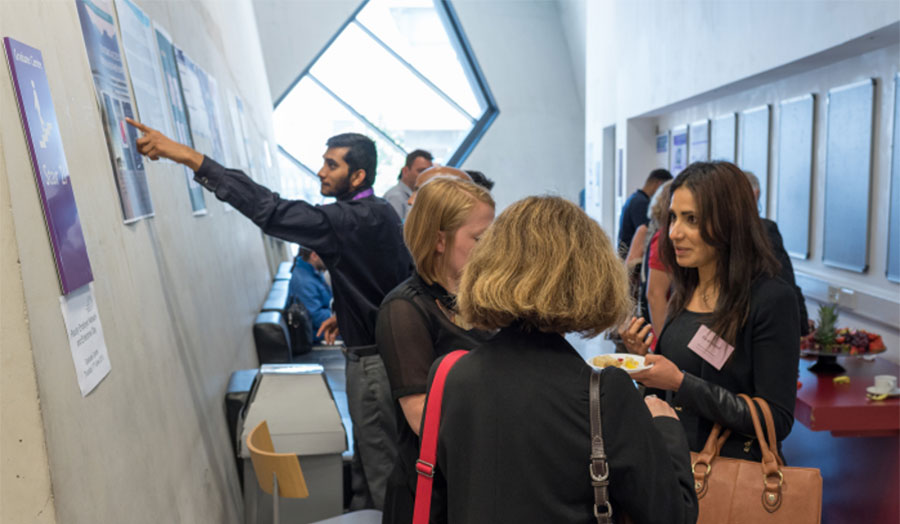
Building and supporting an inclusive, diverse and open research community is important to us and we encourage collaborative and interdisciplinary initiatives among both our staff and student populations. In addition, our Graduate School and Research and Postgraduate Office are there to support research activity in all areas and at all levels. To ensure the rest of the University is aware of these and can actively contribute, we promote their work through interdisciplinary seminars, workshops and discussions and other research initiatives. We encourage collaboration and discussion in a variety of ways, including our annual Research Student and Staff Conference, which gives the entire research community an opportunity to showcase their work and promote the Student and Staff Liaison Forum.
Research integrity
Our commitment to innovation and the pursuit of excellence means our research is in demand from external partners and we are involved in a number of projects in the wider community, where our reputation for high standards of research and integrity is recognised as a driving force in the exchange of knowledge, and our Policy on Research Integrity (PDF) supports this.
Read more about our Research and Knowledge Exchange Strategy 2020/21 - 2024/25.
Find out more about research and knowledge exchange at London Met
Research at London Met:
- Centres of research
- Impact
- Research spotlight
- Expert commentary
- Policy engagement
- Interdisciplinary Research Forum
- Research and Postgraduate Office
- Research Repository
Research degrees
- Find your doctoral degree
- The Graduate School
- Applying - Your research proposal
- Frequently Asked Questions
Funding your degree
Supporting your research
- Developing our researchers
- Annual Report for the Concordat to Support the Career Development of Researchers
- Appendix 1- Action Plan for Staff Researcher Development Concordat
-
Research support for staff (staff login required)
Knowledge exchange
- Working with businesses
- Knowledge Transfer Partnerships
- London Met Student Enterprise
- London Met Lab
- Innovate to Elevate: KTP Associate Conference 2024
- Arsenal FC Innovation Challenge
Policies
More information
- Information for London Met students
- Information for London Met staff (staff login required)
-
Staff Research Development Programme (staff login required)

-(2).jpg)

-(1)-(1).jpg)






.jpg)



























.jpg)