HTTP://WWW.LONDONMET.AC.UK/LONDONMET/APP_TEMPLATES/LONDONMET2004/IMAGES/MONTAGEMAIN-POLYMERS.JPGLONDONMET


Practical Skills in Polymer Processing and Testing

1.  Introduction

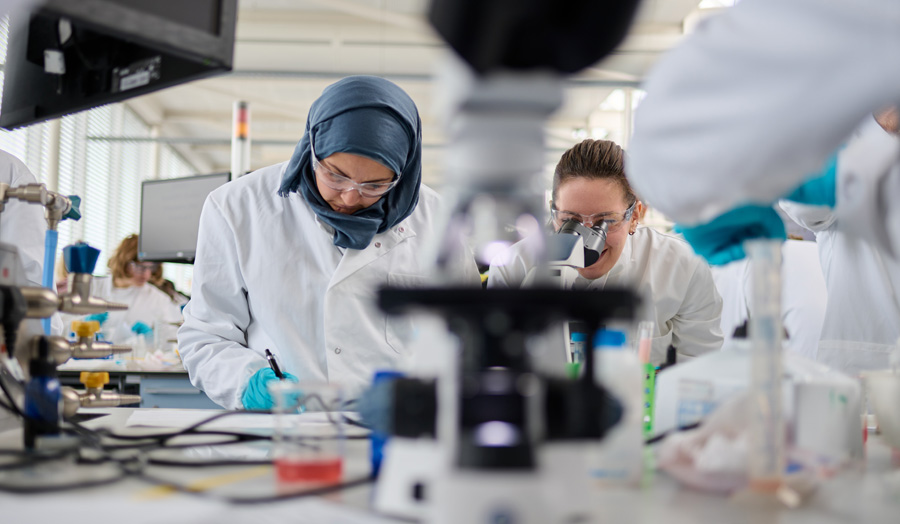
This short course, consisting entirely of laboratory work, is being held to fulfil the practical requirements of the Polyflex Distance Learning course leading to the award of BTEC/Edexel National Certificate in Polymer Technology and for others who wish to gain experience in the primary plastics and rubber processing and testing methods used in these industries.

Polyflex students need to complete 20 exercises, of about two hours duration each, and submit reports for each exercise for assessment.  This may be achieved by a combination of laboratory work in the normal workplace, at a local centre or at the London Metropolitan University (LondonMet). 

Students who wish to fulfil the whole requirement at LondonMet will need to attend the short course for the full two weeks (10 days).   Students who partially fulfil the requirement elsewhere can attend the short course for the appropriate number of days.

2.  Course Content

The exercises for the full two-week course are divided into four groups of five as shown below. Both Polyflex and other students may replace some exercises with alternatives of more relevance to their interests (within the limitations of the equipment available).  They may also select a reduced number of exercises if they wish.  It is anticipated that non-Polyflex students will select the processing and testing exercises only, which form the basis for the one-week short course, as advertised in PRW.  Students may also attend on a daily basis for a fee at the daily rate.

Exercise Areas

Basic Science

Measurement of fluid viscosity
Measurement of thermal conductivity
Material identification
An organic material preparation
A titration exercise

Polymer Science

Polymer identification by simple tests and IR spectroscopy
Preparation of a plastics sheet
Factors affecting free radical polymerisation
Determination of polymer density by flotation and use of SG bottle
Rubber elasticity

Polymer Processing

An injection moulding exercise e.g. mould filling
An extrusion exercise e.g. extruder output
Compression moulding of a thermoset or rubber
Vacuum forming
GRP composite layup

Testing

Melt flow index
Tensile testing
Pendulum impact
Hardness and softness measurements
Vulcanisation behaviour

Thus Polyflex students who wish to attend for two weeks would most simply choose two different exercises each day for both weeks, although it is not essential to organise the work in this way.


Timetable

Each day the practical sessions will start at 10.00 am and run through until 01.00 pm, with afternoon sessions running from 02.00 pm to 05.00 pm.  During these times tutorial sessions will be held on an individual or group basis as necessary.

Students doing any exercises in the Basic Science and Polymer Science group will need to bring laboratory coats.

4.  Practical Skills

The list of exercises is not definitive and the exercises may be replaced by equivalent exercises depending on the student’s interests and the availability of equipment at their place of work or, for those on the short course, at lmu.  However, please remember that any replacement exercises must cover similar skills and learning outcomes.

Expected skills and learning outcomes

In the Basic Science group, the relevant skills are the ability to handle and operate equipment used in simple physical and chemical measurements, recording , handling and interpretation of data and writing reports of  experimental work.  In the Polymer Science group, the relevant skills are the same but now in the context of making chemical and physical measurements with polymers.

In the Polymer Processing and Testing groups, again similar skills are involved but the particular exercises in which they may be acquired may vary.  However, they should include a reasonable selection from the main processing and testing methods used in plastics and/or rubber technology.

5.  Tutorial Work for Polyflex Students

There will be considerable opportunity during the short course for tutorial work in support of the written modules that you have studied.  Indeed the course has been scheduled for this time one month ahead of the examinations to help you clear up any difficulties with the module work before the examinations.  Please come prepared with your problems!

6. Reports (required from Polyflex students)

Students may carry out as many of the exercises (or replacement exercises) as they like at their place of work or local college. However, each exercise must be assessed in the normal way by submitting a report to the London Metropolitan Polymer Centre.

Polyflex students attending the short course should bring a notebook (not just looseleaf paper) in which to record their laboratory observations, as these will form the basis of their reports. Students may well be able to complete some of their reports during the period of attendance at the short course, but most likely they will need to complete them afterwards. At least one report must be completed during the short course. This will be marked and feedback given during the short course. The remaining reports should be submitted for assessment within a month of completing the short course. Guidance notes will be available on report writing.


  Page last updated : : 23 Mar 2005